











The increasing scale of the logistics system, the diversity of goods, and the growing requirements and expectations of the global market economy have led to the search for new solutions enabling the collection and transmission of data. The goal was to achieve both efficient and effective information flow. The market economy required constant adaptation to customer needs, and thus the improvement of the internal organizational infrastructure of enterprises.
An extremely important factor in the services offered has become the qualitative as well as the spatio-temporal aspect. Therefore, along with technological development, the position of IT infrastructure in supporting logistics has been strengthened. New solutions were gradually introduced, starting from automatic identification and communication technology, to integrated management systems.
Genesis and characteristics of automatic identification
Technical progress and the development of computer technology have significantly influenced the development of economic logistics, especially corporate logistics. The increasing requirements and competitiveness of services offered after World War II forced entrepreneurs to look for new solutions that would both improve and facilitate work. With the development of computer science, the first calculating machines were created, followed over time by computers and specialized microcomputer devices. Their application in logistics allowed for the improvement of supply chain management tools. The timeliness of the data held determined the effectiveness of the actions taken by the enterprise. Information became the basic and most important element of the logistics process. Its resources and streams illustrated physical flows, enabling effective management and control. The use of information technology enabled fast and error-free data transfer, and thus reduced the speed gap between the physical flow of resources and the flow of information.
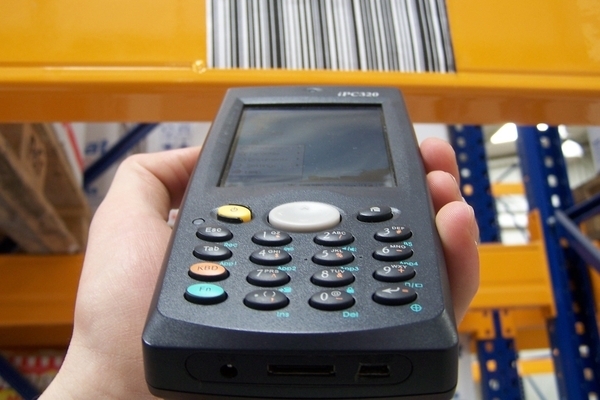
Among the first mass applications of computer science in logistics operations, automatic identification of goods and products should be mentioned. The beginnings of its introduction date back to the mid-1970s. It is a “set of techniques for identifying objects (items) and automatically entering data into a computer.” In trade, it consists of automatically identifying objects based on read information. It allows for the collection and entry of data into an IT system database without the use of a keyboard. This process takes place with the help of specialized electronic devices.
The article contains 28,360 characters.
Source: Logistyka Magazine