









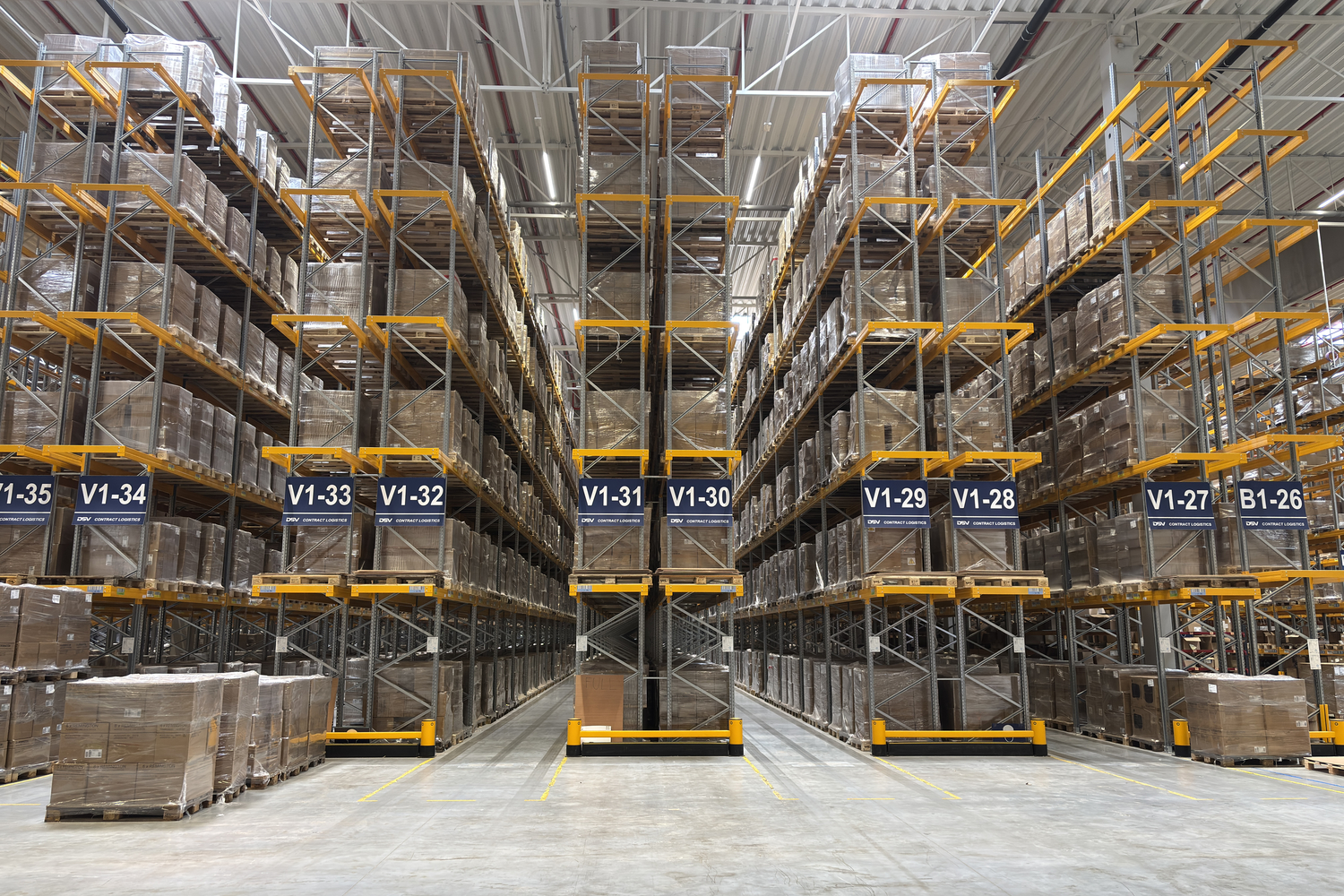
The new DSV distribution center in Krzyżowice near Wrocław began its operational activities three months ago. Yesterday, we had the opportunity to see the warehouse from the inside – to learn about the technological solutions used, the organization of work, and the processes supporting the flow of thousands of products.
Logistics remains invisible to consumers on a daily basis, although it is one of the foundations of the modern economy. Today, we have it at our fingertips: at the very moment we are talking, people around us are working, goods are being packed and moved, and trucks are arriving and picking up cargo. What you see here is not a showroom warehouse. It is a living, bustling space – noted Jakub Kempiński, who welcomed the arriving guests at the beginning.
After the official opening, the event participants were able to see the facility in operation.
Start of operations and the scale of the facility
The first operations in the warehouse began in February with the receipt of the first inbound pallet. Subsequent months brought a gradual increase in the scale of operations: higher inbound volumes appeared in March, while the outbound shipping process started in April. The currently operating part of the facility covers approximately 23,000 square meters of warehouse space and 65,000 pallet spaces.
Finishing works are underway in the remaining part of the building. Ultimately, it will be a facility about twice as large as the one we are currently in – said Wojciech Korona, site manager at DSV.
Initially, it was assumed that about 45 employees would be needed to handle warehouse operations. In practice, the scale of operations turned out to be much larger than expected.
Due to the higher volume of both inbound and outbound, we currently employ about 90 people. We had to increase the team very quickly and train another group of employees – explained Wojciech Korona.
About 35 percent of the staff are employees hired directly by DSV, primarily high-reach forklift operators. The rest of the team consists of temporary workers.
Flexible dock organization
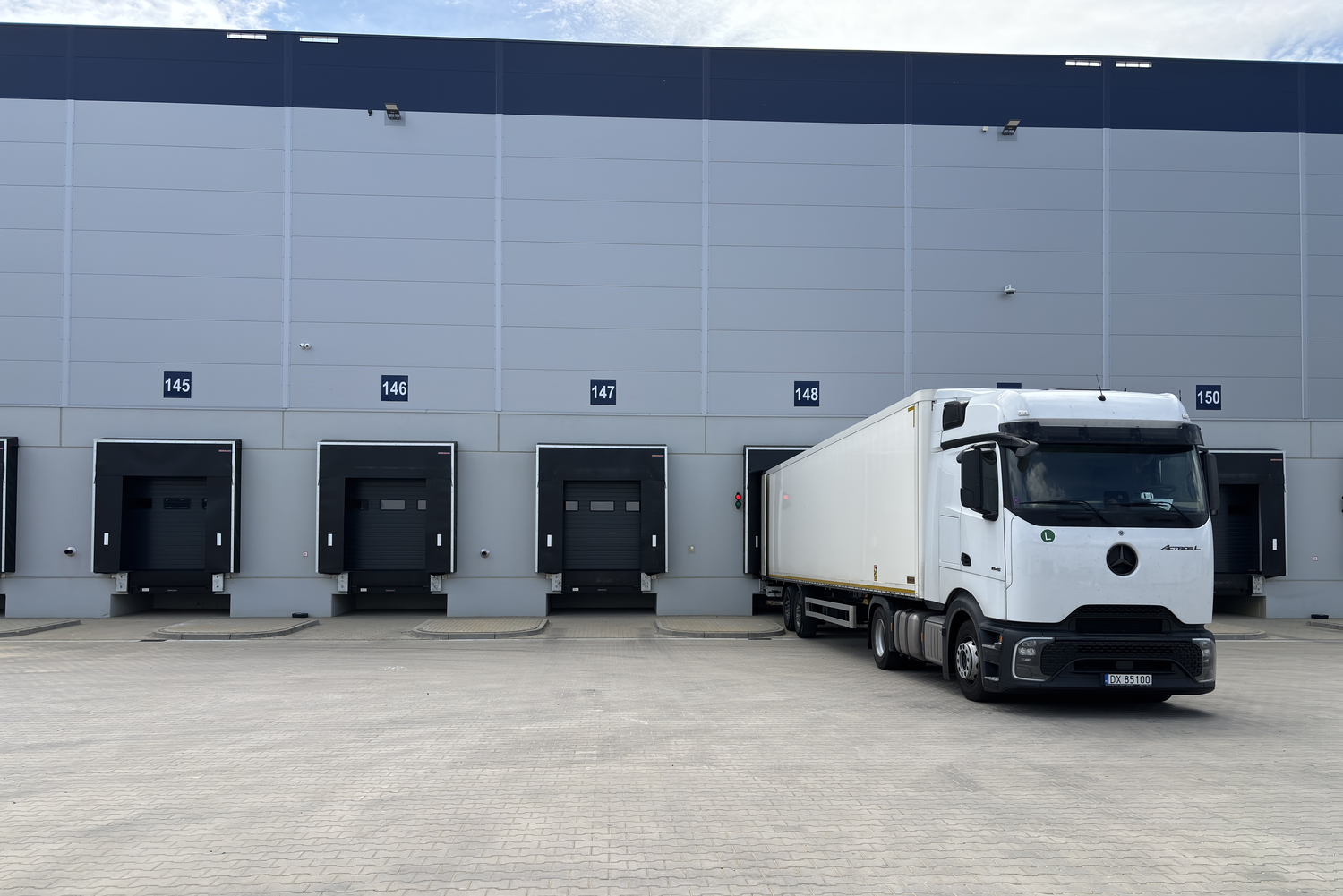
The warehouse is equipped with 21 docks handling both receiving and shipping processes. On average, about 70 percent of the docks are intended for shipping, and about 30 percent for receiving. However, the proportions can change depending on the day and the weekly schedule.
The docks are managed dynamically. We do not have a fixed division where a specific gate always handles inbound or outbound. Depending on the current volume, we move resources to where they are most needed – explained W. Korona.
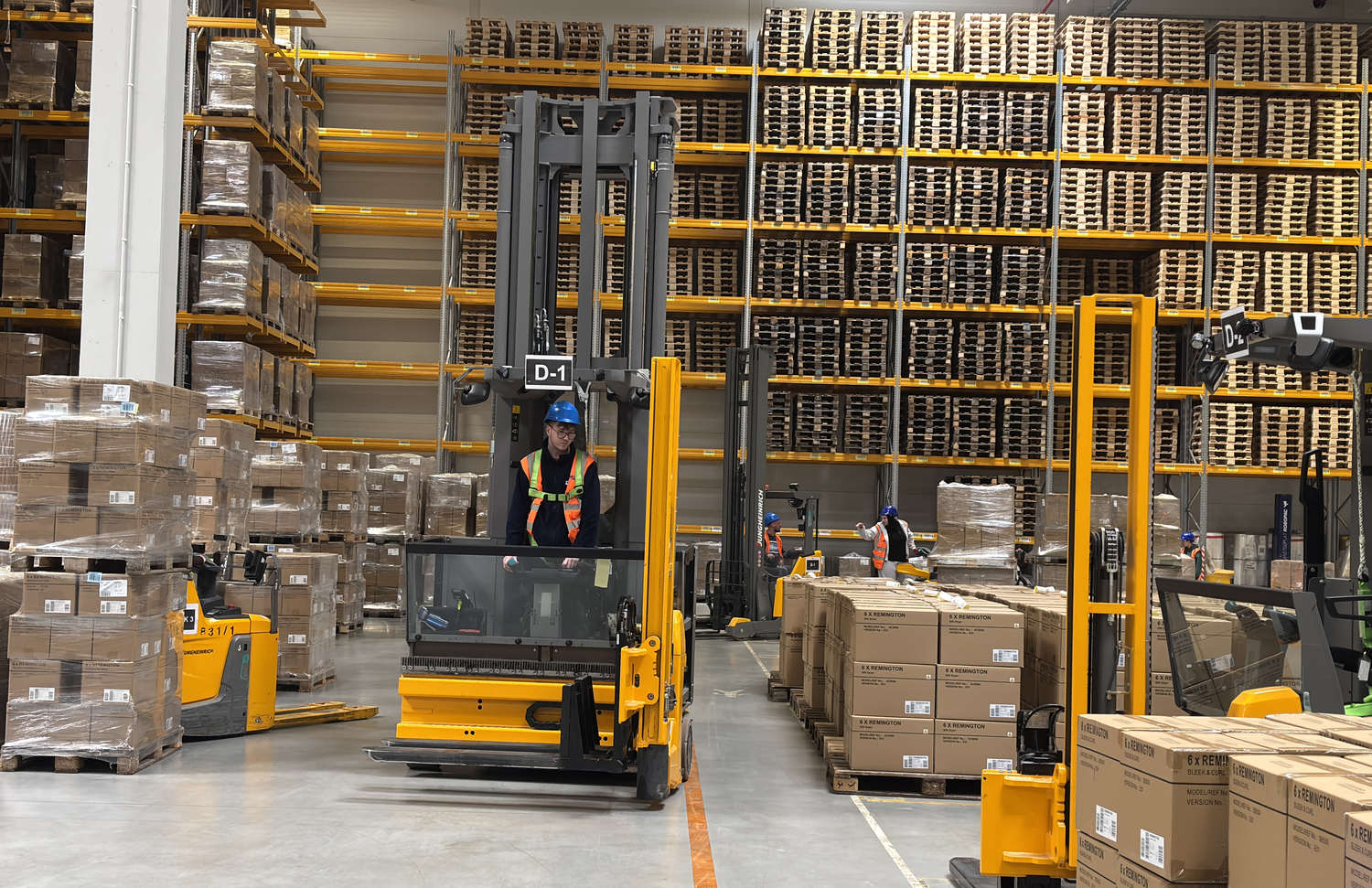
A similar principle was applied to the organization of the team’s work. Employees are trained so that they can perform tasks in both inbound and outbound processes.
Maximum space utilization
One of the most important elements of the warehouse is the use of Very Narrow Aisle (VNA) technology.
Specialized trucks operate in the warehouse, where the operator, along with the cabin, is lifted to a height of about 10 meters. The machines use a guidance system based on inductive loops.
Thanks to this solution, the operator does not have to worry about whether the truck will drift to the left or right, or whether the pallet will be placed too shallow or too deep. The system helps maintain the appropriate precision and reduces the risk of damage – explained our guide.
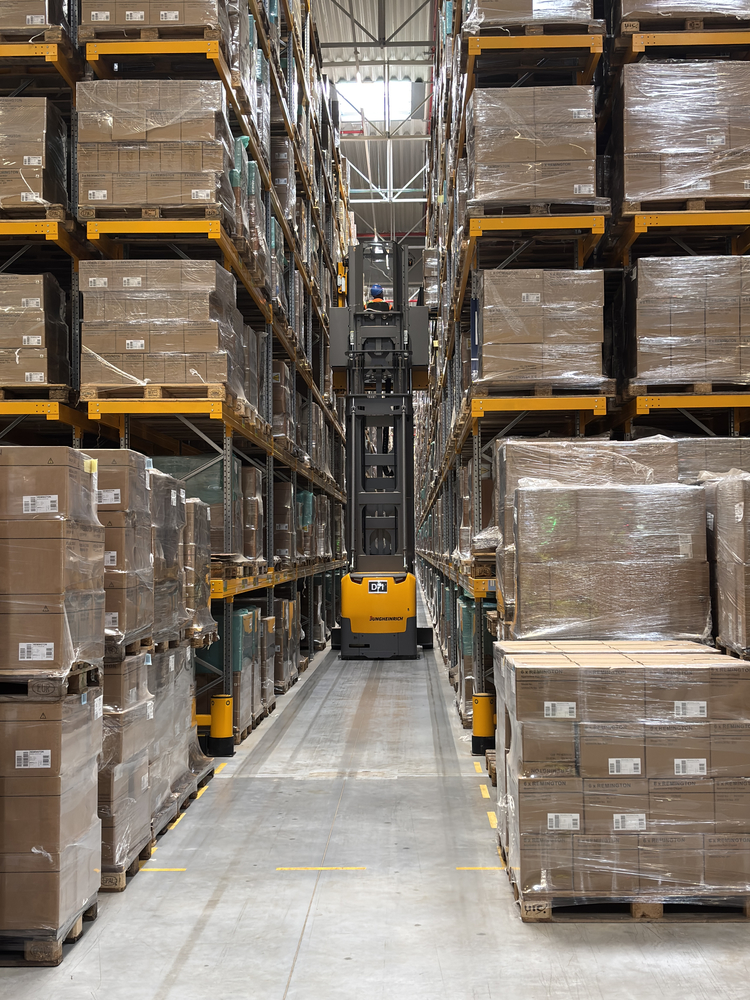
The most interesting solution used in the warehouse is the Double VNA trucks.
This solution functions in only a few warehouses in Poland and a dozen or so in Europe. It is an even more optimized way of using space – emphasized the DSV representative.
Receiving goods
The process of receiving goods currently consists of two main streams. The first was related to the relocation of the client’s products from the previous location. It was a relatively simple process – full pallets went directly to storage locations. Ultimately, the warehouse is transitioning to handling deliveries from containers and trailers, where goods are not always prepared in the form of full pallets.
The goods are arranged in a logical way and do not require additional sorting. From a cost perspective, it is most effective to use simple operational processes – said Wojciech Korona.
Three outbound streams
Shipping from the warehouse has been divided into three main areas. The largest share – about 70 percent – is full-pallet shipping. Goods are picked directly from VNA and Double VNA racks. The second area is mixed picking, which accounts for about 20 percent of operations. In this case, full pallets are first moved to a standard storage zone, from where smaller quantities of products are picked according to customer orders. The remaining 10 percent are parcel shipments.
Growing scale of shipments
Currently, the highest result we have managed to achieve is about 30 trucks handled in two shifts. For a young warehouse that has only been operating for a few months, this is a very good result – assessed Wojciech Korona.
In total, in a short period, it was possible to reach a level of over 50 trucks handled in two days.
Intelligent order management
A simple WMS system, which has been adapted to the client’s requirements, is responsible for handling the processes. It is at the same time very flexible and highly configurable – emphasized Korona.
Already during the first months of operation, it turned out that the client’s needs were growing faster than expected. Initially, two packing stations were planned. During the implementation, the number of orders doubled, and forecasts indicate further growth.
The new DSV distribution center in Krzyżowice shows the direction in which modern logistics is heading: greater flexibility, maximum space utilization, digital process management, and a quick response to customer needs.