











Researchers from the Łukasiewicz – Poznań Institute of Technology have developed a prototype of an intelligent parking bay and an application that allows for searching and reserving free parking spaces in city centers. What were the results of the pilot project conducted in Kalisz? Wiktor Żuchowski, project manager at Łukasiewicz – PIT, comments.
 Poznań researchers conducted a pilot project involving delivery vehicles in Kalisz. The tests lasted several months and concluded with surveys conducted among drivers as well as shop and restaurant owners. As many as 66 percent of respondents admitted that the application has the potential to shorten delivery times and enables the reduction of traffic congestion on the streets. Almost a quarter of the people pointed to a possible increase in road safety. Special sensors were installed in the designated parking bays to transmit data about their occupancy. In the application, drivers could check if a given space was free, and if so, reserve it for themselves.
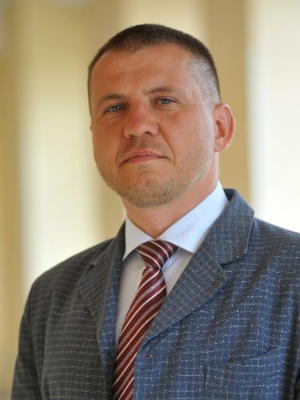
– The pilot project conducted in Kalisz also allowed us to collect the first data regarding the movement of delivery vehicles in this city – summarizes Wiktor Żuchowski, project manager. – We learned, for example, that in 40 percent of cases, the average unloading of goods takes up to 5 minutes and that a parking subscription would be more convenient for drivers than paying for parking each time, because it would save them time. We also know at what hours the bays are usually free, which creates the potential for making them available to passenger cars.
The application can also ultimately be used by municipal services, e.g., to check whether a given delivery vehicle is occupying the indicated bay in accordance with a reservation. It can also be expanded to include the possibility of paying for parking. With the appropriate infrastructure (sensors at every parking space), the application could operate in the entire parking zone and also include passenger cars. Then, even before starting the engine, one could reserve a free parking space, pay for it, and drive off without worrying about having to waste time and fuel looking for a free spot. For road managers, the application would provide complete data on the occupancy of parking spaces in various areas of cities.
The application was created as part of the SPROUT project – Sustainable Policy RespOnse to Urban mobility Transition, implemented in 15 countries. In Poland, the partners are the Łukasiewicz – Poznań Institute of Technology, the City of Kalisz, and the Kalisz Business Incubator.
As part of this project, it was studied how mobility is changing in European cities and how new technologies, social, demographic, or climate changes can influence it. In five cities – Budapest, Kalisz, Padua, Valencia, and Tel Aviv – new solutions were tested. In addition to the application, these included, for example, bicycle parking with access control or the placement of parcel pickup points.
An important element was workshops with representatives of various social and business groups of the city, who were asked to imagine how Kalisz will change by 2030 – in line with the idea that a good start to effectively building a strategy for change in the future is conversation and identifying the needs and expectations of residents.