











The global economy is picking up speed again. However, the sharp rise in demand must be reconciled not only with the ongoing pandemic but also with an increasing shortage of materials. This represents a historic challenge and a true test for global networks and supply chains. At the same time, it is already clear that the solution cannot be a complete departure from globalization.
Supply chains in the global economy are a bit like brushing your teeth in the morning – you don’t have to think about it, you perform the individual actions instinctively, according to a specific pattern. Wherever production takes place according to demand, preferably in a “just-in-time” model, and where there is a need to deliver products and semi-finished goods to customers, global logistics operators work based on advanced, fully digital supply chain management systems. In “normal” times, everything would go like clockwork: companies would work according to customer expectations and their own control mechanisms. As simple as a morning routine.
However, the pandemic has challenged many certainties. Global supply chains are being disrupted time and again. The container ship Ever Given ran aground in the Suez Canal, creating a bottleneck on one of the most important transport routes in the world. International ports in China and South America have had to limit their capacity due to coronavirus cases or strikes. Hurricanes in Sri Lanka and blocked ports in Australia have disrupted the functioning of global supply chains in the Asia-Pacific region. Not to mention the deferred demand for consumer goods in the US, which, combined with a multi-billion dollar stimulus package, has caused record import volumes and a shortage of trucks in distribution.
On top of all this came the crisis related to integrated circuits. The coronavirus is driving digitalization, and semiconductor manufacturers are struggling to keep up. This has huge repercussions: production in key industries, such as automotive or mechanical engineering, has been hampered. Manufacturers have to rely on the patience of their customers and, in some cases, stop production lines again.
Good economic conditions cause deficits
In 2021, the industry is struggling with problems such as bottlenecks and material shortages. The reasons for this are varied. For stakeholders, however, the most important thing is the awareness that these bottlenecks are not a sign of a crisis, but of a long-awaited economic recovery. According to economists from the Ifo Institute in Munich, there is nothing unusual about this. When the economy was recovering after the 2011 crisis, the material shortage was 19%. Currently, the deficit is at 64%. Economists consider this a clear sign that the effects of the pandemic will be felt for a long time to come.
– We are seeing the effects of economic catch-up, which directly translates into the utilization of Dachser’s network transport capacity. Our employees have put a lot of effort and dedication into maintaining its high reliability and efficiency throughout the pandemic, which is now paying off – we are considered a stabilizing factor in the market – says Burkhard Eling, CEO of Dachser.
– Another problem is purchase prices, which in many cases have risen sharply. Currently, manufacturers are still meeting demand from stocks, but these are also melting away quickly – says Klaus Wohlrabe of the Ifo Center for Macroeconomics and Surveys.
All this makes logistics companies a more valued partner and solution provider today than ever before. Carrying out deliveries and distribution in the current conditions is impossible without them. This requires a solid and sustainable network, such as the one Dachser has, which remains reliable and efficient even in the conditions of uncertainty caused by the pandemic.
Rising orders drive freight rates
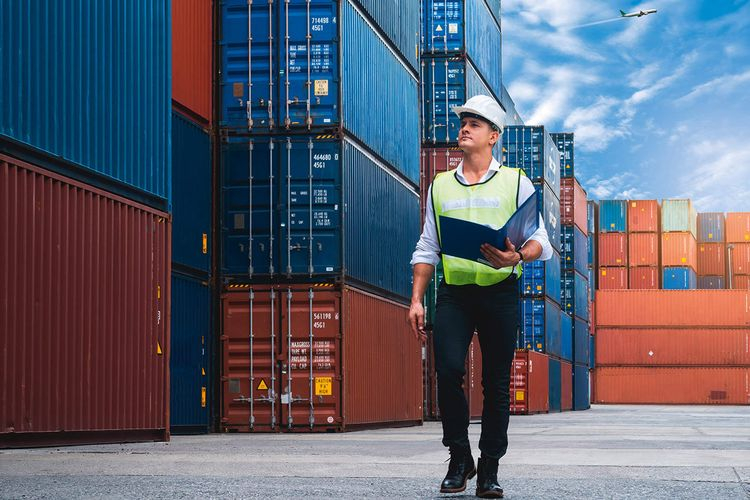
The symbol of global supply chains is the container. Sea freight is currently painfully affected by the limited capacity of European ports, and delays have become the norm. However, there is light at the end of the tunnel.
– We do not yet know how the pandemic-related problems at sea, in ports, or on land will develop and how long it will take to catch up – says Edoardo Podesta, COO Air & Sea Logistics at Dachser, adding that shipping lines expect full capacity utilization at least until the end of the year on almost all trade routes. – After the disruptions that have occurred over the last few months, we are seeing very high demand for consumer goods, which has been contributed to by the US economic aid package and the economic recovery also noticeable in Europe – says Podesta. – Added to this is strong demand for furniture, as well as construction and renovation materials. The automotive industry is also returning to normal operation after the difficulties it experienced over the last two years, which is manifested by the huge demand for the transport of car parts.
At the same time, high sea freight rates are increasing the attractiveness of air transport. While before the crisis air freight was about twelve times more expensive than sea freight, in May 2021 this rate was “only” six times higher. In the first half of the year alone, Dachser carried out over 100 charter flights, regularly serving 12 different departure airports and 15 different destination airports.
Given the shortages of container ship capacity and cargo space on passenger aircraft (used for “belly cargo”), Burkhard Eling does not expect a significant improvement in the situation in the second half of 2021. This means that freight rates will remain high, which will have to be reflected in the prices of goods, and consequently also in logistics services.
Price pressure in road transport
The effects of economic catch-up are reflected in the number of shipments handled by Dachser, and in particular the Road Logistics network.
– In the case of road transport, the demand for cargo space and drivers has increased sharply – says Alexander Tonn, Dachser COO Road Logistics. He adds that the company has responded to the bottlenecks by implementing various measures, optimizing transport planning processes, and creating a task force with its own highly trained professional drivers. However, the situation in road transport in Europe remains tense.
– Waiting times for goods at transit terminals have in some cases increased significantly, which is due to the increase in the share of B2C shipments. This reduces efficiency, lengthens the notification process, and increases costs – says Alexander Tonn. An additional concern is high wood prices, which affects the cost of purchasing pallets. Packaging material suppliers are no longer able to meet the growing demand.
According to Burkhard Eling, a solid and sustainable logistics network will play a key role in this situation. – All our customers are struggling with an accumulation of goods resulting from the pandemic. Either they are storing products, waiting for a more favorable moment, or they are trying to introduce them to the market through special discount promotions. This means that the quality factor will become even more important, helping logistics operators stand out from the competition – says Eling. Dachser, thanks to the flexible management of its own network, has helped its customers to further shorten time-to-market and develop new business models with the necessary, customized solutions.
Separating the market is not the solution
With the change in business models, the question often arises whether globalization should also be limited and markets cut off from external risk. Economists from the Ifo Institute have spoken out against the widespread relocation of production back to Germany and government intervention in supply chains.
– A widespread remodeling of supply chains would cause huge income losses – warns Prof. Lisandra Flach, Director of the Ifo Center for Macroeconomics and Surveys. Instead, sources of supply should become more diversified on an international scale. Free trade agreements could lower costs and reduce dependence on individual nations. This requires deepening the European single market and strengthening the World Trade Organization.
– We notice that many of our customers are paying attention to the future configuration of their supply chains. They emphasize their security and resilience and are exploring more flexible transport solutions. At the same time, they do not want to completely rebuild their supply chains, let alone turn away from globalization – says the CEO of Dachser. He adds that complete nationalization would also be “suboptimal and risky,” suggesting instead that an “intelligent combination of regional and global production structures” is a better way to prepare for future crises. Regional warehouses also allow for better protection against supply chain disruptions.
According to Burkhard Eling, this explains why logistics networks with a flexible structure will now be more in demand than ever before. It is about networks that, keeping the customer’s needs in mind, are able to combine different carriers in the best possible way. As he emphasizes, Dachser has shown during the pandemic that a logistics service provider, as well as the people who make the network function, are perfectly prepared for the supply chains of the future.
Source: Dachser