











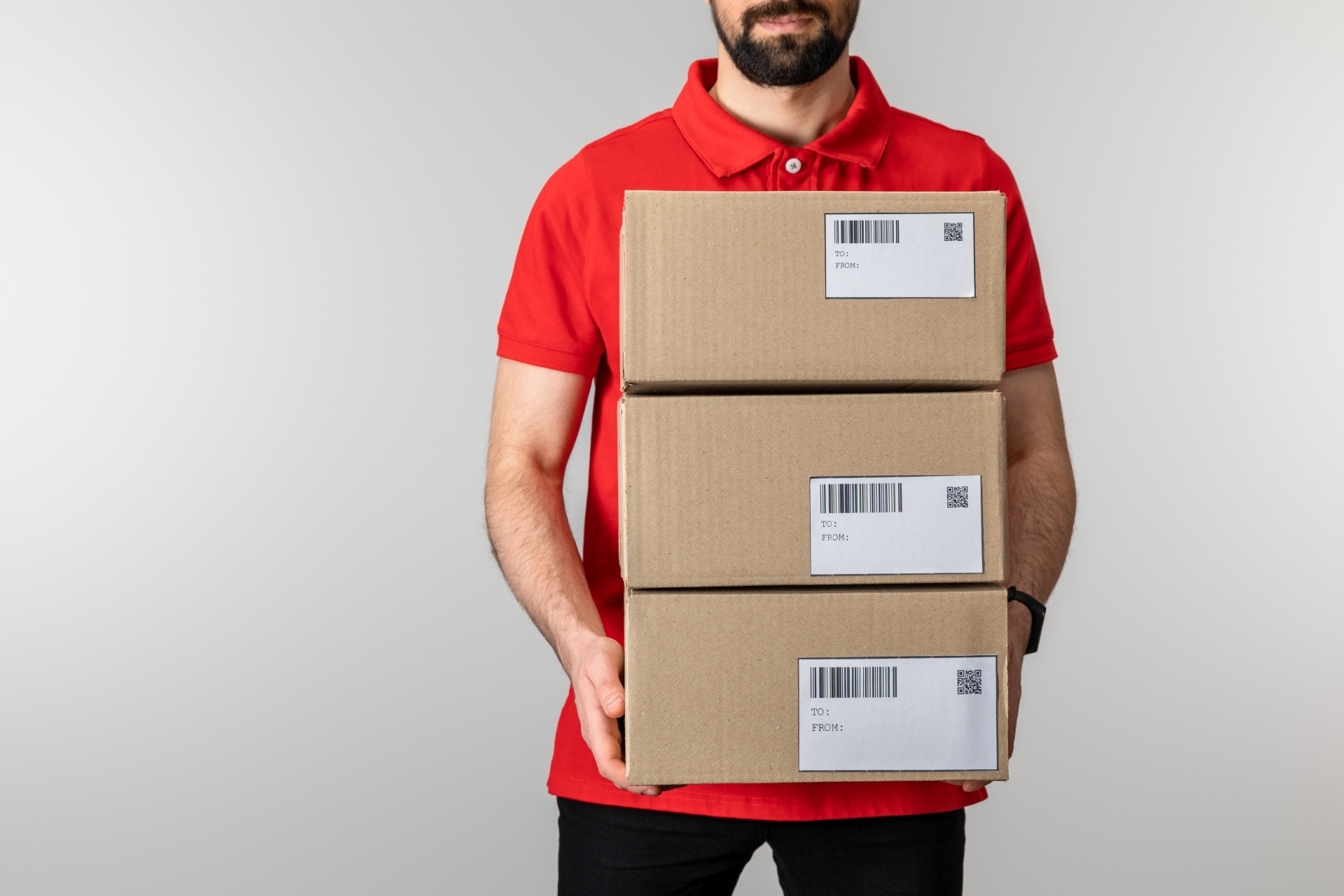
Do the headphones you ordered arrive in a box the size of a microwave? Oversized packaging is not just a consumer annoyance, but a real cost for companies and the environment. Every cubic centimeter means more transport, higher emissions, and fewer satisfied customers. The scale of the problem is serious. As RAJAPACK points out, transport accounts for about 1/4 of greenhouse gas emissions in the European Union [1]. Surely no one wants to pay for air – neither financially nor climatically?
Europe is drowning in waste
In 2021, every European generated an average of over 188 kg of packaging waste. This is more than ever before – and more than recycling systems can handle today. Moreover, as much as 1/3 of municipal solid waste consists of packaging. In recent years, the amount of packaging has grown faster than the EU economy and population [2].
However, the point is not to give up packaging entirely. It plays a key role in logistics and product protection. It secures goods during transport, protects against damage, moisture, and contamination, extends shelf life, and ensures safety in storage. Often, it is thanks to packaging that a product reaches the customer in pristine condition.
Therefore, the solution is not to eliminate it, but to design it wisely – in a way that protects without burdening the environment. Packaging should be matched to the size of the product, be recyclable, and not transport air.
Oversized packaging is not just an unnecessary cost and customer frustration. It is a real environmental burden. Greater volume means more transport, higher fuel consumption, and a larger carbon footprint. That is why we have been investing in optimization for years – our offer includes over 550 box formats, as well as eco-responsible fillers that allow for a real reduction in shipment volume and protect the product without compromise.
– says Jarosław Kamiński, Director of RAJAPACK.
Minimalism in packaging: aesthetics, ecology, and brand message
Minimalism in packaging is ceasing to be just an aesthetic choice – it is becoming a necessity. New EU regulations are intended to harmonize laws across all member states and force the market to transition to more sustainable packaging models. This applies, among other things, to recyclability, reuse, and the reduction of empty spaces in parcels.
It is not just about what we see with the naked eye. Empty air in a shipment means empty kilometers on the road and empty environmental promises. Packaging optimization is not just a matter of aesthetics or savings, but above all, responsibility for the environment. In an era of growing environmental awareness among consumers, companies that invest in intelligent and sustainable packaging solutions gain a competitive advantage and build a positive brand image.
– emphasizes Jarosław Kamiński, Director of RAJAPACK.
The European Union is tightening its course by introducing further regulations related to the packaging market. This is hardly surprising, as if appropriate measures are not taken by 2030, the amount of packaging waste could increase by another 19% [2]. New regulations will force, among other things, the elimination of non-recyclable materials, the obligation to use recyclable packaging, and a systemic approach to box design “from raw material to delivery.”
Companies that are already implementing responsible packaging strategies today will be clearly ahead on this course.
The RAJA Group, the European leader in e-commerce sales for business packaging, industrial equipment, personal protective and hygiene items, and office materials and furniture, offers the largest selection of products to meet every organizational need. The RAJA Group is a partner to 2 million companies in Europe, regardless of their size or sector of activity.
[1] https://www.europarl.europa.eu/topics/pl/article/20190313STO31218/emisje-co2-z-samochodow-fakty-i-liczby-infografiki
[2] https://www.consilium.europa.eu/pl/policies/packaging/
Source: RAJAPACK