








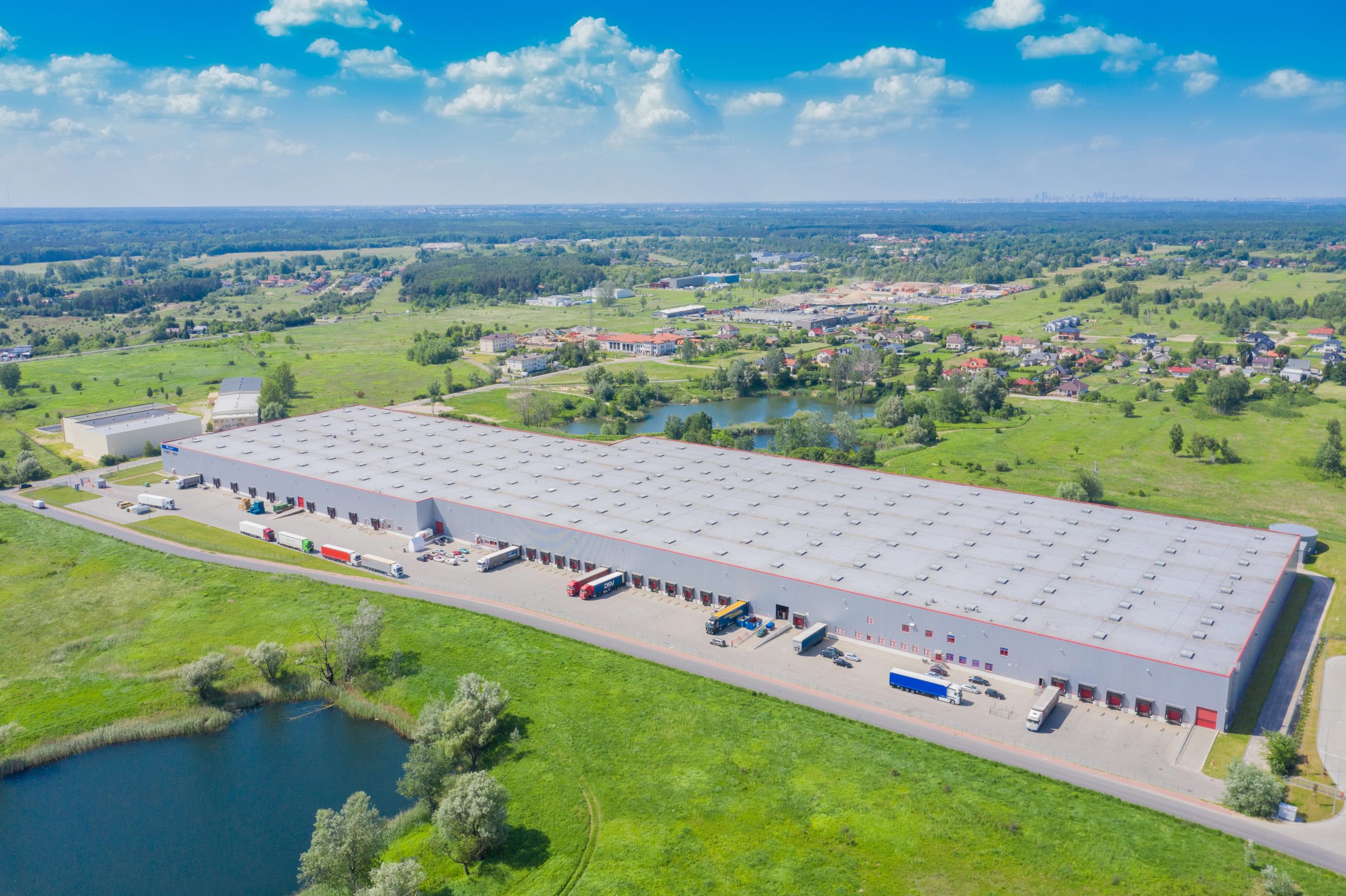
Poland currently has more warehouse space than the Czech Republic, Romania, and Hungary combined, while remaining one of the most affordable logistics markets in the region. Its extensive road, rail, and port infrastructure allows for serving a significant part of Europe within 24–48 hours. This combination of market scale, costs, transport accessibility, and operational expertise makes Poland increasingly the first choice for companies expanding their warehousing, production, and distribution operations in Europe.
Although the warehouse market in Central and Eastern Europe is developing dynamically, Poland remains a benchmark for tenants analyzing locations in the region – it stands out both in terms of market scale, with 37.4 million sqm of modern warehouse space, and the pace of development. For comparison, the Czech Republic, Romania, Hungary, Slovakia, and Bulgaria have a combined total of approximately 35.3 million sqm of warehouse space. Across the entire CEE region, where resources are estimated at approximately 80 million sqm, Poland accounts for nearly half of the modern warehouse space.
Combining scale with competitive costs
At the same time, we are one of the most cost-competitive warehouse markets, with average base rents at the level of 4.2–5.2 EUR/sqm per month. Rental levels are still significantly lower than in most CEE markets, especially compared to the Czech Republic, Hungary, or Slovakia. In terms of rental costs, only Romania can mainly compete with Poland.
– says Michał Rafałowicz, Regional Director at Newmark Polska.
As he emphasizes, the pace of market development is also significant. In the last three years, Poland has delivered the most new warehouse space in the region while maintaining competitive rental prices. Few markets today are able to combine such growth dynamics with cost control.
In the last three years, over 7.5 million sqm of new warehouse space has been completed in Poland, which is many times more than in many countries in the region—for example, in the Czech Republic it was almost 2.6 million sqm, and in Romania, just over 1.4 million sqm.
One of the sources of this advantage is the operational method of developers who secured vast land banks years ago at favorable prices. Thanks to this, they can focus on project execution today. This model was pioneered in Poland and is now being copied in other European markets as well.
– emphasizes Kaja Karbowska-Nowak, Associate in the Industrial and Warehouse Department at Newmark Polska.
We see new tenant needs
Tenant expectations are changing. The growing importance of supply security means that companies are increasingly looking for locations that allow them to build more predictable and resilient logistics chains.
For many enterprises, Poland is a natural gateway to the European market of approximately 450 million consumers. Our hubs are increasingly acting as centers serving Western and Northern Europe.
– says Rafałowicz.
Against this background, the importance of western Poland as a logistics base for Germany is growing.
Limited land availability and a more restrictive approach to new investments on the part of our western neighbors are causing rent increases and a partial shift of logistics activity to the east. The differences in rates are significant – the effective rent in the Lubuskie region is approximately 3 EUR/sqm, while in Berlin it usually exceeds 7 EUR/sqm.
– reports the director at Newmark Polska.
As he highlights, just over a decade ago, infrastructure differences limited Poland’s competitiveness against the West. Today, we combine modern transport infrastructure with a cost advantage.
We are accelerating deliveries across Europe
The central location between Western and Eastern Europe has remained one of the key advantages of the national logistics sector for years. This advantage is reinforced by infrastructure investments – the development of TEN-T corridors, the construction of new road routes such as Via Carpatia, and the expansion of rail infrastructure and intermodal terminals, including the terminal in Małaszewicze, one of the key transshipment points on the Asia-Europe route.
Polish seaports, which are systematically increasing their capacity, also play an important role in choosing warehouse locations. Examples include Danish companies that are increasingly locating hubs in Poland, serving markets using road transport through Germany.
– points out Kaja Karbowska-Nowak.
Leveraging the advantages resulting from the country’s location and developed logistics infrastructure is one of the reasons why NRF, a Dutch company operating in the spare parts and industrial cooling solutions sector, chose Poland.
A natural step in our group’s long-term strategy was the decision to further expand operations and lease new production and warehouse space in Gdańsk. As a company with nearly 100 years of history, we think about infrastructure in terms of decades, not individual projects. Thanks to the developed network of transport corridors from Gdańsk, we can serve many markets, combining production, warehouse, and office functions in one facility here.
– says Zbigniew Ruba, Commercial Director Aftermarket, NRF.
Economies of scale provide greater flexibility
Poland’s significance in the warehouse market also stems from the scale of available resources and the presence of the largest global developers. This translates into a wide range of solutions available for tenants – from BTS (build-to-suit) facilities and urban warehouses to large-scale logistics centers serving several markets simultaneously.
A developed warehouse market allows tenants to flexibly manage occupied space and scale operations as their business grows. Over time, companies often need more space while remaining tied to long-term lease agreements. In such situations, a large developer can propose relocation to another facility within their own property portfolio without waiting for the contract to expire. This is an advantage provided primarily by large, mature markets.
– explains Rafałowicz.
An additional asset is the investment incentive system operating within the Polish Investment Zone.
In many countries, special economic zones only operate in selected areas. In Poland, the investment support system covers the entire country, and investors use the same rules regardless of the project’s location. Only the level of available public aid varies, depending on the region’s development potential. This provides great predictability when planning investments.
– says Kaja Karbowska-Nowak.
Flexibility and competence support development
The ability to quickly launch operations and further develop is increasingly determining location choices. – Many developers have land ready for investment, with complete building permits. Thanks to this, it usually takes only 8–10 months from the start of construction to the handover of the warehouse to the tenant. In practice, this means that by supporting clients in the expansion process, we can quickly indicate available locations and tailor solutions to their operational needs. Such space availability and investment readiness are still lacking in many countries in the region.
– emphasizes Kaja Karbowska-Nowak.
For international companies, the competencies of teams developed in one of the largest logistics markets in Europe are also important. – Due to the market scale, we have a well-educated and experienced workforce. Poland has been handling logistics for a large part of the old continent for years, which is why we can offer high operational competencies today.
– says Director Rafałowicz.
He adds that Poland’s strength also lies in its strong educational background. Technical universities, universities, as well as trade and vocational schools have been training specialists to meet the needs of companies from various economic sectors for years.
In the case of NRF, access to qualified technical staff was one of the significant arguments in favor of further development of operations in the Tri-City region.
Engineering competencies are of particular importance for companies operating in the automotive sector, where automation, quality control, and advanced production processes play an increasingly important role. Access to qualified engineers and technical specialists allows us to develop modern operations, support innovation, and maintain high-quality standards, which are crucial for global manufacturers.
– emphasizes Zbigniew Ruba from NRF.
Maintaining an edge requires new investments
Experts from Newmark Polska emphasize that Poland’s current position is not guaranteed forever. Rising labor costs, energy prices, and competition from Romania and the Balkan countries mean that new factors will determine the country’s further attractiveness.
Access to energy is becoming increasingly important. Investors expect not only adequate connection capacities and modern transmission infrastructure, but also the ability to use renewable energy, solutions improving building energy efficiency, or energy storage. Without proper energy infrastructure, it is difficult to talk about further development. At the same time, Poland remains one of the main beneficiaries of the changes taking place in European supply chains and has all the advantages to maintain a strong position on the logistics map of Europe.
– emphasizes Michał Rafałowicz.
Source: Newmark Polska