








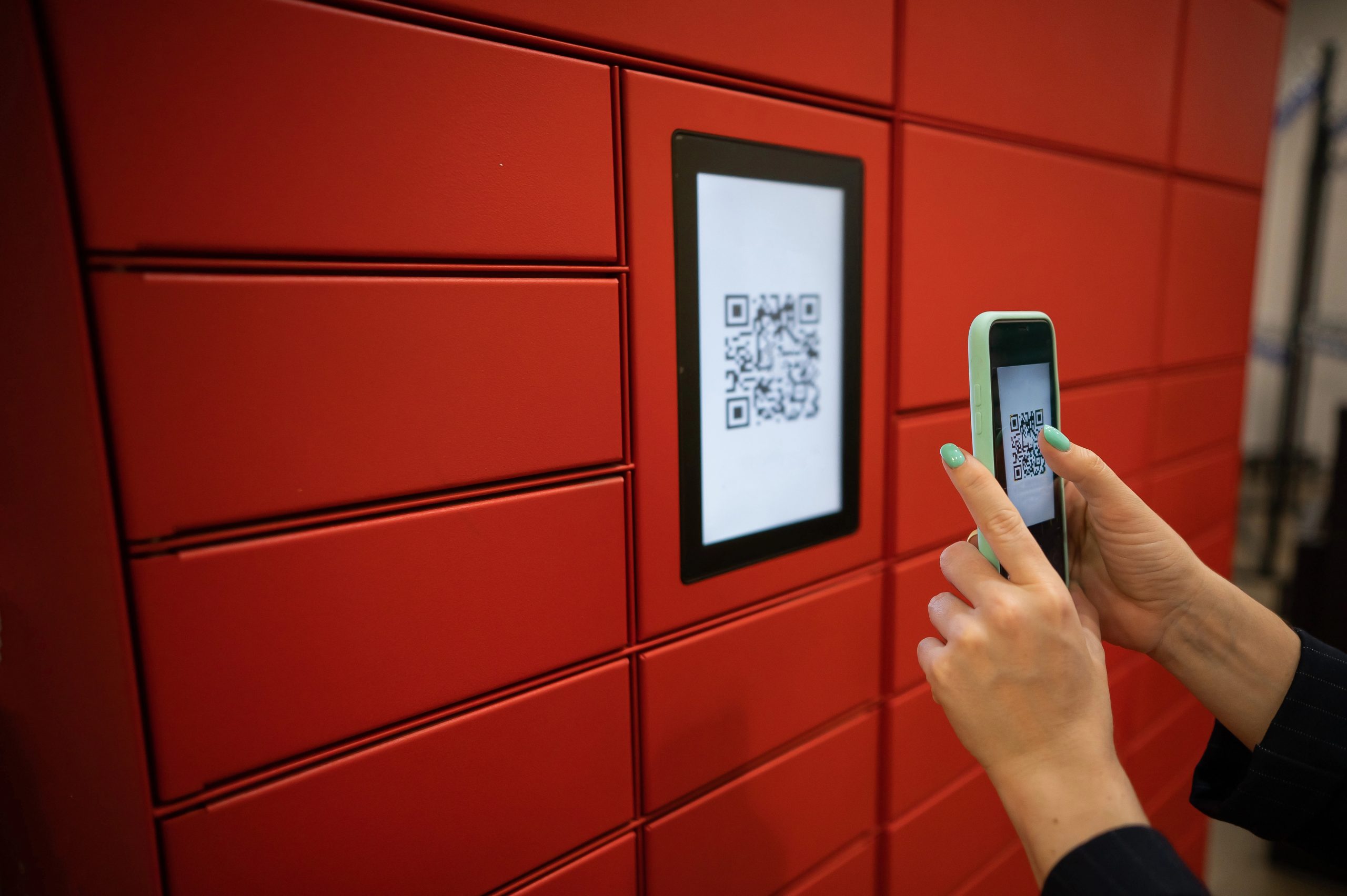
Parcel lockers are being gradually adapted to meet the needs of people with disabilities and older users. DPD Poland has implemented changes in over 70 percent of its machines, as well as in the DPD Mobile app. Recommendations on this matter were prepared by the Maritime University of Szczecin based on research that helped identify the greatest barriers for people with disabilities.
We started the project to make parcel lockers accessible to people with disabilities mainly because of what we heard from our recipients. Often, people using wheelchairs or those with visual impairments reported problems with collecting parcels from our machines. Additionally, we see what is happening in the world and in Poland – the society is aging, so this project is also intended for older people.
– says Rafał Nawłoka, CEO of DPD Poland, to the Newseria agency.
The courier company has already adapted over 70 percent of its parcel lockers to the needs of people with disabilities. The changes were based on the results of Poland’s first comprehensive study on the accessibility of parcel lockers, conducted in cooperation with the Faculty of Transport Engineering and Economics at the Maritime University of Szczecin and the West Pomeranian branch of the Polish Association of the Blind.
In the first part of our research, we carried out four stages, during which we performed an initial assessment of the usability of parcel machines for people with disabilities, then we conducted a series of experiments using a supplied parcel machine. As part of these experiments, people with various disabilities – in wheelchairs, with upper or lower limb impairment, visually impaired or blind – were asked to collect or send a parcel phantom. We conducted an analysis of the machine’s accessibility in terms of the height of individual lockers, signage, and the readability of the machine. We also analyzed the accessibility of the pin-pad device, which was installed in DPD Poland parcel machines at that time.
– explains Stanisław Iwan, PhD, prof. PM, Dean of the Faculty of Transport Engineering and Economics at the Maritime University of Szczecin.
The expert explains that machines placed on raised platforms or driveways, among other things, caused difficulties for people with limited mobility. In turn, visually impaired people pointed to a lack of adequate signage.
We also used a special old-age simulator, which allowed us to check how an older person might feel, who has limited mobility resulting from age, how they might interact with a parcel machine, at what height they are able to pick up a shipment, and what heights will be burdensome for them.
– says Stanisław Iwan, PhD.
In the next stage of research, an analysis of the use of the DPD Mobile application by blind and visually impaired people was conducted.
As part of this experiment, we obtained many very important conclusions regarding the usability of the application, and to what extent it works with applications that read content on mobile devices.
– explains the expert.
After receiving the results of the Maritime University’s research, our work went in two directions. The first was to adapt the place where the machine stands so that it would be accessible to people with disabilities, but also so that the panel where the parcel pickup code is entered would be placed at the appropriate height.
– explains the CEO of DPD Poland.
One of the improvements that the company introduced based on the recommendations received was lowering the pin-pad panels in all parcel lockers. Easy access zones were also designated. These are lockers located at a height of 80–130 cm, which is the most convenient for people using wheelchairs, older people, and those with limited mobility. The adapted parcel lockers stand on flat, paved surfaces, with a minimum of 1.5 m by 1.5 m of free space in front of the machine and without vertical obstacles, such as bollards or road signs. Adapted machines are marked in the application and on DPD websites.
Our plans include further relocating machines, adjusting locations, and making them more accessible. The second group of actions was intended to make our application friendlier for the visually impaired and older people.
– announces Rafał Nawłoka.
The company has implemented new features in the application, including full VoiceOver and TalkBack support, which make it easier for blind and visually impaired people to use the services. After implementing the changes, 87 percent of those surveyed in the study rated the accessibility of the DPD application as “very good” or “good,” and 80 percent considered the navigation intuitive and logical.
We received a lot of positive feedback, according to which parcel machines can be used by blind people if a well-built application is used. Many of its functions have been redesigned to be accessible to blind people.
– says the expert from the Maritime University of Szczecin.
We are planning further actions with the application, more focused on communication, mainly voice-based. We want it to be a tool for two-way communication with the recipient.
– emphasizes Rafał Nawłoka.
The development of machine accessibility is also linked to the growing number of people over 50 shopping online. According to the “E-commerce in Poland 2025” report, 35 percent of internet users in this group admit to shopping online. Data from Statistics Poland (GUS) from 2024 indicate that in our country, 3.9 million people have a valid disability certificate or a degree of disability certificate issued by a disability adjudication board, or an equivalent certificate.
In 2015, the largest group of e-commerce users were people aged 25–34, whereas in 2025, it was the 55+ group.
– reminds prof. Stanisław Iwan.
For us, this is a clear signal. The accessibility of parcel lockers is not just a matter of social responsibility, but primarily a response to the real needs of a growing group of customers. Our goal is to adapt as many points in our network as possible to the needs of older people and people with disabilities.
– points out the CEO of DPD Poland.
There are over 69,900 parcel lockers in Poland – according to data from Cashless.pl at the end of the first quarter of 2026. This is nearly 5 percent more than at the end of 2025 and 30.4 percent more than at the end of March 2025. The DPD Poland network counts over 12,500 parcel lockers.
Source: Newseria