








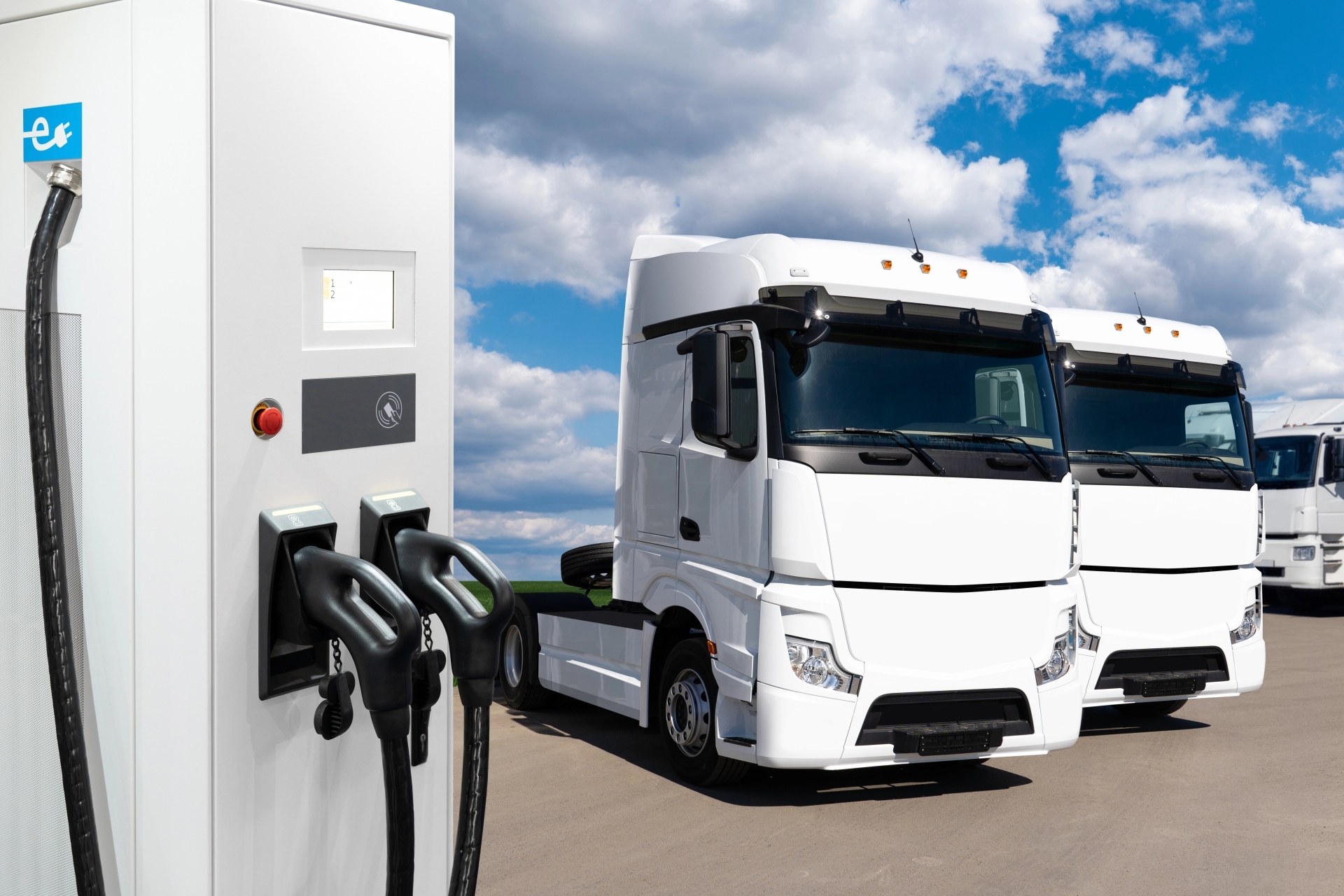
In 2025, the number of new truck registrations in the European Union fell by 6.2 percent year-on-year, reaching 307,460 units, according to data from the European Automobile Manufacturers’ Association (ACEA). Although this is a lower result than in the record-breaking 2023, Volvo Trucks representatives believe it was a successful year, and the outlook for 2026 seems even better. The manufacturer achieved a 19 percent share of the European market. It announces that it is ready to accelerate the pace of transport electrification. For now, heavy electric vehicles account for just over 4 percent of registrations.
ACEA data shows that declines in heavy-duty truck registrations persisted over the last year in major European markets. The largest, double-digit decline was recorded in Germany (down 12.2 percent), followed by France (down 9 percent) and Spain (down 3.6 percent). In the European Union market, demand for the heaviest vehicles decreased by 5.4 percent y/y, and for medium-sized vehicles by 9.9 percent. Despite this, Volvo Trucks representatives assess the previous year positively.
We are doing great in Europe and have a strong market position. In 2024, for the first time, we became the leader of the European market with a 17.9 percent market share. Last year, we strengthened this position and remain the leader, with a market share of 19 percent. Our position is growing in all European countries.
– emphasizes Roger Alm, President of Volvo Trucks, in an interview with the Newseria agency.
In 2025, Volvo Trucks increased its share of the European heavy-duty truck market (16 tonnes and over). The markets with the highest number of registrations for this brand were the United Kingdom, France, Poland, Germany, and Lithuania. Globally, Volvo Trucks was the market leader or the second-largest brand in 30 countries.
We had a fairly strong market, even if it was weaker compared to the record-breaking 2023. We feel that the market will remain at least at the same level, or perhaps there will even be a slight increase. Looking globally, the geopolitical situation we are in is quite complicated. I am referring to tariff decisions and many wars taking place around the world. This causes significant uncertainty among customers, who are investing cautiously in equipment. This has a very large impact on total global demand.
– assesses Robert Grozdanovski, Vice President for Central and Eastern Europe at Volvo Trucks.
In 2025, diesel-powered vehicles accounted for 93.2 percent of new truck registrations over 3.5 tonnes in the EU, while the share of electric vehicles grew to 4.2 percent of the market, according to ACEA data. Manufacturers are constantly developing their range of zero-emission vehicles, although the scale of their sales remains limited. The combined share of trucks with alternative powertrains, including electric, gas, and hydrogen, did not exceed 7 percent of the market.
Fossil-free transport is gaining popularity much more slowly than we expected. As a manufacturer, we are ready for it. We have eight different zero-emission models available. Unfortunately, the market is not responding well enough. I believe that all participants in the supply chain must take responsibility for this, starting with ourselves as customers – one needs the courage to invest and be ready to pay a little more for eco-friendly solutions.
– argues Robert Grozdanovski.
The largest markets for Volvo electric trucks are Germany, the Netherlands, Norway, Sweden, and the United States. The company states that they have already traveled over 250 million km since the introduction of the first models in 2019. In total, it has sold over 5,700 electric vehicles, which have reached users in 50 countries. The group’s calculations show that this has reduced carbon dioxide emissions from the exhaust pipe by 213,000 tonnes.
Volvo Trucks aims to reach net-zero emissions by 2040, implementing a three-path technology strategy. These are: battery electric powertrains, fuel cell electric, and internal combustion engines fueled by renewable fuels, such as green hydrogen, biogas, biodiesel, or HVO (hydrotreated vegetable oil).
We are working on a long-term vision. We are entering a new strategic cycle and intend to expand our business. We want to grow, create new products, develop the organization, and strengthen the distribution network. We will continue to invest significant funds in product development, especially now that we are all participating in the transition towards zero-emission vehicles.
– emphasizes Roger Alm.
In 2026, Volvo plans to introduce a heavy-duty electric truck to the market with a range of up to 600 km on a single charge.
One of the manufacturer’s key sales models remains the Volvo FH Aero. In 2025, nearly 33,000 units of this vehicle were ordered in Europe, including its electric version.
We are constantly developing our products by investing heavily in research and development, both in terms of internal combustion engines and electromobility and other renewable fuels. So, we look to the future with optimism, counting on further strengthening and developing our business. Today, we have a good and strong position on which we can build in the future.
– assesses the President of Volvo Trucks.
Poland is one of the largest truck markets in Europe. Data from the Polish Automotive Industry Association shows that in 2025, 29,979 new trucks were registered in the country, which means a 6.7 percent y/y increase. The segment of vehicles over 16 tonnes reached 26,815 registrations, noting an increase of approx. 9 percent.
We are the market leader in Poland, with a 22 percent share. We have delivered over 5,000 trucks to Poland, which is a very important market for us, with a significant impact on our European market share, our business, and our profitability. We have been in Poland for over 30 years. We have built a solid distribution network here, thanks to which we are close to our customers. We also have many good partners in the Polish market. We are therefore building long-term relationships, earning trust, and ensuring that our products provide what customers expect, namely, efficient trucks that allow them to earn money.
– explains Roger Alm.
Our latest Volvo FH Aero model was very well received by the Polish market, but our position is primarily determined by relationships, quality of service, and long-term partnership.
– adds Małgorzata Kulis, Managing Director of Volvo Trucks Poland.
An opportunity to discuss the future and development of the Polish market was the meeting of the company’s management with representatives of the authorized Volvo Truck Center service in Skawina near Kraków.
The presence of the global and regional management in Poland confirms that we are a strategic market on a European scale. Parallel to sales growth, we are investing in the development of the service network – the new location in Wieszowa and the one planned for 2027 in Gorzów Wielkopolski are part of building a lasting advantage. We want to be close to our customers – not only as a supplier of trucks but also as a partner in transport transformation.
– says Małgorzata Kulis.
Among the factors that may affect the future dynamics of the transport market in the region, company representatives point to the prospect of rebuilding Ukraine after the end of the war. According to the latest joint assessment by the World Bank, the European Commission, the UN, and the Ukrainian government, the costs of rebuilding the war-torn country are estimated at approximately 524 billion dollars.
I think there will be a huge wave of investments in Ukraine, both in construction and logistics. This will be a great opportunity for countries neighboring Ukraine, and thus also for transport companies from these countries, especially for Poland, which has very close relations with Ukraine.
– says Robert Grozdanovski.
Source: Newseria