








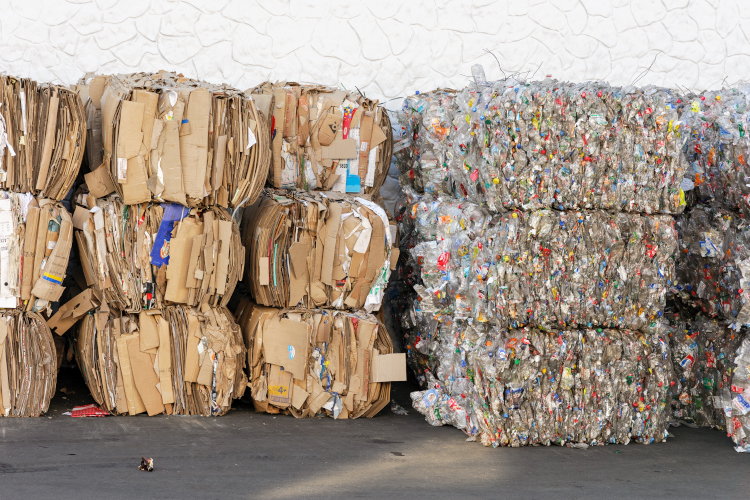
MEPs from the Committee on the Environment, Public Health and Food Safety (ENVI) have approved the draft of new packaging regulations – the Packaging and Packaging Waste Regulation (PPWR), which aims to reduce the problem of the growing amount of packaging waste in the EU. The tools to achieve this include developing a circular economy through the recycling of raw materials, as well as setting new targets for reducing plastic packaging and increasing the recycled content in packaging. One of the issues raised is the corrugated cardboard sector’s contribution to the circular economy, as the recycling rate for these materials in Europe already exceeds 90%.
– The packaging directive is a topic that is currently stirring up a lot of emotion in the EU and beyond, because it will influence how we define and treat packaging across Europe. A change in thinking is key here – we should understand that everything we no longer need and what we throw away is still a valuable raw material. We are talking about glass, paper, and plastic packaging. All these materials can be successfully reused and reintroduced into the cycle instead of being wasted – says Ladeja Godina Košir, founder and executive director of Circular Change and co-chair of the European Circular Economy Stakeholder Platform (ECESP), to the Newseria Biznes agency.
A circular economy is the opposite of the current linear economy, based on the “make, use, dispose” model. It assumes, among other things, that used products are recycled and returned to circulation, which saves raw materials and reduces waste. Moving to a circular economy is also – as the European Commission points out – a prerequisite for achieving climate neutrality by 2050. Therefore, the EU has adopted a series of regulations in recent years that are intended to bring member states closer to implementing a circular model. Importantly, this is expected to bring not only huge environmental benefits but also financial ones – the EC estimates that applying circular economy principles across the entire EU economy could contribute to increasing the EU’s GDP by 0.5% by 2030 and creating about 700,000 new jobs.
The latest “The Circularity Gap Report 2023”, developed by the Circle Economy Foundation and the consulting firm Deloitte, shows, however, that the global economy as a whole still has a long way to go to close the loop, and the situation is actually worsening.
– A few years ago, 9.1% of the global economy was circular. At this moment, it is only 7.2%, so we are heading in the wrong direction – says Reinier Schlatmann, Managing Director of DS Smith in the Eastern Europe region.
This means that as much as 92.8% of the materials and raw materials used globally are single-use and do not return to the secondary cycle.
According to the EC, the average European generates 188.7 kg of packaging waste annually, and statistics show that between 2009 and 2019, the amount of packaging waste generated in the EU grew by more than 1/5, with the largest increase (26.4%) in plastic packaging waste. It is estimated that by 2030, this amount will continue to rise, and by the end of this decade, the average EU resident will be generating 209 kg of packaging waste annually.
– Packaging and packaging waste are a serious problem – says Emmanuelle Maire, representative of the European Commission’s Directorate-General for Environment. – EU citizens waste large amounts of packaging, including plastic food packaging, paper and cardboard packaging, and the amount of waste is constantly growing. That is why the European Commission has submitted a proposal to the European Parliament and the Council to reduce the amount of waste, because if we do not take any action now, the amount of waste will increase by 19% by 2030.
The PPWR, or Packaging and Packaging Waste Regulation, is intended to help reduce the amount of packaging waste and bring member states even closer to implementing a circular economy, as well as encourage producers to take greater responsibility for the packaging they put on the market and look for new, more environmentally friendly solutions.
– In this way, we can reduce CO2 emissions, counteract climate change, and make the packaging industry operate more dynamically by being able to use existing materials instead of constantly consuming new resources – emphasizes Emmanuelle Maire.
– The PPWR is about, among other things, reducing waste, using more recycled raw materials, and increasing the recycling rate, and these are key issues for building a circular economy. – says Reinier Schlatmann, DS Smith.
The new regulation will set specific waste reduction targets for plastic packaging (10% by 2030, 15% by 2035, and 20% by 2040). Meanwhile, EU countries will have to ensure that by 2029, 90% of materials contained in packaging (plastics, wood, ferrous metals, aluminum, glass, paper, and cardboard) are collected separately.
Among the most important assumptions of the proposed directive is also a ban on the sale of very lightweight plastic shopping bags (under 15 microns), unless they are required for hygienic reasons. Consumers will instead have the option of bringing their own food and takeaway beverage containers. Another point is the ban on the use of so-called “forever chemicals” (per- and polyfluoroalkyl substances, PFAS) and bisphenol A in food-contact packaging, and wider use of reusable packaging in e-commerce. At the same time, the EC wants to define the term “reusable packaging” in detail (e.g., minimum number of reuse cycles) and introduce requirements for mandatory levels of recycled content (recyclate) in packaging products.
On October 24 this year, MEPs from the Committee on the Environment approved the new rules with 56 votes in favor, 23 against, and 5 abstentions. The next step is a vote in the European Parliament, scheduled for November this year.
– Currently, the European Parliament is working at a fast pace on issuing an opinion and will propose changes to the drafted regulations, and the 27 member states are also working intensively on their implementation. The goal is to reach an agreement between EU policymakers early next year, before the European Parliament elections – says Emmanuelle Maire.
As the Managing Director of DS Smith in Eastern Europe points out, the planned regulations will have a broad impact on the packaging industry and, paradoxically, could contribute to flooding the market with millions of tons of plastic, which is linked to the desire declared by some member states to increase the share of plastic reusable packaging at the expense of paper and cardboard.
– When it comes to paper and cardboard, their recycling rate is 82%, while for plastics this rate is only 32% in Europe and only 9% globally – says Reinier Schlatmann, DS Smith. – We fully support the direction of the proposed changes regarding the PPWR, because they address the complex problems we all face. However, recycling and material reuse are complementary to a circular economy for packaging, so we cannot view reuse as the primary solution that should be implemented universally.
FEFCO, the European Corrugated Packaging Association, also points to this problem. According to an analysis commissioned by them, applying the mandatory reuse requirement for packaging could contribute to the market being dominated by plastics.
– One only needs to go to a store today to see that many changes have already taken place. Many packages that were once plastic have been replaced by cardboard packaging, which can be easily recycled – says Reinier Schlatmann from DS Smith. – One example of such packaging is for fruit and vegetables, where strawberries, blueberries, or other products are packed in cardboard instead of plastic. Cardboard is also successfully used in the transport and industrial sectors.
To continue the trend of replacing plastic with more environmentally friendly raw materials like paper or cardboard, the packaging industry is calling for opposition to any attempts to remove exemptions from the obligation to reuse corrugated cardboard in the area of transport packaging. Removing these exemptions will have a negative impact on a sector that already places huge emphasis on recycling and eco-design in line with circular economy principles.
– Reuse and recycling are complementary to a circular economy for packaging, and we are pleased that the European Parliament’s Committee on the Environment agreed with this in its position of October 24, 2023, agreeing with the European Commission’s proposal to exclude corrugated cardboard packaging from most categories subject to mandatory reuse targets, and in particular to exclude transport packaging from it – says Reinier Schlatmann, DS Smith.