









 It is not without reason that transport and forwarding are considered one of the most important sectors of the economy. They are an essential element in the functioning of many other industries – they carry out regular deliveries of goods, and supply shops and plants. At the same time, the transport of goods carries the risk of damage. This is especially true when it comes to cross-border transport. Which legal regulations govern transport services? What regime has been provided by the legislator? Here is the most important information regarding carrier liability.
What legal acts regulate carrier liability?
All rules related to the carrier’s liability for transported goods can be found in two legal acts:
1. The Transport Law Act of 15 November 1984;
2. The Convention on the Contract for the International Carriage of Goods by Road of 19 May 1956 (referred to as the CMR Convention).
We use national regulations when the place of taking over the goods and the place designated for delivery are located within the territory of Poland. The act simultaneously applies to the transport of both persons and goods performed for a fee by an authorized carrier (it excludes maritime, horse-drawn, and air transport).
On the other hand, the international CMR Convention is related to cross-border transport. According to Article 1, paragraph 1 of the CMR Convention, its provisions apply to: (…) every contract for the carriage of goods by road in vehicles for reward, notwithstanding the place of residence and the nationality of the parties, when the place of taking over the goods and the place designated for delivery, as specified in the contract, are situated in two different countries. (…) CMR is therefore used, for example, in relation to transport on the Poland-Germany and Poland-Belgium routes. It is important that at least one of the parties to the transport contract adopts the convention.
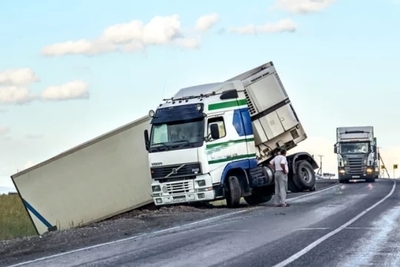 Damage and the scope of liability – how to understand them?
In the case of damage regarding the transport of goods, it refers to a quantitative or qualitative loss that reduces the value of the goods or prevents their use. These will be situations such as loss of goods, loss of the goods themselves, or damage to them. Furthermore, national and international law supplement the concept of damage with transport delay. According to Article 65, paragraph 1 of the Transport Law, damage must occur during the time between the acceptance of the consignment for transport and its delivery. Furthermore, delay in the delivery of goods is also treated as damage. In turn, the CMR Convention in Article 17 imposes liability on the carrier for total or partial loss of goods or their damage occurring between the time of taking over the goods and the time of delivery, as well as for delay in delivery. It can therefore be seen that the grounds for liability in each of the discussed legal acts are similar. In summary, for carrier liability to exist, three conditions must be met concurrently:
1. occurrence of an event that justifies the emergence of liability, e.g., delay in the delivery of goods,
2. damage, such as partial spoilage of transported food,
3. a causal link between the event and the damage.
Limitation of liability according to national law
Reading the paragraph above, one might conclude that this liability is quite strict. However, each of the discussed legal acts contains premises, the fulfillment of which means that carrier liability does not arise. According to the Transport Law Act (Article 65, paragraph 2), the carrier is not liable if the damage resulted from:
– causes occurring on the part of the sender or recipient that are not caused by the carrier’s fault,
– the characteristics of the goods themselves,
– force majeure.
In each of these situations, the burden of proof lies with the carrier – they must prove the contrary. Regardless of this, liability for shortage, loss, or damage (not for delay) does not arise if the carrier proves that the damage to a given extent is the result of one of the following causes:
– consignment under a name inconsistent with reality, inaccurate or insufficient for goods excluded from transport or accepted for transport under special conditions, or failure by the sender to maintain these conditions (e.g., in the transport of medicines or biotechnological materials),
– lack, insufficiency, or defects in the packaging of goods exposed to damage under these conditions due to their natural characteristics (e.g., improper packaging of glass goods),
– special susceptibility of the goods to damage due to defects or natural characteristics (e.g., transport of perishable fruit),
– loading, arranging, or unloading of goods by the sender or recipient,
– transport of consignments that, according to the contract or regulations, should be guarded, if the damage results from causes that the guard was supposed to prevent (e.g., radioactive materials, weapons, ammunition).
When one of these conditions is demonstrated, a statutory presumption of its truth arises. Then the other party to the dispute must present contrary evidence. According to Article 70 of the Transport Law, the carrier is not liable for damage resulting from non-performance or improper performance of a command to change the transport contract. An exception to this rule is the situation in which these commands came from authorized persons, i.e., the sender or recipient of the goods. Then the compensation is calculated in accordance with the principle of Article 80 of the Transport Law.
The issue of quantitative shortages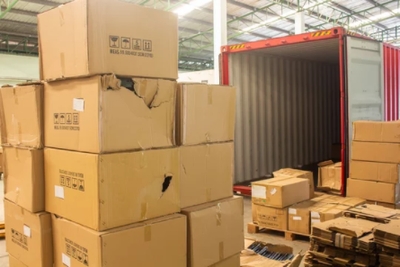
The next issue concerns quantitative shortages. It is worth knowing that the Transport Law exempts carriers from liability for a shortage of a consignment, i.e., a change in quantity or mass – provided that the carrier:
– did not check these parameters because it was not their duty,
– delivered the goods in an undamaged state – unless the authorized person proves that the damage occurred between the acceptance of the consignment for transport and its delivery. However, in that case, it is necessary to rebut the statutory presumption provided for in Article 6, paragraph 2 of the Transport Law.
Some materials spontaneously (naturally) lose mass due to their physicochemical properties, e.g., some elements such as sulfur, metal ores, cement, or solid fuels. In that case, the carrier’s liability is limited to the portion of the shortage exceeding the accepted norms. An exception in this situation is damage resulting from causes that do not justify referring to these regulations, e.g., theft occurs. At the same time, the Transport Law includes the possibility of issuing a regulation indicating such norms. The current ordinance of the Minister of Transport, Shipping and Communications of 16 January 1989 regarding national norms for natural shortages of certain articles transported by road transport (and its equivalent regarding rail transport) has been repealed – therefore, there are currently no executive regulations in this regard. Furthermore, if the damage is only partially caused by the carrier’s fault, their liability is limited only to that scope.
What about claims against the carrier?
The provisions of the Transport Law also contain extensive protection for carriers regarding the submission of claims. Article 76 of the Act indicates that the acceptance of the consignment by the authorized person results in the expiration of claims for shortage or damage to the consignment, except in situations where:
– the damage was confirmed by report before the consignment was accepted by the authorized person, or this was neglected due to the carrier’s fault,
– the shortage or damage resulted from intentional fault or gross negligence on the part of the carrier,
– damage not visible from the outside was found by the authorized person after accepting the consignment and, within 7 days, they requested a determination of its condition and proved that the damage occurred between the acceptance of the consignment for transport and its delivery.
Carriers are also secured thanks to a short limitation period for claims. It is one year or two months in the case of delay in delivery.
Monetary limitations on carrier liability
In addition to the subject-matter limitation of carrier liability, the national act also introduces limits regarding the maximum amount of requested compensation. According to Article 80 of the Transport Law, when a shortage or loss occurs, compensation may amount to the equivalent of:
– the price indicated on the supplier’s or seller’s invoice,
– the price resulting from the price list in force on the date the consignment was sent,
– items of the same type and grade at the place and time of their dispatch.
In the case of a consignment with a declared value, compensation includes exactly this value or a portion thereof in the event of a shortage – unless the carrier demonstrates that the value of the goods was lower than declared. If a shortage occurs in the goods, the compensation amounts to the percentage share of the shortage in the value of the complete item. Apart from compensation, the carrier is also obliged to refund the freight charges, as well as other costs resulting from the transport of the consignment (in whole or in part, depending on the damage). When damage other than to the goods occurs as a result of delay, the carrier returns the costs in double the amount.
When do statutory limitations on the amount of compensation not apply? When the damage results from intentional fault or gross negligence on the part of the carrier. The CMR Convention and liability for the transport of goods
In the case of the international CMR Convention, the carrier is obliged to check:
– the data in the consignment note regarding the quantity, features, and numbers of the goods,
– the apparent condition of the goods and packaging,
– the quantity of goods in the vehicle (upon the sender’s request and subject to reimbursement of expenses incurred for this purpose).
This does not mean a detailed, thorough inspection, but only an initial verification. The carrier only needs to ensure that the goods or packaging do not have traces of damage and are properly packed for the time of transport. There is no uniform line of case law regarding the degree of the carrier’s precaution. However, it is pointed out that the diligence expected of a professional should be maintained. This is of particular importance in the case of sensitive goods. Therefore, if the carrier specializes in the transport of a specific material, the degree of diligence they show should be greater. In that case, it could be, for example, checking the tightness and stability of cylinders with concentrated acids, the pH of a chemical solution using an acidimeter, or the temperature of ice or dry ice when transporting biochemical reagents.
If the carrier does not have such an opportunity, they must note the applied reservations on the consignment note. This is important in that, in the absence of a contract, the consignment note is evidence of its conclusion, as well as the terms and the acceptance of the goods by the carrier. When there is no reservation, according to Article 9 of the CMR Convention, it is presumed that the goods and packaging were in good condition and the number of pieces of goods, their numbers, and features were in accordance with those stated in the consignment note.
International law and limitation of carrier liability
In the case of the CMR Convention, according to Article 17, paragraph 2, the carrier will be released from liability if the loss, delay, or damage resulted from:
– the fault of the authorized person.
– an order given by the authorized person,
– an inherent defect of the goods,
– an act of force majeure.
According to Article 19 of the CMR Convention, a delay in the transport of goods occurs when they are not delivered at the agreed time, or in the case of an agreed deadline – the transport time exceeded the time in which a diligent carrier would have done so. Furthermore, according to Article 17, paragraph 4 of the CMR Convention, the carrier’s liability will also not arise when the loss or damage to the goods occurs as a result of:
– the use of open vehicles without tarpaulins, if such an obligation was noted in the consignment note,
– lack or defective packaging of goods, which are therefore exposed to loss or damage,
– handling, loading, arranging, or unloading of goods by the sender or recipient or persons acting on their behalf,
– the effect of the natural characteristics of the goods, which may lead to spontaneous loss or damage to the goods (e.g., rust, leakage, drying out, spoilage),
– insufficiently or incorrectly marked consignments,
– the transport of live animals.
If the carrier is only liable for some causes of damage, they are liable for them only to that extent. However, they cannot rely on defects in the vehicle they are using for transport, nor on the fault of the person from whom they rented the vehicle or that person’s employees. Demonstrating the occurrence of a cause excluding liability is on the part of the carrier. However, when they actually determine a given reason, a presumption of consistency with this claim will arise. On the other hand, the authorized person may carry out contrary evidence. When damage occurs to livestock or goods that require special conditions of transport, the carrier should demonstrate that they took measures appropriate to the circumstances or complied with the given instructions.
Possibility of pursuing claims under the CMR Convention
Effective pursuit of claims under the CMR Convention requires the recipient of the goods to act with due diligence. They must check the condition of the goods, report any irregularities to the carrier (not the sender), and also secure evidence of the occurrence of damage, its extent, and the circumstances of its origin.
The report can be made within seven days from the delivery date in the case of damage or loss. In the case of delay, the recipient has 21 days from the delivery date to do so. Otherwise, it is assumed that the recipient received the goods in accordance with the contract.
When does the seven-day deadline not apply? When the goods were checked by the recipient and the carrier – unless the defect is of a hidden nature and could not have been detected earlier.
What is the amount of compensation under international law? Its amount is calculated taking into account the value of the goods at the place and time of their acceptance for transport (Article 23, paragraph 1 of the CMR Convention). The value of the goods can be calculated according to the current market price, stock exchange prices, or the usual value of goods of the same type and quality. In accordance with the rules, compensation should not exceed 8.33 units of account for each kilogram of missing gross weight. An exception is the situation in which the value of the goods or a special interest in their delivery was declared. A unit of account is a special drawing right converted each time into the national currency in the event of a court dispute.
– Apart from compensation, freight, customs duties, and other fees incurred in connection with the transport service of the goods are also subject to reimbursement.
– In the case of a reduction in the value of the consignment, the compensation should correspond to the decrease in value – if it is so large that the goods are no longer suitable for use, compensation is paid as for the loss of the consignment.
How to protect the carrier’s interests? Tips
The foundation is a properly constructed transport contract. The contract should include regulations related to such issues as:
– permissible amount of natural shortages,
– the entity responsible for loading and unloading goods,
– securing the consignment,
– supervision over special-purpose goods,
– accurate determination of the initial weight and quantity of the transported goods.
All used information must be included in the consignment note. Disputes concerning transport law are usually considered individually. Although there are not many regulations governing these issues, they are quite complex, and national law regulations often replace structures used in the international arena. Regardless of the situation, the best solution is usually to seek the help of a law firm. It is worth choosing specialists who will draft and provide an opinion on the contract, as well as represent the transport company, sender, or recipient in court.