In the latest issue of Logistyka magazine, we discussed the topic of innovative solutions in the packaging industry. We also asked renowned experts to express their opinions on this issue.
 Mariusz Jedliński, Prof. AMS, Ph.D., Maritime University of Szczecin, Polish Logistics Association
I start from the assumption that one should “package only what is necessary, and only in the way it must be, for a price that everyone accepts.” This stems from my deep conviction that the idea of Sustainable Development is the guiding economic and social obligation for the modern world, so that we can constantly develop economically for the prosperity of the entire society, which, however, requires deep shared environmental empathy for the needs of future generations. Therefore, this perspective must concern both manufacturers and the users of packaging themselves, as well as all other stakeholders. However, in addition to a series of educational activities, there are more and more so-called speed bumps, if only in the form of the Single Use Plastic directive, which comes into force from July 2021, focusing on the ban on the use of what is harmful, in favor of promoting what is currently acceptable (10 alternatives). And, of course, at this moment, this does not only apply to, for example, consumers in the HoReCa industry (cups, straws, loose caps, etc.), but also to the logistics industry, due to, for example, the requirement to increase the level of recycling of plastic containers to a level of at least 25% as early as 2023. And this already raises a key question: how to reconcile this pro-environmental perspective, often forced by top-down regulations, for example of plastic processors, which causes an increase in packaging costs for them by up to 100 percent (the Plastic Tax effect) with the economic interest (the price of the purchased packaged good) of the end customers themselves? After all, we expect them to actively support such actions by paying any (higher) price, in the name of the common good. Of course, harmful plastic oceanic islands appeal to the imagination, but one must also remember the huge costs of adapting production lines, the need to adopt systemic solutions in the field of packaging management systems (e.g., deposit collection system), or changing consumer habits (the pandemic unfortunately forced increased use of plastic packaging, e.g., in takeout sales). Therefore, the thus postulated biodegradability of packaging must finally be understood as a specific production-consumption economic susceptibility. The principle “produce from what is necessary, use as many times as you can, manage everything again” – this is my expectation for the packaging of the future.
 Natalia Czaja-Jagielska, Ph.D. Eng., College of Logistics
The packaging industry is experiencing constant development. Packaging has been an inseparable companion of food and industrial products for hundreds of years, and there is no indication of changes in this field. However, major changes are taking place in the perception of the functions of packaging. Passive product protection is transforming into active – in active packaging that is able to control the presence of harmful compounds or microorganisms. Active packaging is often accompanied by intelligent labels whose task is to inform the consumer about the quality of the packaged product. Such functional packaging is part of monitoring systems for products requiring special conditions (e.g., frozen food) throughout the supply chain. However, systems are being sought that will not require complicated assembly, expensive implementation, or additional employee involvement.
The consumer increasingly decides on environmentally friendly packaging in their choices. The aspect of ecology is becoming an important factor determining the production of new packaging. The future is eco-design, i.e., designing the entire product life cycle. In this trend, it will be important, among other things, to reduce the weight of packaging, use materials suitable for mechanical or organic recycling, and use materials from recyclables. A lot of innovative and developmental changes are being noted in the sector of producing materials based on renewable raw materials such as PLA, starch, or cellulose.
A promising solution in the logistics industry is a biodegradable equivalent of styrofoam based on thermoplastic starch. Yet another interesting proposition seems to be packaging based on green polymers, the production of which is increasing year by year. These are traditional synthetic polymers such as PE, PP, PET, or PVC, produced entirely or in part based on sugarcane. The leader of such solutions is the Brazilian company Braskem, but green packaging is increasingly present on the European market of food and cosmetic products. The use of biodegradable or green packaging are elements of a general trend observed in packaging, relating to the management of used packaging. The goal is to increase the level of recycling and reduce the amount of packaging ending up in landfills, which will affect the reduction of the carbon footprint. In recent years, there has also been great development in e-commerce, which in the last year recorded a sharp increase related to the pandemic. Therefore, there is a significant demand for packaging adapted to electronic sales. Packaging made of paper products, which very well fulfill the protective function of the product during the transport process, leads the way.
 Piotr Lewandowski, Key Account Manager, Knauf Industries
The future of the packaging industry must include new trends related to ecology. An important element for the industry is the possibility of reusing packaging, and in subsequent stages, the ease of recycling it. Reusable packaging is increasingly used in many sectors. The prospect of multiple use of packaging is an opportunity for many companies to reduce costs. Thanks to the versatility of packaging, companies can reduce logistics costs at the entire order stage. This is facilitated by the much lower weight of packaging and the adjustment of packaging to the size of transported products. These factors translate into reduced energy consumption and more efficient transport loading. It should also be taken into account that the packaging industry is developing dynamically and is visible in more and more new sectors. Komebac® packaging, which we have just introduced to the Polish market, not only fits into new trends, but it can be safely said that it exceeds the expectations of the logistics industry. Cost optimization, the ability to match the packaging to the transported product, and the ability to personalize packaging to customer requirements are key elements that will influence the industry. Furthermore, the ecological aspect and the possibility of reusing packaging is an important component of new trends in the packaging industry.
 Marta Jędrzejczak, Marketing Manager, DS Smith
Thinking about the future of the packaging industry, the issue of sustainable development comes to mind first. Consumers are becoming increasingly sensitive to the problem of packaging waste, and regulatory pressure is increasing. EU directives impose requirements on manufacturers regarding the recycling of individual packaging fractions. Additionally, there are fees for this title. DS Smith, a leading manufacturer of corrugated cardboard packaging, helps clients change packaging to eco-friendly ones. In accordance with the principles of design for the circular economy, it ensures that each package well protects products and brands, uses a minimal amount of raw material that will be able to remain in continuous use, and is effective throughout the supply chain. Additionally, we always check if it can be done better. Thanks to such an approach, DS Smith wants all packaging it produces to be recycled or reused by 2030.
Sustainable development remains a key issue. Brands will have to find a way to reconcile eco-friendly packaging with new requirements regarding hygiene and safety. The pandemic caused a real explosion of e-commerce. If this trend continues, packaging that is generally designed for use in stationary stores will have to change to meet the requirements of online sales. Another trend that we are observing is increasing efficiency – both of packaging and the packaging process. Packaging will have to make greater use of shipment monitoring technology, e.g., NFC and RFID tags, providing access to data enabling the optimization of supply chains. And an important trend – packaging that is connected and intelligent. They will be used to connect customers with brands and provide them with information about the safety of their goods.
 Tomasz Wapiński, Sales Director, VPK Radomsko
The packaging industry is developing at a very good pace. A significant role here is played by the increase in the popularity of purchases via electronic channels. More and more companies are investing in the development of online business, and consequently, in the distribution of their products directly to customers using corrugated cardboard packaging. We have significantly expanded our offer for the e-commerce industry, which has grown strongly as a result of pandemic-related restrictions. According to Gemius Polska research, 73 percent of Polish internet users already shop online. By 2025, the share of the e-commerce industry in the retail market will reach almost 20 percent. Requirements regarding the shape, size, and functions of packaging are also changing. Often, these are no longer thousands of pieces of one type, but short series of personalized products in accordance with customer requirements. We prepare designs tailored to the content and the process of unpacking, exchanging, or returning goods. We also increasingly feel the trend related to ecology, with more economical packaging, and increasing the use of the recycling process. We try to respond to the needs of our clients and adjust products to the requirements of the business they conduct.
 Aleksandra Kretkowska, CSR Consulting, GOZ w Praktyce portal
Trends in packaging in the coming years will largely result from the course taken by the European Union, redirecting the EU economy to the path of a circular economy (GOZ). The new action plan for GOZ assumes that by 2030, all packaging on the EU market will be suitable for reuse or recycling, and that this will be profitable. The goal is, of course, to reduce raw material consumption and the number of waste. To achieve this, many revolutionary changes in the entire packaging value chain are announced. Another review of Directive 94/62/EC is to be made to tighten requirements for packaging. The emphasis will be placed on reducing excessive and problematic packaging, eco-design with a view to returning to circulation, mandatory participation of recyclates, reusable packaging, and sales without packaging. Legal changes will also include plastics intended for contact with food, bio-based and biodegradable. The Union also has ambitious plans to create a unified selective waste collection model and a coherent packaging labeling system that would facilitate proper segregation for consumers. These changes mean that thinking about packaging in terms of GOZ is a necessity today. The priority must be to limit the weight of packaging, then reuse, and finally – recycling. To make this possible, it is necessary to think about the entire life cycle of packaging and cooperation in its value chain. It is necessary to create innovative solutions and business models. For this purpose, we have established a number of cross-sectoral initiatives, such as the Polish Plastics Pact – for closing the plastic circuit, the 5 Fractions Coalition – which created a common packaging labeling system, or the Center for Sustainable Packaging. Packaging that after use is suitable only for disposal is a thing of the past today. We write about this on the GOZ w Praktyce Portal.
 Małgorzata Greszta, CSR Consulting, Polish Plastics Pact
A strong trend in the packaging industry, which results on the one hand from growing consumer expectations and on the other from EU legislation, will be a change in the approach to plastic packaging. Plastics in the future are to circulate in a closed circuit. To implement this idea in Poland, in 2020 we established the Polish Plastics Pact. It is a cross-sectoral initiative and a platform for cooperation of participants in the value chain of plastics in the field of packaging. 34 companies and organizations have already joined it. The Pact is part of the global Plastics Pact network coordinated by the Ellen MacArthur Foundation. The goals of the Pact are based on a model of the three most important directions of action postulated by experts, which are reducing the use of plastics, innovation, and creating a closed circuit. The roadmap proposed by the Polish Plastics Pact assumes 6 strategic goals, which companies operating in the initiative will strive to achieve by the end of 2025:
1. Identify and eliminate indicated excessive and problematic plastic packaging through redesign, innovation, and alternative delivery models.
2. Strive to reduce the use of virgin plastics in packaging introduced to the market by 30%.
3. Ensure that all plastic packaging is suitable for reuse or recycling.
4. Increase the share of recycled raw materials in plastic packaging to 25%.
5. Effectively support the packaging collection and recycling system to reach a recycling level of at least 55% on the Polish market.
6. Raise the quality and effectiveness of consumer education in terms of segregation, recycling, reuse, and reduction of packaging consumption.
Achieving our goals would mean huge changes in the plastic packaging market in the coming years. And we are striving for these changes within our partnership.
The article comes from the LOGISTYKA 1/2021 magazine.
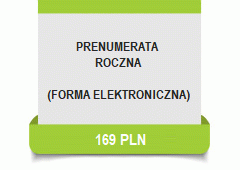
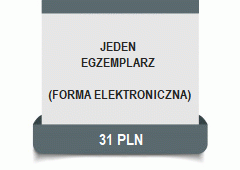
The e-edition of the magazine is available in our offer!

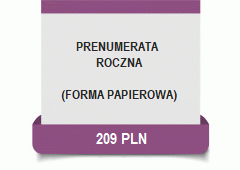
Stay up to date, order a subscription to LOGISTYKA magazine!