








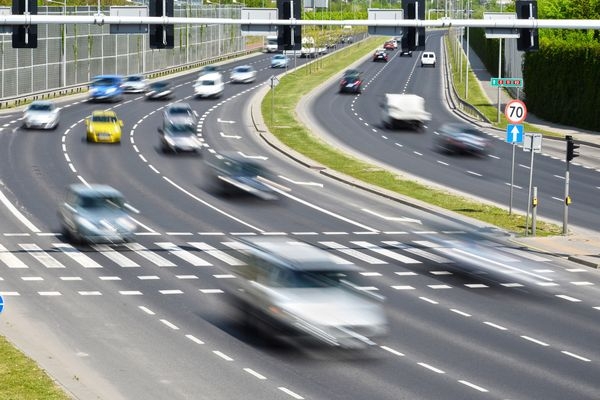
In 2016, there were 33,664 road accidents recorded in Poland, and 638 railway accidents in 2015, according to data from the National Police Headquarters and the Office of Rail Transport. This data shows that we should invest in areas that improve safety. In addition to the human factor, infrastructure improvements, or training systems, technology also has a significant impact. How, then, can it be used to make things safer?
Safety is better, but still in need of improvement
According to data from the Office of Rail Transport included in the report “Assessment of the functioning of the rail transport market and the state of rail traffic safety” – there were 638 railway accidents in 2015, in which 228 people lost their lives. The largest number, as many as 247 cases, were incidents caused by a railway vehicle in motion, and there were as many as 206 incidents at level crossings. This is 4.9 percent fewer incidents than in 2014. Statistics from the Road Traffic Office of the National Police Headquarters show that in 2016 there were 33,664 accidents on Polish roads, in which 3,026 people lost their lives. Compared to 2015, this number increased by 1.8 percent. This data shows that transport safety is an area that cannot be neglected, because it affects our lives.
Technology in cities
Transport safety is made up of three elements: the human factor, procedures, and technologies. Technology should be understood as both infrastructure and all technologies supporting safety. In road transport, systems that inform vehicle drivers about any road events and obstacles affecting driving safety are gaining importance. These systems also provide information about poor weather conditions, and travelers can read the generated messages in real-time via electronic signs placed on many routes. Such systems, although seemingly simple, contain a number of algorithms used to collect, analyze, and transmit data.
– One of these will soon provide information about the road situation to travelers on expressways and motorways belonging to the Trans-European Transport Network (TEN-T). We will prepare it on behalf of the General Directorate for National Roads and Motorways. The investment currently being prepared will enable efficient exchange of traffic data between public and commercial road managers, emergency services, and the media. Through providers, the information will be passed on to drivers and all interested parties in real-time – says Piotr Ciepły from Qumak S.A., the contractor of the system for the GDDKiA.
The situation is different in cities. Here, the biggest threats are speed unadjusted to road conditions, inattention, or improper traffic organization at intersections. According to the National Police Headquarters, as many as 70.9 percent of road accidents in 2016 occurred in built-up areas. Therefore, in modern cities, traffic will be controlled by intelligent systems, i.e., ITS. Depending on the needs, they can perform several tasks. On one hand, they manage traffic flow and clear traffic jams in the city, and on the other, they increase road safety. 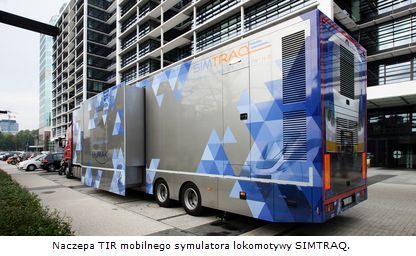 The most important element of such systems is speed management, the result of which is smoother traffic flow. Sensors located within the city where the ITS operates determine the speed at which a car should move for the journey to be smooth and safe. Exceeding this speed makes it necessary to stop the vehicle at the next traffic lights. Moving the car at the indicated speed reduces the number of stops, traffic jams, the number of accidents, and their severity.
Analysis of the data collected by the systems allows for the avoidance of many road events, among other things, by verifying traffic light programs that are not adapted to local conditions and providing information about optimal alternative routes. The compatibility of the modules making up the Intelligent Transport System significantly increases the scope of its capabilities. For example, ITS, in combination with modern monitoring systems, can track traffic on roads and detect vehicles moving outside the designated trajectory, such as driving against traffic. They can also verify incorrectly parked cars or objects left in the traffic area that restrict visibility, which increases the probability of a collision. Additionally, an automatic incident detection system allows for faster arrival at victims and redirection of traffic so that it does not pose a threat to road incident participants and medical and emergency services.
– ITS is the future of agglomerations. Due to the fact that more and more people are living in cities, the number of vehicles is also increasing. This, in turn, has a negative impact on safety. Therefore, the use of Intelligent Transport Systems helps all road users – emergency services, city and road managers, organizers and public transport operators, and residents. Thanks to such systems, traffic is smoothed out, thanks to the use of variable message signs, among other things, which inform about possible traffic jams, enabling the avoidance of so-called “bottlenecks” via other roads, and supporting the balancing of transport tasks in the city. Additionally, ITS contributes to reducing the amount of harmful gases and dust, and as a result, improving air quality, and this is of key importance today when we talk about reducing smog. Intelligent systems should be expanded to meet the challenges facing intelligent and functional cities – says Tomasz Turczynowicz, President of Star ITS, a company belonging to the Qumak Capital Group dealing with Smart City technologies.
ITS systems can also manage street lighting to adapt it to meteorological conditions. This directly impacts increasing the level of road visibility, and thus improves safety, especially for unprotected road users. Such a pilot system is being tested by the Municipal Infrastructure and Transport Authority in Krakow together with the AGH University of Science and Technology. Furthermore, it is estimated that intelligent lighting management is to bring the city savings at the level of 71% of energy expenditure used for lighting. This action is in line with the current trend where much attention is paid to improving the visibility of pedestrians and cyclists. To increase their visibility at pedestrian crossings and bicycle crossings, which are particularly dangerous places, sensors adjusting the intensity of lighting to current weather conditions are installed. The presence of bicycle traffic is signaled on an LED lamp displaying a bicycle symbol in front of an approaching car.
Rail operators are investing
The area of safety looks slightly different on the railway. Here, technology has always played an important role, due to the number of transported passengers, the speed of movement, or the braking distance and weight of the traction vehicle 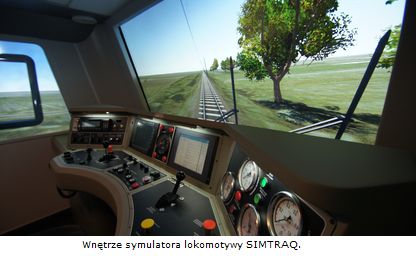 . Ensuring the safety of passengers depends to a large extent on the training and correct reactions of the train driver to situations that may happen on the tracks. Although UTK data shows that safety on the railway has been increasing in recent years, the legislator still sees the need to improve this state of affairs. Therefore, at the beginning of 2018, regulations will come into force that impose on every operator the obligation to train train drivers (3 hours per year) on simulators. For this reason, modern railway vehicle simulators are being created, such as SIMTRAQ – created by Polish engineers from the technology company Qumak.
– This state-of-the-art railway vehicle simulator, and the only one built on a semi-trailer, allows for the full reproduction of any route in Poland and around the world. Thanks to the use of a six-degree-of-freedom (6DoF) motion platform, it is possible to recreate all the forces acting on the train driver during the ride (among others, during acceleration, braking, cornering) in various atmospheric conditions and during various events, e.g., a car entering a level crossing, skidding, or derailment – says Daniel Wiśniewski, advisor to the board for local government public transport at Qumak S.A. – The added value of the simulator is its modular architecture. This allows, among other things, the launch of additional sets of functionality expanding the didactic capabilities of the system. This is a novelty among current simulation solutions. The completion of the full reproduction of the situation in the train driver’s cabin is the fact that it was made of original parts found in rail vehicles.
As indicated by the statistics of the Office of Rail Transport, included in the “Reports on the safety of Rail Transport in Poland”, 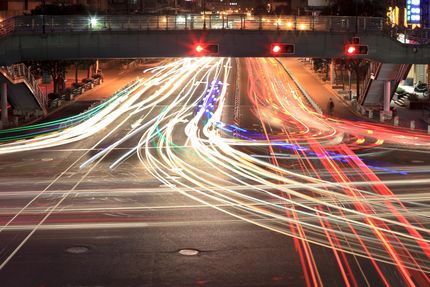 72.4 percent of accidents on railway lines are caused by the unauthorized appearance of external entities on the tracks. In such a situation, the most important thing is the correct reaction of the train driver, which can be practiced on a simulator. It allows the generation of typical, non-typical, and emergency scenarios of events occurring while driving. An additional value of simulator exercises is the possibility of recreating the circumstances that led to a railway disaster, e.g., Szczekociny, and training train drivers on how they should react so that this type of disaster does not occur. A training system based on simulators is not only financial savings but also an improvement in driving safety and the effective use of the existing rolling stock.
Modern technologies certainly allow us to increase our safety. Currently, we are witnessing important changes, thanks to which, as travelers, we can feel safer. However, one must remember that safety, for the time being, will remain dependent on many factors, among which technology is playing an increasingly important role.
Source: QUMAK S.A.