









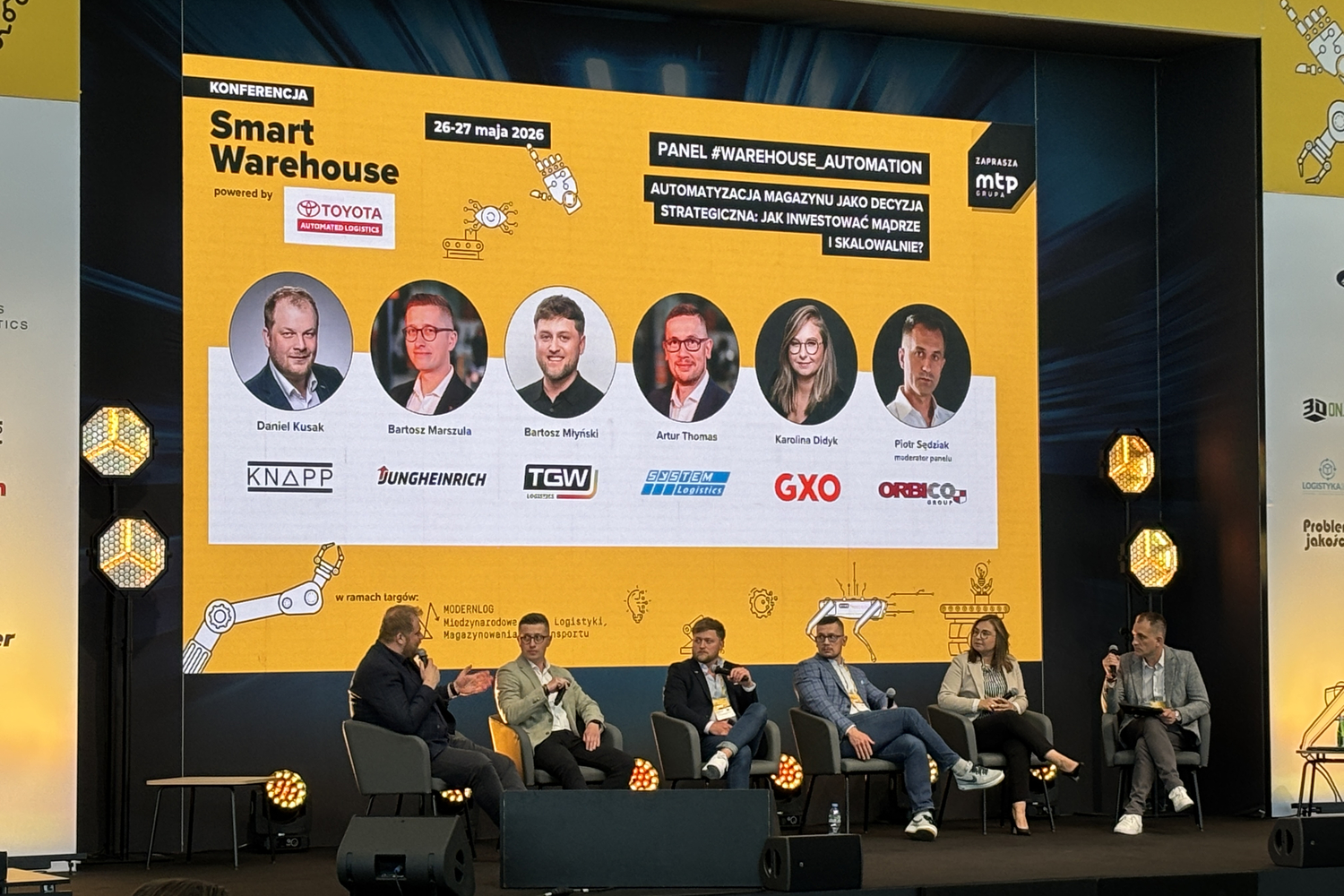
In times of rapid market changes, warehouse automation has ceased to be merely a technological novelty and has become a critical element of survival and growth strategy. However, behind the impressive visions of fully autonomous facilities lie traps that can turn a costly investment into an operational “anchor.” During the debate “Warehouse automation as a strategic decision,” held at the Smart Warehouse conference, experts shared their experiences from the front lines of implementation.
Strategic bipolarity: An advantage or a burden?
The decision to pursue automation is a turning point for any organization. It can elevate a company to a new level of efficiency or become its greatest limitation. As Piotr Sędziak from Orbico Group noted:
Automating a warehouse can be a very significant strategic advantage (…), but at the same time, it can become an anchor, something that will be a very high cost, a limitation, and a bottleneck.
The key to success is not the technology itself, but a precise definition of needs. Companies often fall into the trap of so-called “magic pots”—buying off-the-shelf “all-in-one” solutions without deep process analysis. Meanwhile, the investment process should start with the questions “why?” and “what for?” rather than “how?”. Failing to answer these crucial questions leads to a phenomenon that experts call post-purchase dissonance—the unpleasant feeling of anxiety that arises just after spending millions of euros, when reality begins to diverge from catalog promises.
The trap of missing data
The greatest sin of the design phase in automation implementation is relying on inaccurate or outdated data. Warehousing is a dynamic process, and designing automated systems takes a very long time.
Designing a warehouse from concept to implementation can take two or even three years. The perspective of two to three years in current times can be totally unpredictable – adds P. Sędziak.
During this time, the client’s business environment can change completely. Therefore, the project must be flexible, not “tailor-made” only for one specific sales season from the past. The experts invited to the debate emphasized that their role is to challenge the client’s assumptions:
An engineer is there to understand the needs well, ask the right questions, and perhaps resolve those assumptions which—as it turns out—are not assumptions at all, but a lack of understanding of the process – says Daniel Kusak from Knapp.
The warehouse as a “collection of exceptions”
Automation relies on standardization, but the reality of a warehouse floor is often the opposite. Experts agreed that “a warehouse is a collection of exceptions that has been given a standard.” Attempting to automate every process, even the rarest one, is a direct path to financial disaster.
A good project is one that finds an optimal balance.
In a good automated system implementation project, you need to include employees and find a balance between the necessity of automation and human work, thanks to which it will be possible to take care of extreme exceptions – adds Bartosz Młyński from TGW Logistics.
Machines are great at repeatability, but humans remain the best “fuse” for unusual situations, such as damaged packaging or errors in delivery planning.
The integrator as a “technological physiotherapist”
The relationship with a technology provider does not end with signing a contract—it is a “marriage for years.” Choosing a partner should be based on trust and the willingness of both parties to engage in dialogue. Experts describe themselves as “technological physiotherapists” whose task is to “adjust” the client’s processes so that they can harmonize with modern mechanics.
A worrying signal for an investor should be a situation where no one challenges their assumptions.
If 8 out of 10 companies refuse to participate in a project, it is not because they don’t like us, but because they understand that this project will almost certainly fail – says Arthur Thomas, System Logistics. – An honest integrator can reject a project and advise the client to hold off on the investment if the processes are not yet ready for it.
The nervous system of automation
Many investors focus on conveyors, robots, and racks. However, the true heart of the system is the software.
The nervous system of automation is the IT system. If something stops working, it most often turns out that something has gone out of sync between the WMS and the control system – explains A. Thomas.
Software failures can be more paralyzing than mechanical malfunctions. Therefore, the issue of service and post-implementation support must be an element of the strategy, not just a footnote in the contract. Market standards are evolving toward 24/7 systems with a guaranteed response time, e.g., up to 4 hours.
A new definition of ROI: More than just staff savings
The traditional approach to return on investment (ROI) based solely on labor cost reduction is becoming insufficient. In the face of demographic changes, automation is becoming a necessity.
When calculating, soft and strategic factors should be taken into account:
- Workplace attractiveness: Automation takes over heavy and repetitive tasks, allowing employees to take on more ambitious roles.
- New business value: A modern warehouse allows for handling more orders in less time, which directly translates into sales growth.
- Competitive advantage: Building operational stability that cannot be easily calculated in a spreadsheet, but which determines the company’s position in the market.
Summary: Humility toward technology
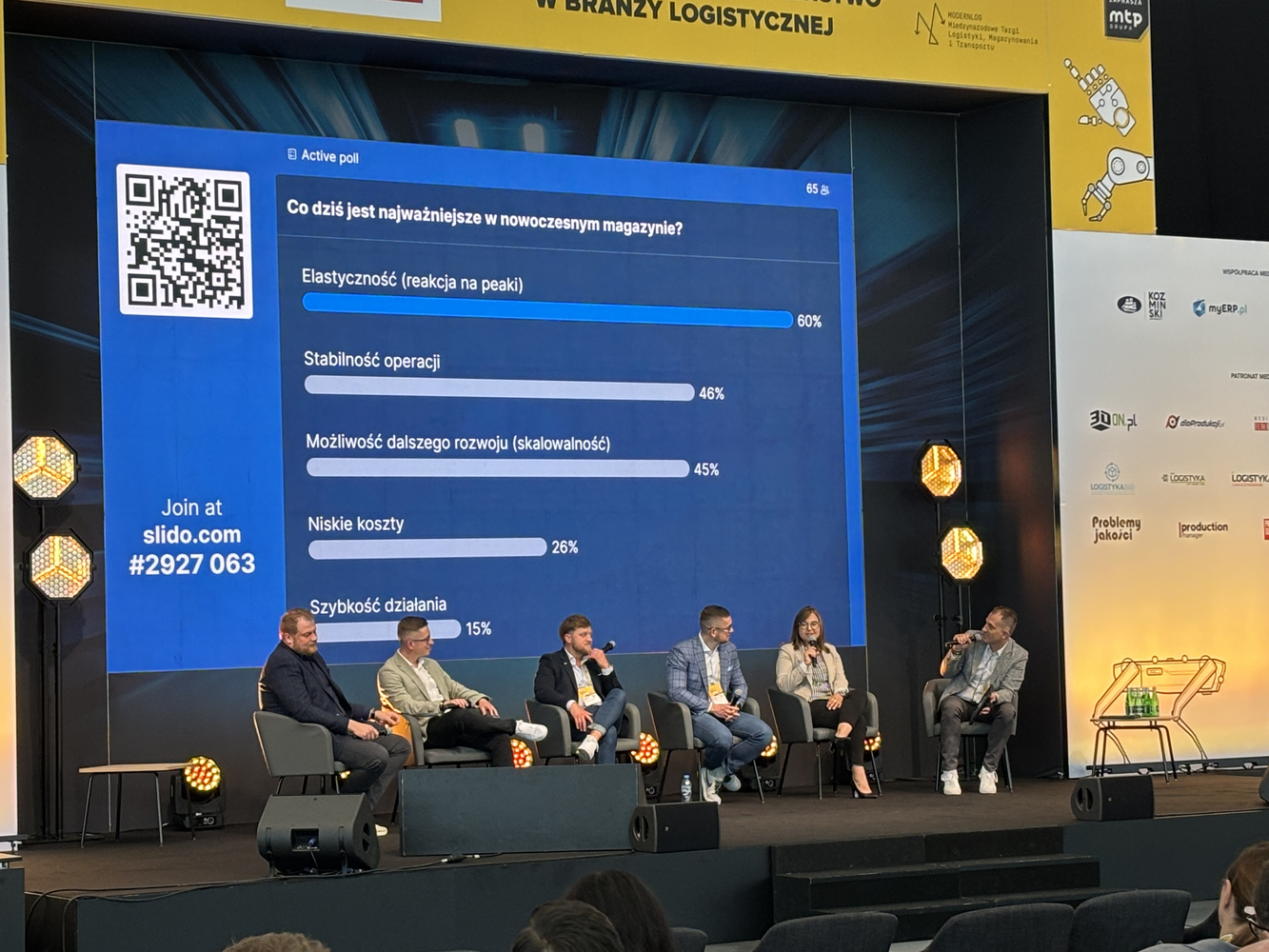
Warehouse automation is a process that requires courage, but also immense humility. Success depends on the quality of input data, honesty in the relationship with the integrator, and the understanding that the system will evolve over the next 10-15 years.
Flexibility and the ability to develop the system are more valuable today than the lowest initial cost. Investing in automation is not just buying machines—it is changing the DNA of the entire organization – the experts conclude.
The article was based on the debate “Warehouse automation as a strategic decision,” which took place during the Smart Warehouse conference.