










Polish logistics is the lifeblood of the economy – especially the manufacturing sector. How is the industry coping with rising consumer demands, digital transformation, and staff shortages? The latest market research sheds new light on the priorities of managers. The conclusions may be surprising: after years of dominance by recruitment problems, costs and the urgent need for automation are moving to the forefront.
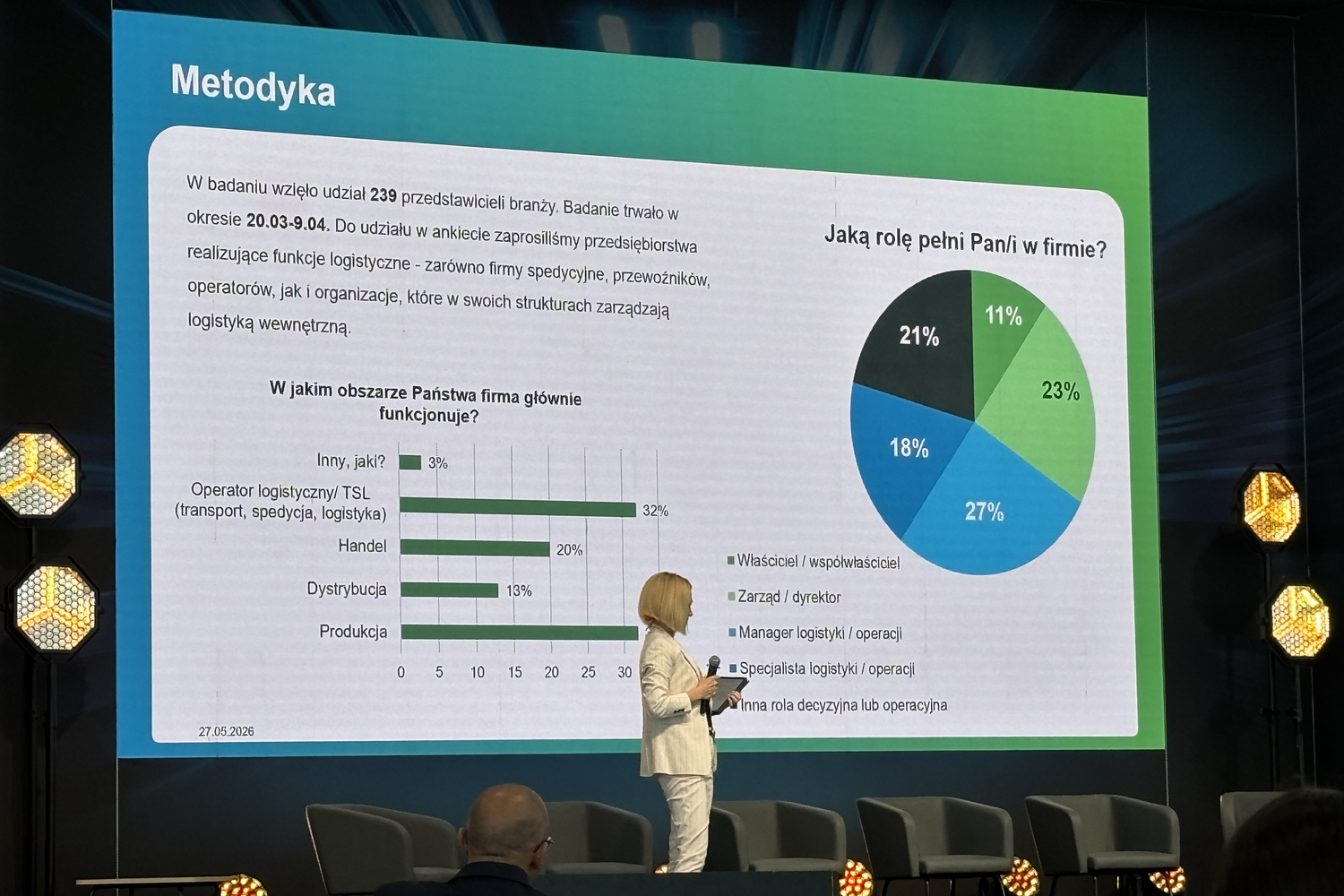
The study, conducted between March and April on a group of 229 industry representatives, provides a very fresh and broad picture of the situation. Importantly, the survey included not only strictly logistics companies but also representatives of various sectors – as logistics permeates every area of business today. So, what does the current landscape look like, and what awaits us in the coming years?
A market full of optimism, but also paradoxes
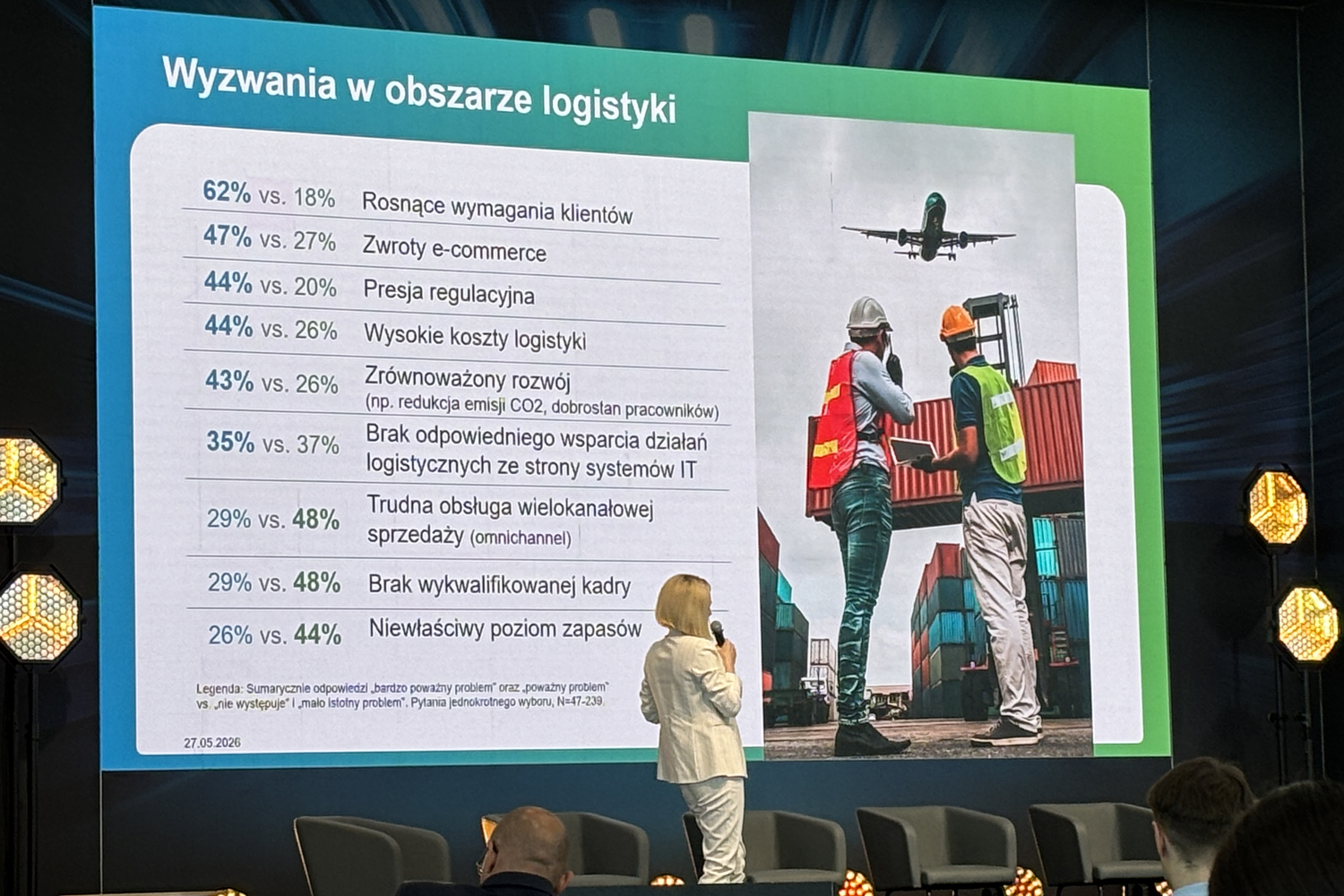
Despite geopolitical and economic challenges, there is a significant dose of optimism in the Polish logistics industry. As many as 50% of respondents rate the condition of logistics in Poland as very good, seeing clear development prospects. This is a huge contrast compared to the perception of our industry in the general public space, where positive ratings hover around only 26.7%.
Poland remains an extremely innovative market. We are a kind of testing ground for Europe – we are eager to test new solutions, check their effectiveness, and then scale those that work. However, there are “dark clouds” on the horizon. Entrepreneurs are facing regulatory challenges (such as Clean Transport Zones) and unprecedented pressure from customers – says Luiza Luranc, Sales Director at ManpowerGroup.
Today, the consumer – and ultimately, it is they whom the entire supply chain serves – expects services that are lightning-fast, error-free, eco-friendly, and at the same time free or extremely cheap. However, it is worth asking whether the logistics industry is partly imposing this murderous pressure on itself? It often turns out that the customer is willing to wait 2-3 days longer for a shipment if it exempts them from additional fees.
Costs dethrone HR. Time for smart technology
A year ago, in a similar study, logistics professionals pointed to employees as the number one challenge. Today, the situation has changed. Operating costs have risen to the top of the list of problems, followed by the need for automation and robotization.
We are all gathering massive datasets today. However, competitive advantage is no longer built on access to technology alone. The companies that win are those that can wisely put Artificial Intelligence (AI) to work and base their decision-making models on it – explains Tomasz Walenczak, General Director at ManpowerGroup.
The real challenge, however, turns out to be the implementation itself. Companies that decide to invest quickly collide with the problem of integrating modern solutions with existing (often outdated) IT systems. The key today is not just the budget, but the consistency of operations, transparency of processes, and the level of innovation adoption by teams.
Demographics force automation. What about humans?
Since automation is progressing so quickly – especially in warehouses, transport, and maintenance – where is the place for humans in all of this?
As many as 39% of respondents predict that technology will lead to a reduction in employment. In the face of cost pressure, this is a logical step towards maintaining profitability. However, this trend should be viewed through the prism of demographics: 150,000 workers have disappeared from the Polish labor market in a short time. For many companies, automation is no longer just optimization, but the only way to maintain operational continuity. At the same time, 14% of those surveyed see that innovations will create new, highly specialized positions. Humans will not disappear from the supply chain – they will be moved to more creative and analytical tasks – says Luiza Luranc.
The new face of talent management: Upskilling and flexibility
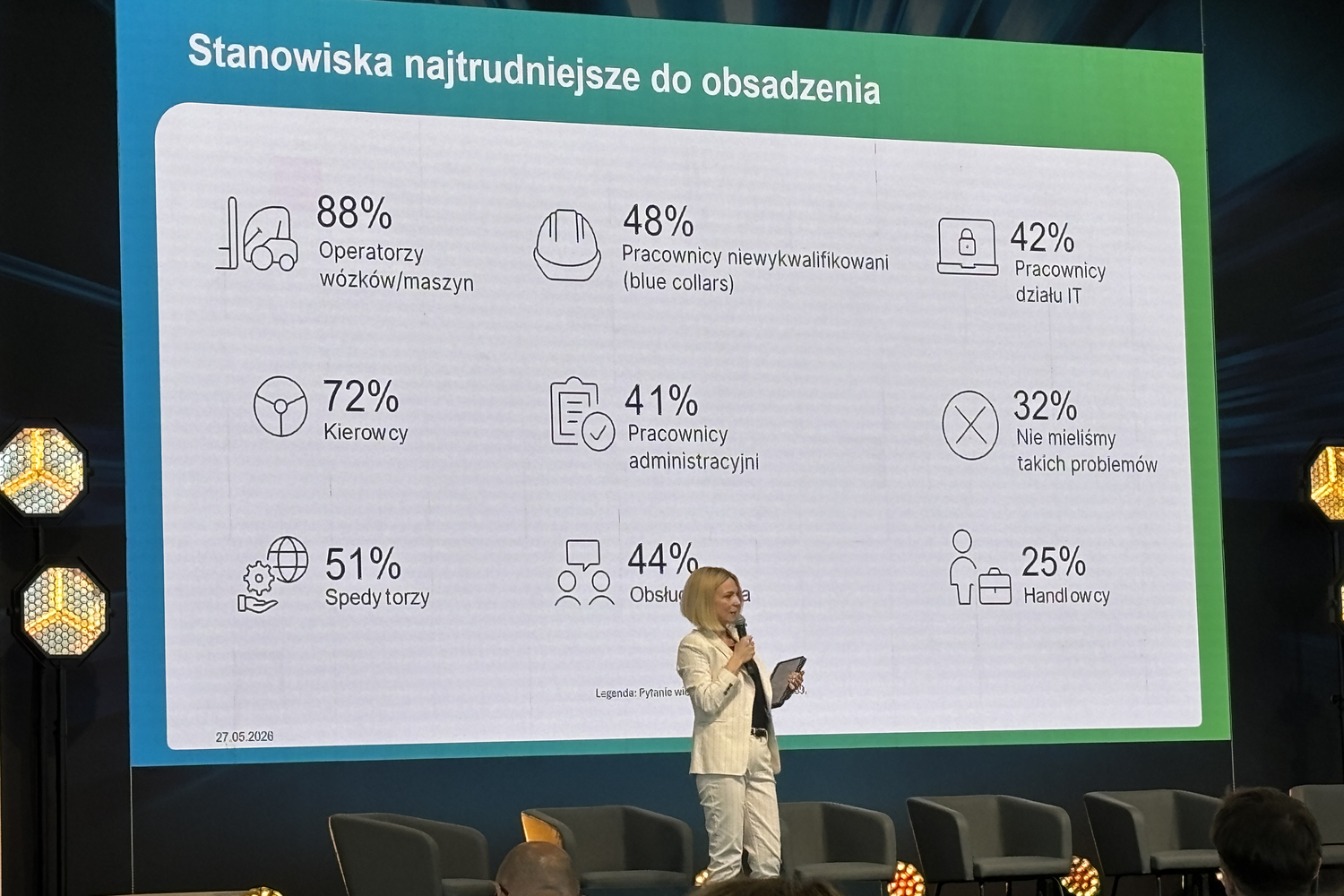
Staffing problems have not disappeared completely (42% of respondents still point to them). Employers are facing wage pressure, rising candidate expectations, and a massive skills gap. There is a shortage of forklift operators, drivers, production workers, but also managers ready to lead in the digital era. Surprisingly, almost half of the demand concerns unskilled workers.
How is the industry responding to this crisis?
1. Reskilling and upskilling: These concepts have ceased to be just a market curiosity. Companies are creating internal initiatives, investing in upgrading the qualifications of current employees and preparing them to operate new technologies.
2. Flexible forms of employment: The market is increasingly opening up to temporary work and contracts. Companies are learning to utilize the potential of people with disabilities, students, or people who can only work a few hours a week. Although this requires enormous flexibility in operational schedules, European examples prove that it brings tangible benefits.
Social responsibility and safety
Finally, it is worth emphasizing that a supply chain is exactly as strong as its weakest link. Corporate Social Responsibility (CSR) and operational, cybersecurity, and legal-regulatory safety are currently moving to the forefront of management strategies. Properly designed processes in these areas are today a guarantee of customer satisfaction and stable relationships with business partners – adds Tomasz Walenczak.
A full picture of the market, enriched with expert commentary, can be found in the latest, over 40-page report, which premiered during the Smart Warehouse conference.
The report can be downloaded HERE.
The article was based on the presentation of the “Where are you heading, logistics?” report, which took place during the Smart Warehouse conference.