











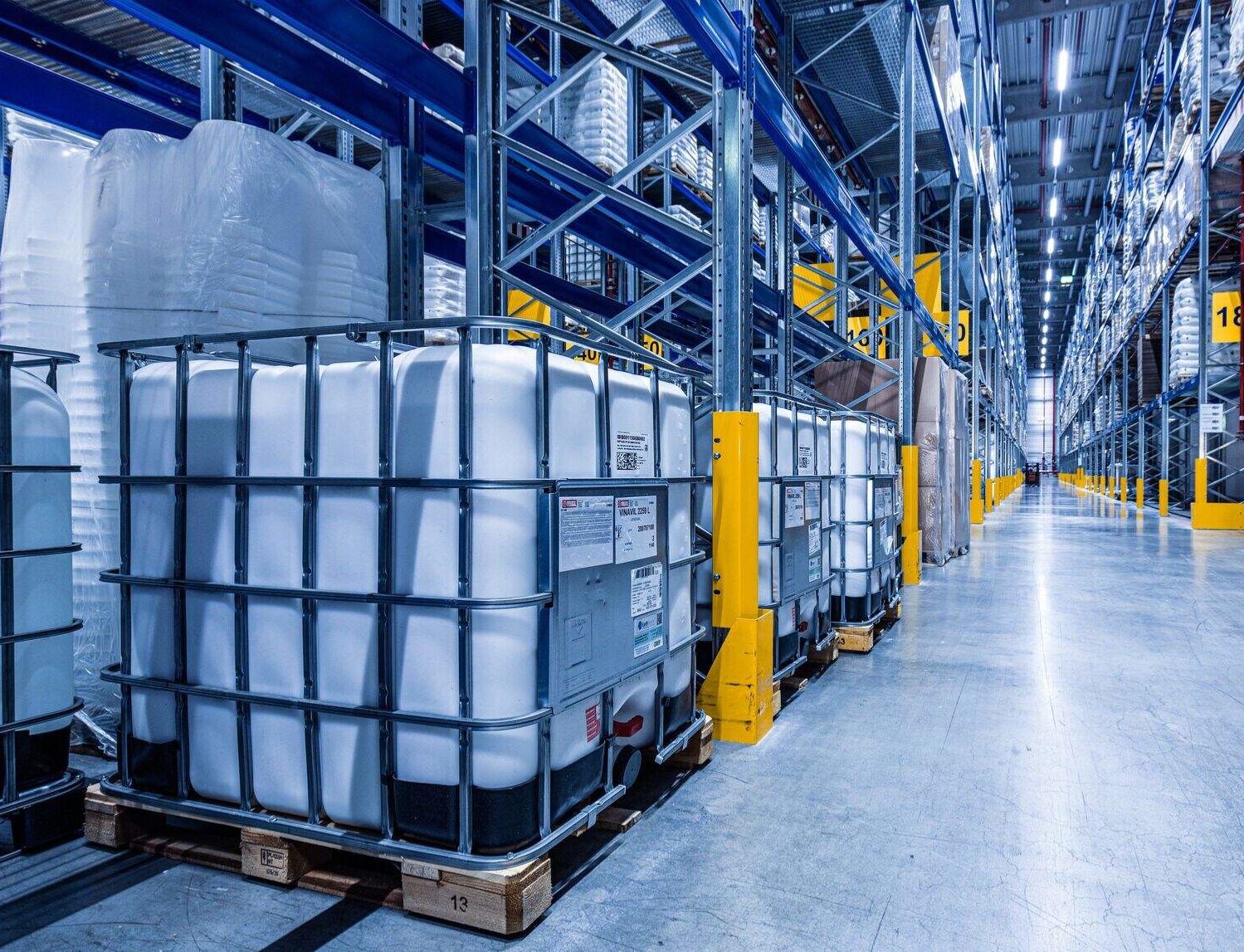
Chemical logistics and the storage of hazardous materials are among the most demanding and sensitive areas of logistics today. An unstable economy and high regulatory requirements mean that solutions tailored to customer needs and guaranteeing maximum safety are essential. In Rastatt, in southwestern Germany, a warehouse was recently launched, designed to meet the market requirements of the future in a sustainable way.
The chemical industry is under pressure. Geopolitical tensions, trade barriers, market volatility, and increasingly stringent regulations are forcing the sector to undergo major changes. But this is precisely the moment to look boldly into the future. During its recurring semi-annual press conference, the German Chemical Industry Association (VCI) announced that a clear recovery for the industry is expected in 2026. For logistics operators, this means that investments made today will form the foundation that will ensure supply security and competitiveness in the future.
An example of the implementation of such a strategic concept is the construction of a new hazardous materials warehouse for the logistics company DACHSER in Rastatt. The facility, built just 8 km from the company’s logistics center in Karlsruhe/Malsch—where two hazardous materials warehouses are already in operation—serves as a model response to modern requirements for future-proof chemical logistics. With the highest technical level, innovation, specialized regulatory knowledge, sustainable power supply, and a full focus on customer needs, the investment realized for DACHSER aligns with the family-owned company’s principle of a strategic and long-term approach to development. In times of economic uncertainty, organizations that invest outside of business cycles prepare their network for the challenges of the future.
Safety begins at the planning stage
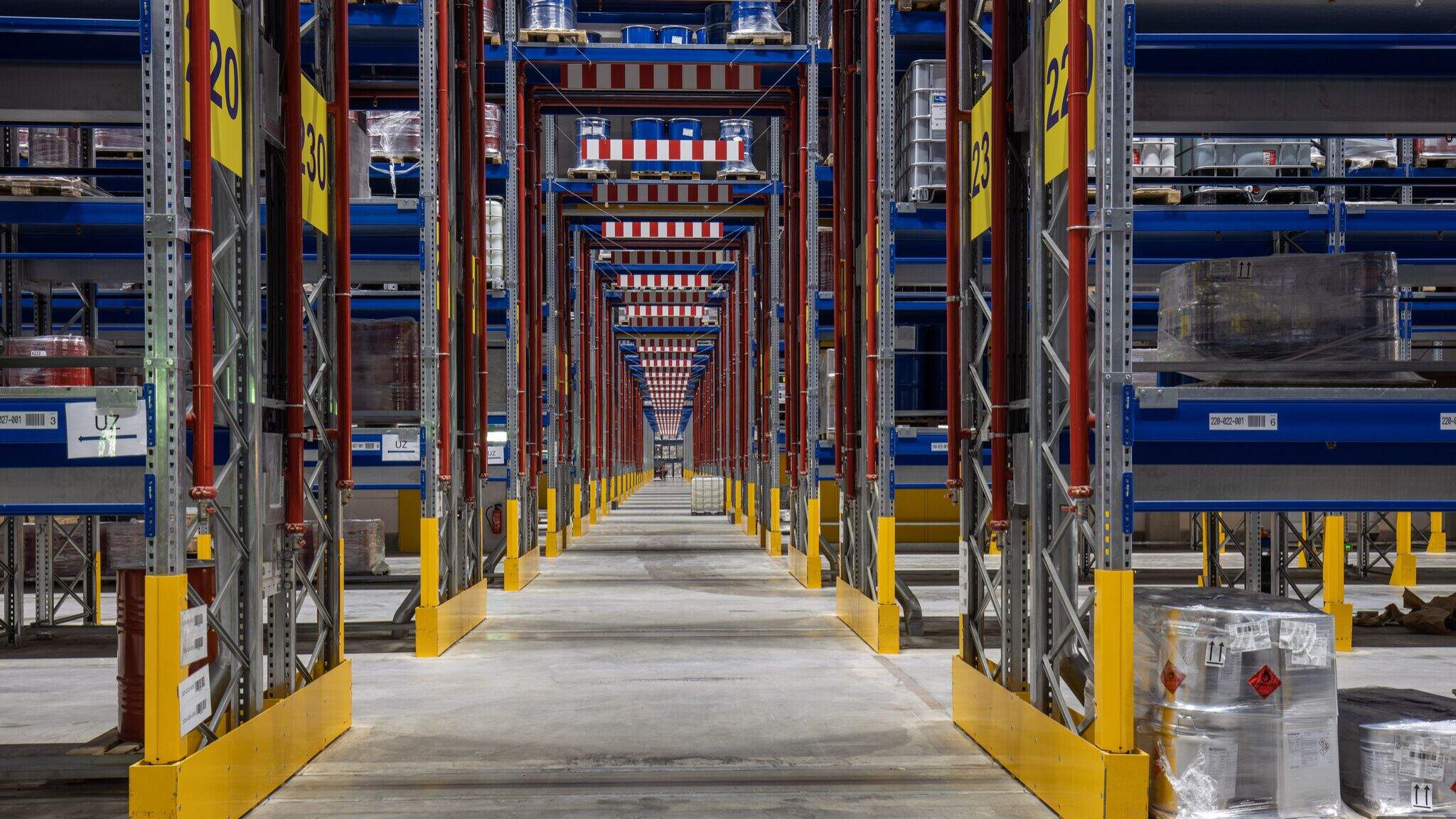
DACHSER has been operating a hazardous materials warehouse in Karlsruhe since 2007. In 2019, the company launched another facility there. The 21,800 m² warehouse accommodates 48,000 pallets, and the approved capacity for hazardous materials and substances with water hazard classes I–III exceeds 20,000 tons. Technical equipment includes over 29,000 sprinklers, 60 km of pipelines, a fire water tank with a capacity of 1,250 m³, and specialized drainage systems that allow for safe storage even at higher levels.
The hazardous materials warehouse in Rastatt is a well-thought-out expansion of the existing infrastructure. Unlike the previous investment, it was not built by DACHSER itself but is a leased facility, fully adapted to the operator’s needs. It offers approximately 23,500 m² of space and 42,000 pallet spaces. The approved storage capacity for substances with water hazard classes I–III reaches 24,000 tons. 5 fire zones, 32 gates, and a 12.2-meter-high terminal provide the structural basis for flexible use. Equipment includes, among other things, modern sprinkler systems compliant with FM Datasheet 7-29 with foam concentrate, a fire water retention system, and a smoke detection system (RAS).
Storing hazardous materials differs fundamentally from standard warehouse logistics. Safety aspects must be considered as early as the planning stage. The building’s construction must be adapted to various material groups—which is essential in the complex process of obtaining permits under the German Federal Immission Control Act (BImSchG). This requires a great deal of specialized knowledge. In Rastatt, from the design stage, in close cooperation between the investor, the construction department, and DACHSER’s hazardous materials experts, the focus was on maximum structural flexibility. Fire zones, uniform safety standards in all storage areas, and full protection via a sprinkler system enable the safe and legal storage of a wide range of material classes. This means that the structural requirements specified in the BImSchG were met at the design stage.
A key feature of the “built-to-suit” facility is its comprehensive safety concept. The goal here was not to create new, experimental technologies, but to consistently implement proven standards. This includes, among other things, heat-resistant racking and architecture optimized for fire protection. The building was designed to ensure maximum flexibility in terms of how the facility is used. Unlike existing hazardous materials warehouses, comprehensive fire and safety protection was implemented in all zones during the design and construction phase. Experience shows that retrofitting facilities later is up to twice as expensive.
DACHSER’s corporate hazardous materials management department, which supports all company branches on a daily basis, was also involved in the construction project. It is responsible for standardizing processes, consulting on construction and warehouse projects, and training for DGSA advisors. In addition, there is the updating of internal guidelines and lists of goods not permitted for transport and storage, as well as knowledge transfer through specialized forums, quarterly bulletins, and constant exchange of experience between experts.
Adapting to market requirements
Hazardous materials storage is no longer just for chemical companies. Companies from the consumer goods, electronics, and automotive sectors are also reporting a demand for specialized spaces. In recent years, lithium-ion batteries have become a particular challenge due to their potential thermal instability and risk of self-ignition.
Customers also have very different requirements regarding volume, material classes, safety levels, or operational processes. The warehouse in Rastatt was not designed for one specific customer—it is a universal facility that allows for a wide spectrum of applications, and some construction work was also carried out with future specialized certifications in mind.
A major advantage of the location is its proximity to the logistics center in Karlsruhe. The two facilities are only about 8 kilometers apart, which allows for efficient shuttle connections and flexible resource management. This increases operational efficiency and simplifies administrative procedures. If one warehouse faces limitations due to permit issues, some operations can be quickly moved to the second location, which has a broader range of certificates. Infrastructure duplicated in this way increases system resilience and enhances supply security.
Sustainable development—from the very beginning without fossil fuels
A modern hazardous materials warehouse must offer more than just impressive technology. A contemporary facility must also set standards in the area of sustainable development. Therefore, the warehouse in Rastatt is based on completely emission-free energy sources—a photovoltaic system, a heat pump, and panel heating powered 100% by renewable energy sources.
This is not a symbolic action, but a real change. Moving away from fossil fuels reflects the practical implementation of the sustainability strategy expected by customers. Many companies in the chemical and related industries are now defining their climate goals in relation to the entire supply chain—including warehouse logistics.
People remain irreplaceable
Technology and infrastructure are very important, but it is people who make the difference. In Rastatt, the focus from the beginning was on combining experience with development and modernity. The new team is being formed based on staff from the Karlsruhe logistics center. All employees participate in regular training and receive instructions on handling hazardous materials. There is also close cooperation with local authorities and fire services.
At the same time, DACHSER is actively investing in young talent. After the warehouse was launched, the HR department intensified recruitment efforts through local campaigns, open days, and targeted counseling for those interested in working there. Young employees are involved at an early stage and systematically trained to meet the increasingly demanding standards of hazardous materials logistics. At DACHSER, we understand that the scope of responsibilities involving customer contact, certification processes, and safety standards requires the team to have both technical competence and specialized knowledge, as well as communication skills.
The facility in Rastatt is proof that the implementation of such a comprehensive concept is possible only through the cooperation of technology, organizational structures, and competent people. Future-proof hazardous materials logistics requires an integrated approach—especially in a situation of market pressure. This investment is a commitment to the German market and, at the same time, a signal to the entire industry that if we want to actively shape the future, we must act today.
Chemical logistics in Poland: responsible partnership in a dynamic market
From a local perspective, we also see a growing demand for professional, certified spaces for storing hazardous materials. The market needs flexible facilities that are operated in a sustainable way and allow for the handling of many material classes. In the case of chemical logistics, issues of regulatory compliance and readiness for future certifications are particularly important. Modern customers also expect partnership and comprehensive consulting from a logistics operator. From reviewing hazardous goods and assessing risks, through preparing an effective concept, to selecting a location and integrating transport and warehouse processes in accordance with industry regulations and the best standards.
– comments Ewelina Staszewska-Kobiela, Business Development Manager Poland DACHSER Chem Logistics.
Industry reports show that at the end of the second quarter of 2025, the total area of modern warehouses in Poland exceeded 36 million m², which, with a vacancy rate of only 8.2%, indicates a sustained high demand in the commercial real estate market. This is also proof of the sector’s resilience and Poland’s continuing role as an important logistics hub in the global supply chain.
DACHSER accurately interprets market trends, which is why the company is able to offer an integrated service in which modern infrastructure is combined with high standards in the area of safety and process management. Such a package, strengthened by responsibility and customer relationships, allows DACHSER to offer quality that stands out against the dynamic, contemporary economic landscape.
– adds Ewelina Staszewska-Kobiela.
Source: Dachser