











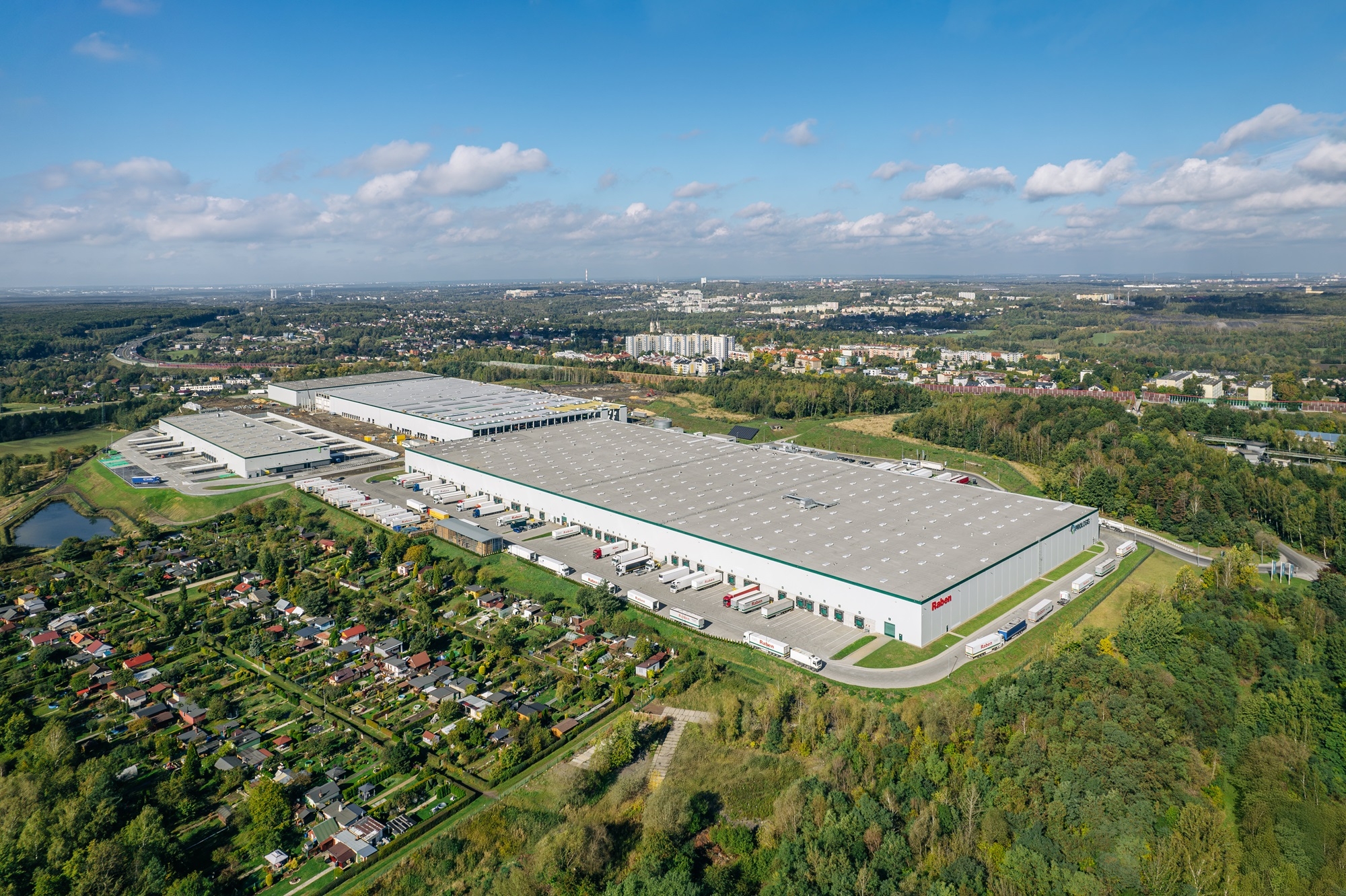
According to the latest Prologis Research report, titled Persistent Supply Constraints Position Europe For Value Growth, the European logistics real estate market is valued at 500 billion euros and is struggling with a supply gap exceeding 150 billion euros.
The development of new warehouse projects in Europe faces regulatory barriers, infrastructure constraints, and increasing environmental requirements. Meanwhile, the demand for modern space continues to grow. Demand is driven by the growth of e-commerce, companies’ efforts to strengthen supply chain resilience, and rapid urban development. Responding to this demand is becoming increasingly difficult.
The European Modern Logistics Concentration Index (MLC), which measures the availability of logistics space relative to the number of households, stands at 30 in Europe. In the United States, this index reaches 75. The lower the MLC, the greater the need for new warehouse construction.
Due to higher population density in European cities and more efficient distribution networks, a simple comparison of these values is not fully representative. A realistic benchmark for estimating actual supply would be a level of around 50.
Even if Europe were to approach a more balanced level of logistics space supply, the gap would still remain significant. At the current pace of construction, closing it would take about eight years and require investments exceeding 150 billion euros.
– emphasizes Eva van der Pluijm-Kok, Vice President of Research at Prologis Europe.
The greatest obstacles to the development of logistics projects arise in cities. Therefore, new investments are being built further and further from city centers, even though that is where demand is highest. Market reality confirms this correlation: facilities located close to consumers record faster rent growth. Over the last three years, urban locations in Europe have seen rental rate growth of 150–240 basis points above the industry average.
The shortage of logistics space in Europe is structural, not cyclical. For customers, the most important thing today is access to modern and sustainable facilities located in attractive locations. For investors, this is an important argument, because well-located properties retain long-term value. Limited supply continues to drive performance. At Prologis, thanks to our scale, broad portfolio, and efficient project execution, we deliver what is a challenge for others. As a result, we provide lasting and long-term benefits to our stakeholders.
– says Ben Bannatyne, President of Prologis Europe.
Poland: dynamic growth under the pressure of barriers
Poland is the fastest-growing logistics market in Europe. Since 2007, its resources have increased by over 900%. Such dynamic development was possible thanks to uniform national regulations that favor the efficient implementation of new investments.
As the market matures, new challenges can be expected. Rising infrastructure costs and more stringent planning requirements may slow down the pace of development. This could make it difficult to maintain the current growth momentum.
– said Paweł Sapek, Senior Vice President, Regional Head for Central Europe at Prologis.
Prologis is consistently increasing its commitment in Poland. It currently offers logistics and production properties with an area of 2.6 million m², which accounts for almost half of the company’s entire portfolio in Central Europe. Over the past year, Prologis has strengthened its position in key logistics and business locations, including through the purchase of Prologis Park Grodzisk near Warsaw and the start of construction of Prologis Park Ujazd in the Opole Voivodeship. The first building being constructed as part of this complex will serve as a distribution and picking center for Schaeffler, a leading global technology supplier for the mobility sector.
The company also has land in the Warsaw region, including a recently purchased site for the construction of Prologis Park Nadarzyn.
Source: Prologis, Inc.