











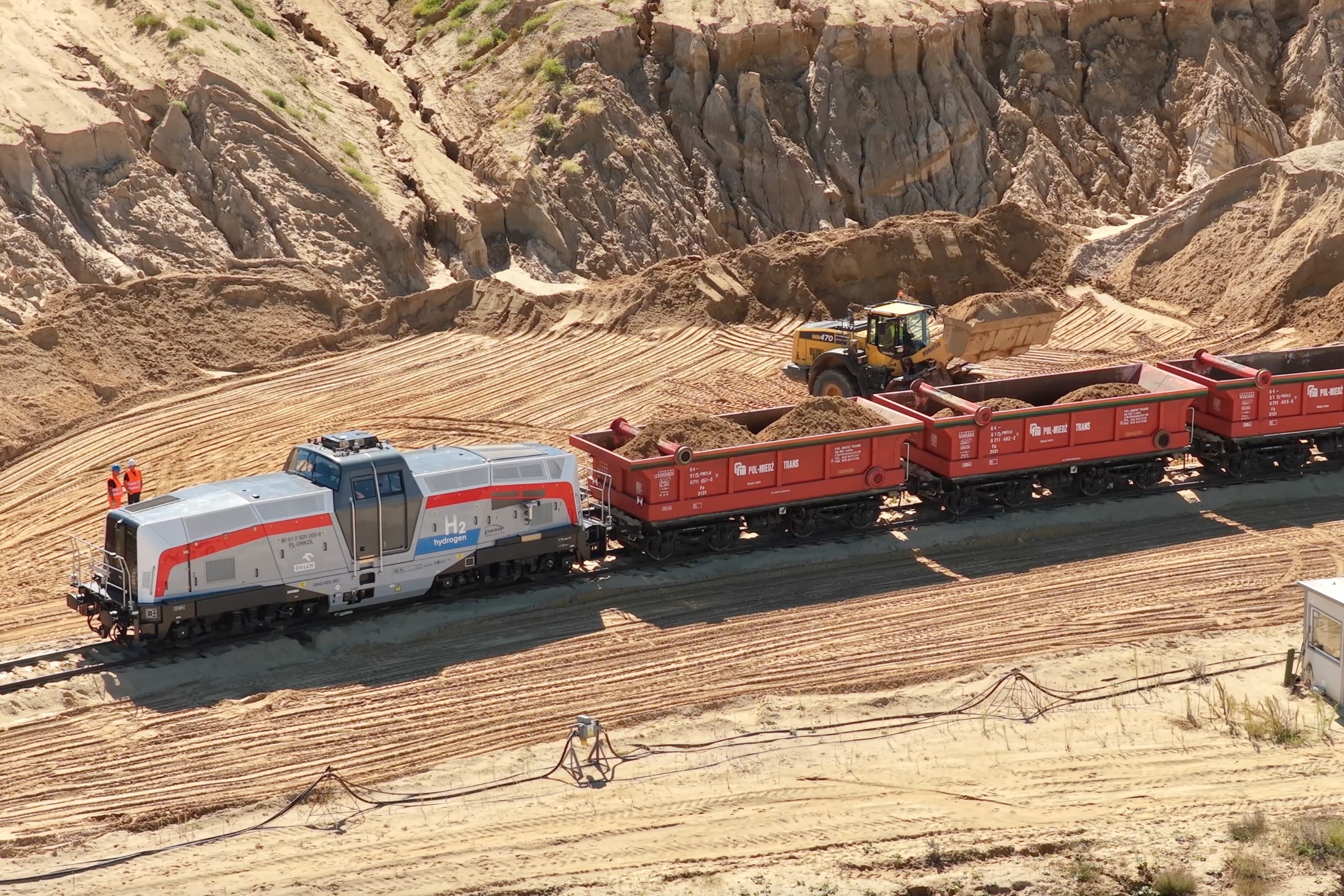
During a press conference held in Polkowice, hydrogen railway tests in Lower Silesia were summarized. The event was attended by representatives of the Marshal’s Office of the Lower Silesian Voivodeship, Koleje Dolnośląskie, Pol-Miedź Trans, and KGHM Polska Miedź S.A. as entities interested in hydrogen technology in rail transport, as well as PESA Bydgoszcz – the manufacturer of the first hydrogen locomotive in Poland and one of the first in Europe.
Energy transformation is becoming an inevitable direction for the development of modern regions. Hydrogen is essential here, as it can revolutionize public transport. Lower Silesia, with its strong scientific and industrial base, developed transport infrastructure, and dynamic local governments, has a chance to play a key role in this revolution.
Hydrogen tests were initiated by Koleje Dolnośląskie, which launched the first scheduled train powered by this fuel of the future. Four trains on the Jelenia Góra – Karpacz route operated last Wednesday and attracted significant interest.
Rail is the transport bloodstream of the region. To encourage residents to use trains, we must work on constantly improving our transport offer. Electrification of railway lines is a government task, but we are not resting on our laurels and are also looking for modern, ecological solutions ourselves. That is why Koleje Dolnośląskie has started testing hydrogen-powered locomotives.
– said Paweł Gancarz, Marshal of Lower Silesia, during the premiere.
Later, during the Economic Forum, one of the debates was devoted to hydrogen propulsion. Representatives of the Ministry of Climate and Environment, as well as the authorities of the Lower Silesian Voivodeship, were in agreement regarding the use of this propulsion in rail transport.
The hydrogen locomotive made an incredible impression on the passengers who took part in this historic event. Hydrogen-powered vehicles are already running in Germany, and numerous nations in Europe are testing them. When this fuel of the future becomes a permanent part of rail traffic, we will always remember this historic moment when Koleje Dolnośląskie was the first to operate such a train in the timetable. By the end of September, we will have analyses regarding this journey, which will allow us to take further steps regarding hydrogen. Of course, we are already checking the possibilities of co-financing such machines.
– said Damian Stawikowski, President of Koleje Dolnośląskie, during the debate.
During Monday’s conference in Polkowice, representatives of Pol-Miedź Trans, KGHM Polska Miedź, and PESA unanimously emphasized that the hydrogen locomotive tests were very promising.
The last few days in Lower Silesia were a very demanding test for our hydrogen locomotive and the entire team. Both the route to Karpacz and the work at the KGHM site set the bar high, but the Sm42-6Dn performed very well. We see huge potential for cooperation with our partners, and I think the time for the hydrogenization of railways in Lower Silesia is coming. The results of our tests will help our Lower Silesian partners make decisions on this matter.
– says Krzysztof Zdziarski, President of PESA Bydgoszcz.
An important declaration was made by Piotr Stryczek, Vice President for Corporate Affairs at KGHM Polska Miedź S.A. It is possible that in a few years, the copper concern’s rolling stock will be based on hydrogen.
The tests conducted in the Copper Basin only confirmed that it is worth investing in this technology. They showed that hydrogen fuel is the fuel of the future. Therefore, green energy will occupy an important place in our capital group’s energy strategy.
– announced Piotr Stryczek, Vice President for Corporate Affairs at KGHM Polska Miedź S.A.
Koleje Dolnośląskie is the first carrier in the country to transport passengers in carriages pulled by a hydrogen locomotive. On a daily basis, Koleje Dolnośląskie operates railway routes in three countries and three voivodeships, and from December, they will also reach a fourth: the Opole Voivodeship. They cover over 15 million km per year on the tracks, and there are many indications that in the future, they will also use battery or hydrogen-powered vehicles.
Since 2019, Pesa has been consistently implementing projects for emission-free hydrogen rail vehicles. At the moment, it is investing in modern halls that will be prepared for the production of hydrogen-powered vehicles, and it is also working on a passenger vehicle powered by electric traction and hydrogen fuel cells, dedicated to serving regional connections.
Source: PESA