











During the Stena Line Baltic Business Conference Gdynia 2025, one of the presentations was delivered by Ron Gerlach, Technical Director at Stena Technik. He presented a vision of the future of shipping, where innovation and sustainability go hand in hand.
We are considering building more flexible types of ships that can be upgraded in the future. We will likely see a greater variety of conventional diesel engines, different types of fuels combined with electrification and the development of fuel cells. Probably, thanks to the ability to simulate the ship and operations in the future by running artificial intelligence algorithms, and at some point perhaps even thanks to quantum computers, we can accelerate development and hull shape optimization.
– said Gerlach.
This approach fits perfectly into Stena Line’s long-term strategy, which aims to reduce CO₂ emissions by 30% by 2030. The company is already implementing solutions based on alternative fuels (LNG, methanol), hybrid propulsion, shore power in ports, and is designing ferries that are ready for future upgrades.
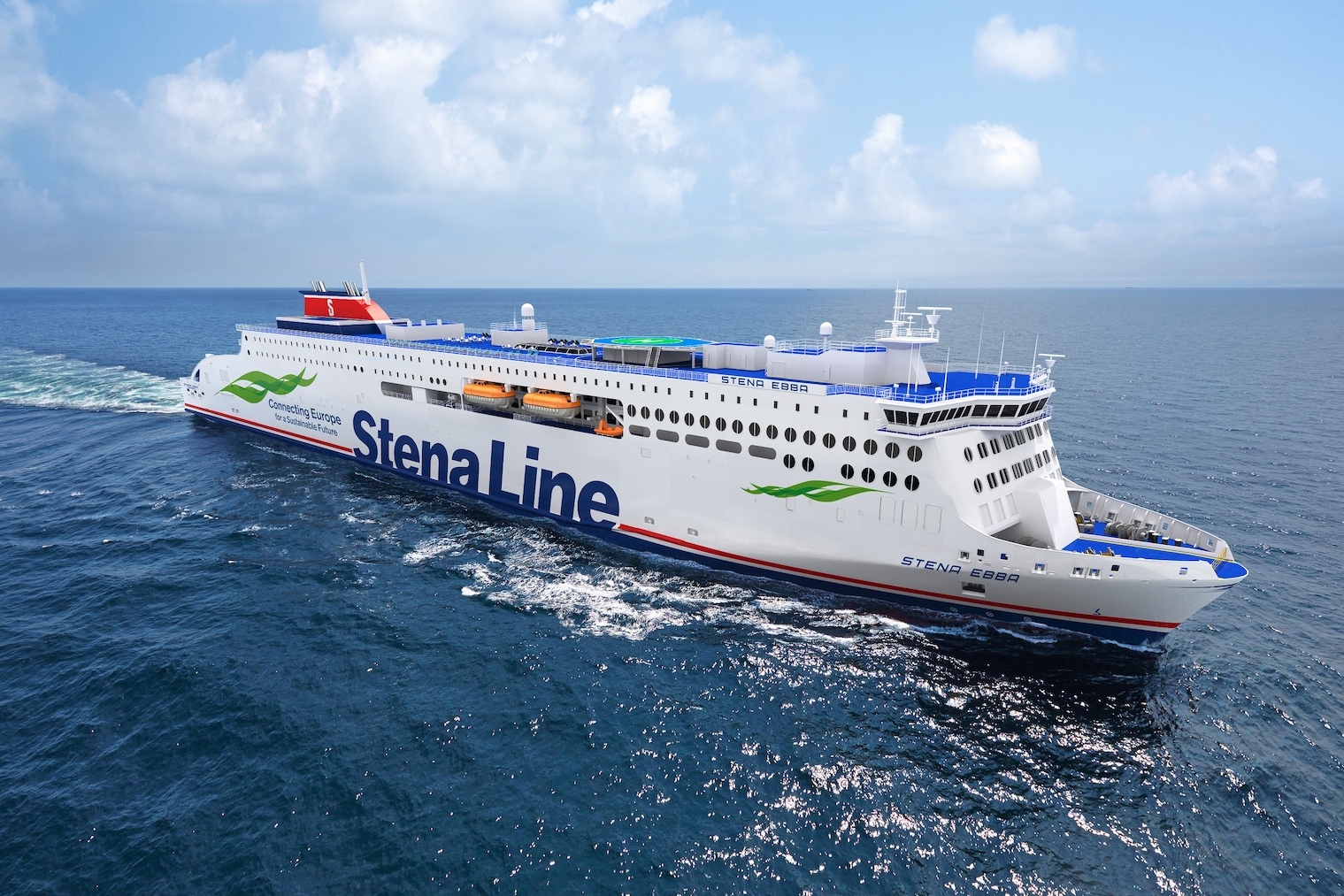
Modern E-Flexer class vessels, such as Stena Estelle and Stena Ebba, operating on the Gdynia–Karlskrona route, are flagship examples of implementing low-emission technologies. Their design allows for the later installation of fuel cells and battery systems. Integrating artificial intelligence into ship design opens a new chapter in optimizing the energy and operational efficiency of the fleet.
Source: Stena Line