











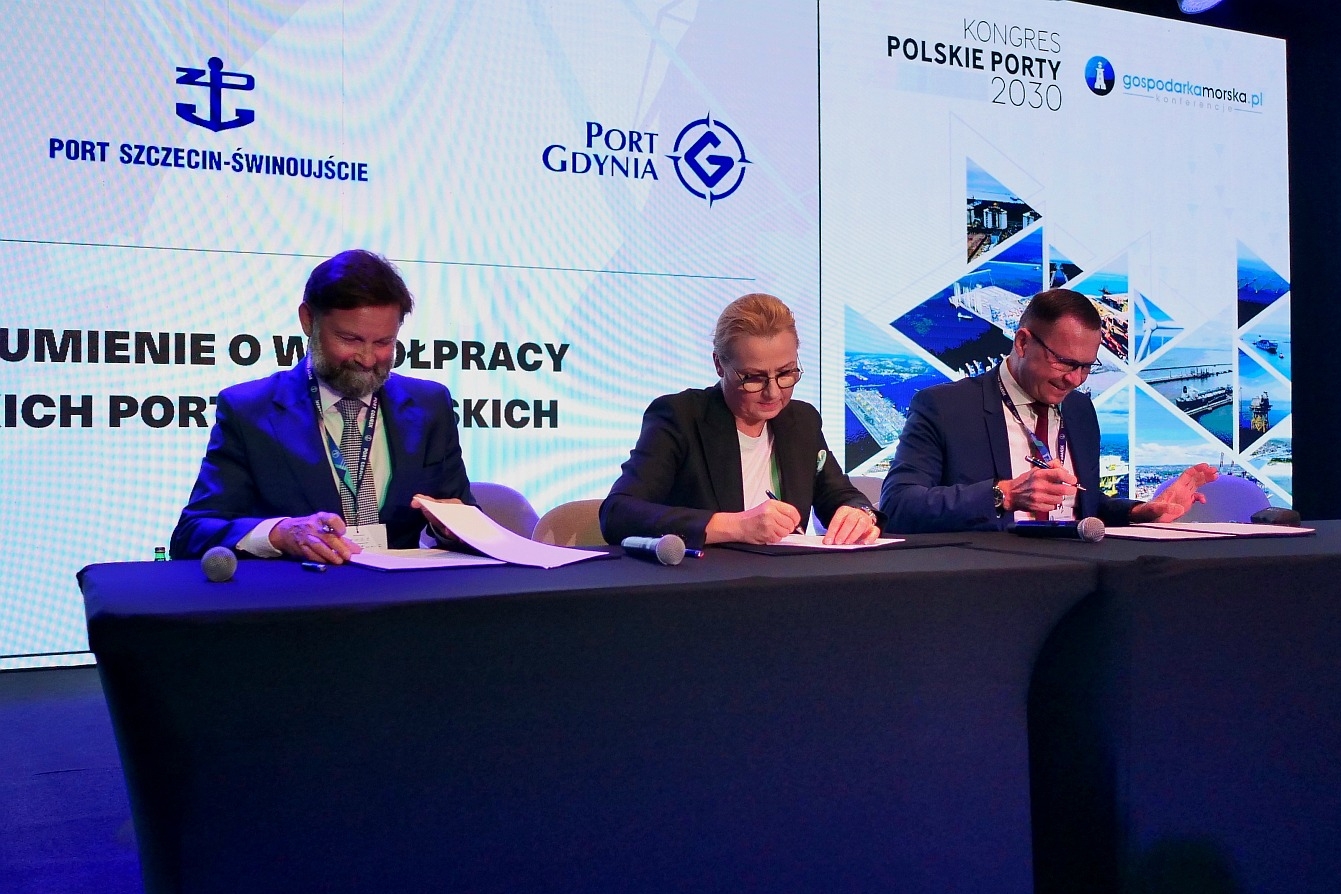
On June 24, 2025, in Sopot, a cooperation agreement was concluded between the three largest seaport authorities in Poland: the Port of Gdańsk, the Port of Gdynia, and the Szczecin and Świnoujście Seaports. This is a unique moment that opens a new chapter in the history of the Polish maritime economy – a chapter based on cooperation, coordination, and a shared vision of development for the coming decades.
The cooperation concerns strategic challenges facing Polish ports – both those related to infrastructure and digitalization, as well as the need for a unified voice on the European forum. It is based on clearly defined goals.
The purpose of the agreement is:
- jointly resolving the most important issues relevant to Polish seaports of fundamental importance to the national economy,
- strengthening the competitive position of Polish ports against foreign ports,
- strategic planning for the sustainable development of ports and their access corridors – for the benefit of the entire economy,
- exchange of knowledge, experience, and best practices between ports,
- implementing innovative technologies in line with global trends and EU guidelines,
- harmonizing procedures, standards, and digital systems to increase interoperability,
- increasing the importance of Polish ports in the TEN-T network,
- building a stronger negotiating position for ports with national and European institutions,
- joint efforts to secure funding and better conditions for supporting port development.
The agreement was signed during the Polish Ports 2030 Congress, which was opened by Deputy Minister of Infrastructure Arkadiusz Marchewka. In his speech, he emphasized the importance of working together:
This is about smart cooperation. It is not about not competing with each other: competition is good, it provides new opportunities, but stronger cooperation will allow the Polish voice to be heard on the international stage. And this will translate into creating a more attractive offer and reaching new customers with it.
Piotr Gorzeński, President of the Port of Gdynia Authority S.A., also spoke about the significance of the agreement in the context of current challenges:
Seaports are one of the most important links in the national economy. They generate billions in revenue for the state budget, attract investment, support exports and imports, and at the same time serve as critical infrastructure. Today’s challenges – from energy transition and geopolitical pressure to regional competition – require not only operational efficiency but also coordinated action at a strategic level. The agreement between the three key ports will allow us to effectively build Poland’s lasting position in the European transport system. Strong ports mean a strong state – and this is not an empty slogan, but a reality that is measurable and tangible in the economy and the country’s security.
Source: Port of Gdynia Authority S.A.