











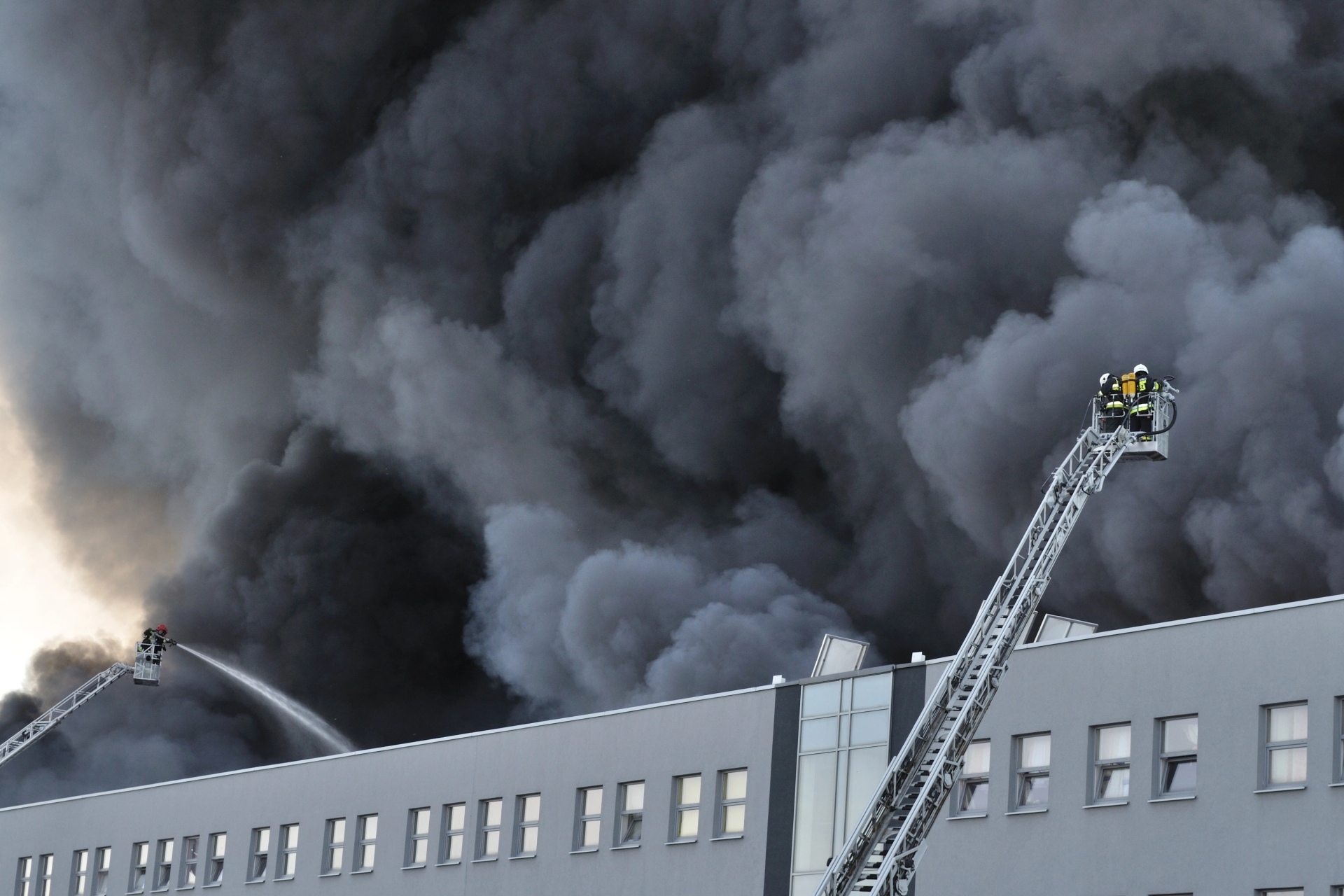
According to the State Fire Service (PSP), there were 832 fires in warehouse facilities in 2024. This is a slight decrease compared to 2023 (859 fires) and 2022 (944 incidents). Over the last three years, there have been a total of 2,635 fires in warehouses.
Warehouse facilities, much like production plants, are characterized by a specific fire risk profile – large areas, the storage of very diverse goods, the presence of machinery and electrical installations, and often flammable materials as well. Added to this is the issue of building construction – in recent decades, many halls have been built using materials that allow for construction at a relatively low cost and in a short time. However, in the event of a fire, these buildings – especially those made of sandwich panels – very quickly lose their structural integrity. An example is the fire at a warehouse hall in Baraki in March 2024, where the roof and wall structure collapsed, and the building caved in, resulting in losses estimated at 5 million PLN
– says Krzysztof Mierzyński, responsible for property and business interruption insurance at Attis Broker.
The most common causes of fires in such facilities include defects in electrical devices and installations (e.g., wiring or lighting) and carelessness when using open flames (including cigarettes, matches) – reports the PSP. Many fires also result from improper solid fuel heating, mechanical device defects, and technological processes. Arson also occurs.
Insurer requirements – key fire protection measures
The higher the risk of loss, the more detailed the requirements insurers set for companies seeking property protection. The type of business conducted and the materials stored are not the only factors. The construction of the buildings is also significant. The risk assessment for the same activity conducted in masonry buildings can be completely different than in buildings made of sandwich panels with a polyurethane foam core, which is a combustible material.
The list of the most common insurer requirements includes:
- External or internal hydrants – compliant with fire regulations, the number and capacity of which should be adapted to the actual fire load of the facility.
- Fire Alarm System (FAS) – the most favorable solution is to cover 100% of the enterprise’s area and connect the installation to the PSP system, which enables a faster response by services.
- Sprinkler systems – ceiling or in-rack, with the latter being particularly important in high-bay warehouses.
- Other fixed extinguishing systems – foam systems used in the chemical and fuel industries (creating a layer that isolates the fire from oxygen) and gas devices that displace oxygen from the room (for facilities where water could damage property).
- Regular system inspections – ensuring the efficiency of all fire protection installations and periodic testing of electrical, gas, and ventilation systems, as well as so-called chimney inspections.
- Thermal imaging camera inspections – increasingly required by insurers, especially concerning the verification of critical points (e.g., electrical switchboards, connectors, motors, or photovoltaic panels) to detect so-called hot spots.
- Monitoring and physical security – properly planned cameras inside facilities and sometimes the 24/7 presence of two security guards in the facility allow for early fire detection.
- Distance from the PSP unit – the location relative to the nearest fire station has a direct impact on the arrival time and the start of firefighting operations.
We increasingly observe that insurers expect companies to implement modern diagnostic technologies, such as inspections using advanced thermal imaging cameras. Their use is no longer limited solely to identifying potential sources of fire – they also constitute an effective tool for early detection of signs of wear and the risk of machine and installation failure. Companies investing in such solutions can count on more attractive insurance terms, including lower premiums and more favorable policy provisions.
– adds Monika Arasimowicz from Attis Broker.
Different requirements, different insurers
Proper fire protection is a key element of risk assessment by insurers. However, each of them may set different requirements regarding specific technical solutions or the frequency of inspections. Insurers evaluate many factors simultaneously – from the type of business conducted, through the building’s construction, to the security systems used.
The requirements of individual insurers can vary significantly. That is why companies seek policies through brokers who know the specifics of different companies’ requirements and are able to negotiate protection terms tailored to the facility. Consulting involves selecting an insurer, but also preparing technical documentation and meeting all requirements, which can translate into a more favorable premium.
– concludes Krzysztof Mierzyński from Attis Broker.
Summary
- There are several hundred fires in warehouse facilities in Poland annually – in 2024, 832 such incidents were recorded, according to data from the State Fire Service (PSP).
- Individual incidents can lead to millions in losses, which is why insurers are placing increasingly high requirements on their clients regarding fire protection.
- They check, among other things, the distance from the nearest fire station, expect 24/7 security presence in the facility or monitoring, and the performance of regular thermal imaging camera inspections.
Source: Brandscope Sp. z o.o.