











“Last mile” is the final stage of the process of transporting goods from a distribution center to the end recipient. Although it constitutes only a fragment of the entire logistics chain, it generates significant costs. Depending on the sector, this share can range from 40 percent[1] to as much as 53 percent[2] of the total delivery value. Along with the dynamic development of e-commerce, customer expectations regarding the speed and flexibility of deliveries are also growing. In turn, new regulations regarding the obligation to create Clean Transport Zones impose additional restrictions on traditional combustion engine vehicles. Logistics companies must therefore adapt their fleets to the new regulations, which often involves the need to invest in low- or zero-emission vehicles. All these factors make effective management of the “last mile” an increasingly greater challenge, requiring innovative and sustainable logistics solutions.
“Last mile” – a critical stage of logistics
The growing importance of the “last mile” results from several key factors. Firstly, the development of e-commerce significantly increases the demand for effective logistics solutions. According to PwC data, the value of the Polish online sales market in 2024 was approximately PLN 140 billion, and forecasts indicate growth to PLN 192 billion by 2028, which corresponds to a CAGR of 8%[3]. Furthermore, the pressure for sustainable development, resulting from growing environmental awareness and legal regulations, increasingly influences the need to reduce the negative impact of transport on the environment. According to a Gemius report, as many as 41% of surveyed customers attach great importance to this aspect[4]. Moreover, in response to problems related to air pollution and noise, more and more cities are introducing Clean Transport Zones. This also results from the amendment to the act signed in December by the President of the Republic of Poland, Andrzej Duda, according to which cities with a population of over 100,000, where nitrogen dioxide (NO₂) standards have been exceeded, are obliged to introduce CTZs. Consequently, combustion engine delivery vehicles are becoming an increasingly less optimal solution for the “last mile”.
Are light electric vehicles a solution for logistics?
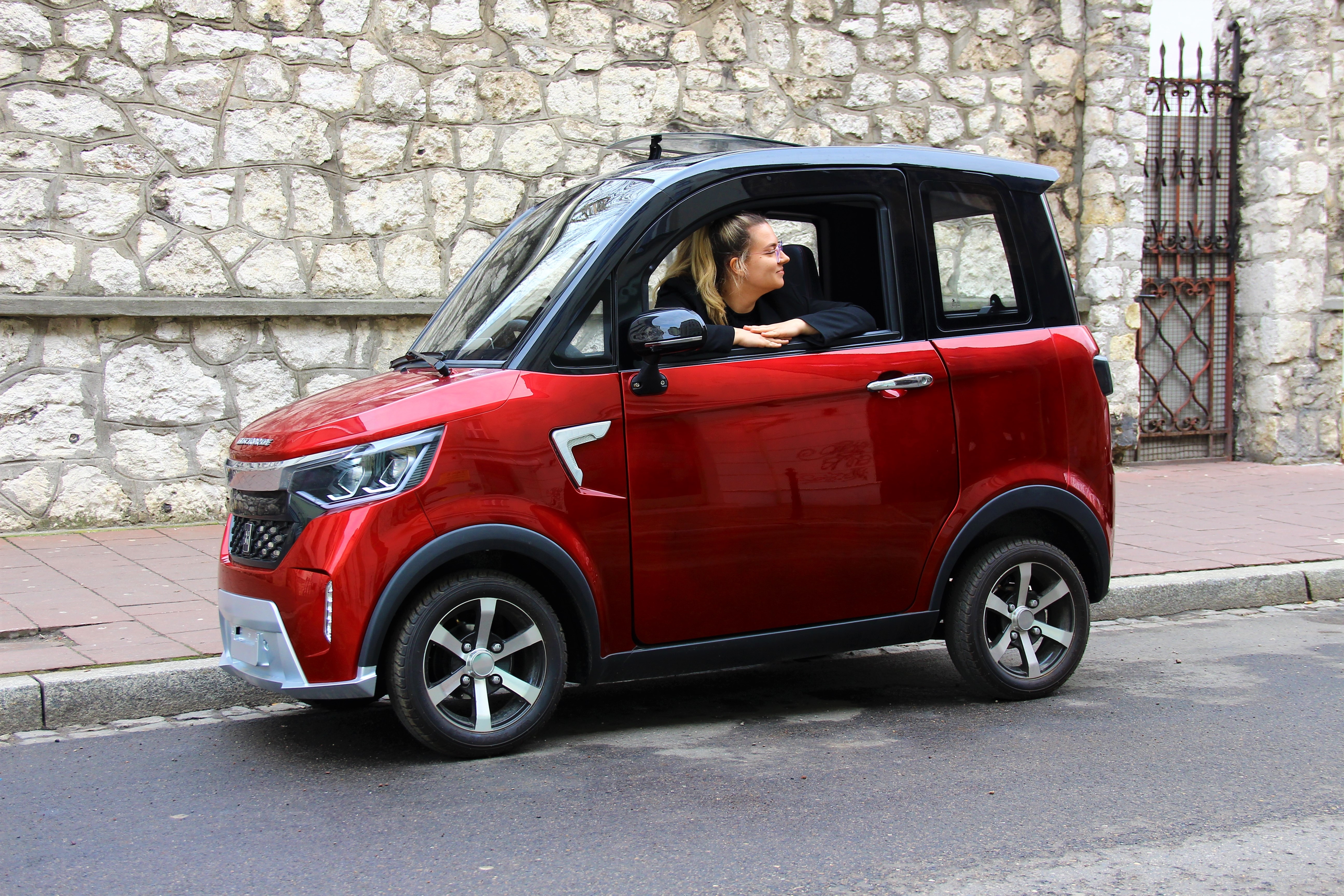
In this context, urban electric vehicles could potentially be the answer to the pressing problems of urban logistics. Two types of vehicles, in particular, may prove useful in this case.
Category L6e vehicles: include light quadricycles whose unladen mass without batteries does not exceed 425 kg, the maximum engine power is 4 kW, and the maximum speed is 45 km/h. To drive vehicles of this category in Poland, a driving license of at least category AM (from the age of 14) is required.
Category L7e: concerns heavy quadricycles whose unladen mass without batteries does not exceed 450 kg (for vehicles for the transport of persons) or 600 kg (for vehicles for the transport of goods), and the maximum rated engine power does not exceed 15 kW. Depending on the specific subtype (e.g., L7e-A, L7e-B), a category B1 or B driving license is required to drive them.
For “last mile” logistics, the key features of light electric vehicles are primarily their compactness, which facilitates movement and parking in crowded city centers, the ability to use bus lanes and free parking, and an electric drive that eliminates exhaust emissions and reduces noise.
Light electric vehicles offer a number of benefits for companies operating in the area of urban logistics. First and foremost, their operation is associated with lower operating costs compared to traditional delivery vehicles. Additionally, their compact dimensions allow for easier maneuvering and parking in crowded city centers, which translates into increased delivery efficiency. In turn, the lack of exhaust emissions and noise contributes to improving the quality of life in cities and positively influences the company’s image as environmentally responsible. Furthermore, such vehicles comply with regulations regarding low-emission zones, which allows for free entry into these areas without additional fees.
– explains Maciej Płatek, CEO of the Electroride brand, a Polish manufacturer of light electric vehicles.
It is worth noting that internal fleets remain the most frequently used solution. According to data from APQC (American Productivity & Quality Center)[5], as many as 42% of companies possess them. External suppliers, other than courier and postal companies, are the second most common option, used by 33% of respondents. These data underscore the importance of having one’s own, more flexible, economical, and ecological means of transport.
The potential of micromobility in logistics
Many companies and cities in Europe are slowly implementing light electric vehicles in their logistics operations. For example, the French Post (La Poste) is consistently developing its fleet of electric vehicles and logistics infrastructure to meet the growing requirements related to ecological “last mile” delivery. It currently has the largest number of electric delivery vehicles in Europe, totaling 37,000 units, and plans to increase this fleet by another 8,000 light electric vehicles by the end of 2025[6]. In parallel, it is developing a network of urban logistics hubs that enable the transshipment of parcels from trucks to more ecological means of transport, which allows for the realization of deliveries on the last leg in a zero-emission manner.
More and more companies are noticing the potential of light electric vehicles in carrying out deliveries on the so-called last mile. Importantly, these are no longer just large enterprises – small and medium-sized companies are also increasingly reaching for such solutions. Urban electric vehicles can be used in many different sectors: from courier shipments, delivering small orders, e.g., groceries, to work related to the maintenance of green areas. Their use within logistics centers, where mobility and the reduction of exhaust emissions count, is also becoming increasingly popular. Our vehicles have already reached several such facilities, where they are used for moving between halls and for servicing technical infrastructure.
– summarizes Maciej Płatek.
The challenges associated with the so-called last mile, compounded by the dynamic development of e-commerce and progressive urbanization, require companies to implement ecological and efficient means of transport. Companies are increasingly looking for alternative solutions that not only meet the growing expectations of customers but also fit into the assumptions of sustainable development. Micromobility can play a significant role in urban logistics, especially at its most demanding stage.
[1] Deloitte. 2023 “Global Smart Last-Mile Logistics Outlook”.
[2] https://www.wisesystems.com/blog/last-mile-statistics-2023-insights-innovations-trends/?utm_source=chatgpt.com
[3]https://www.strategyand.pwc.com/pl/pl/publikacje/2024/e-commerce-w-polsce.html
[4] Gemius. 2024 “E-commerce in Poland”.
[5] https://www.forbes.com/sites/stevebanker/2023/02/26/last-mile-delivery-visibility-and-vehicle-capacity/?sh=2cacec307f3c
[6] https://www.lapostegroupe.com/en/reducing-the-environmental-footprint-of-logistics-activities1?utm_source=chatgpt.com
Source: Electroride