








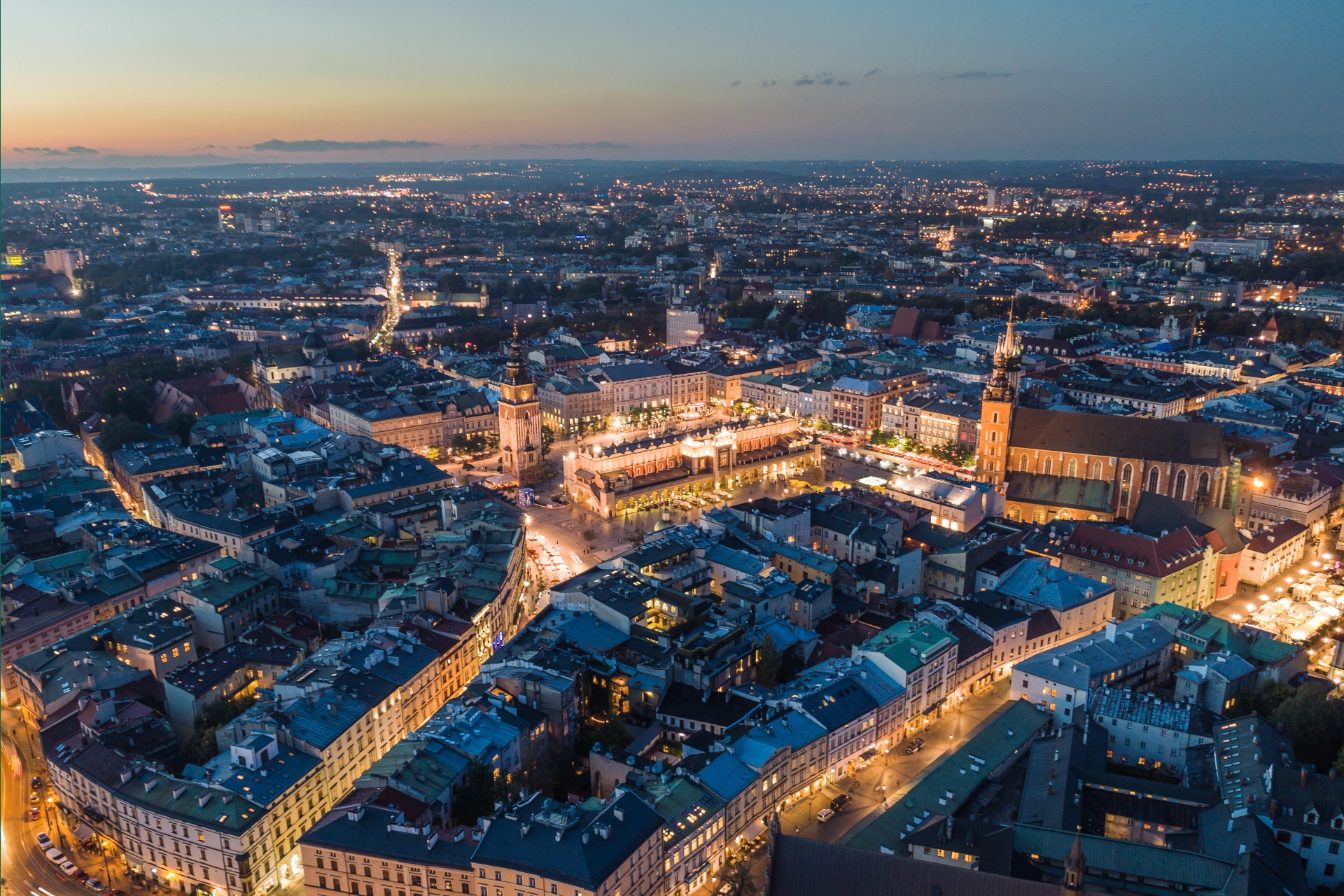
The globally operating firm Arup, specializing in sustainable engineering, has developed a new report presenting practical ways to create Clean Air Zones. Among the case studies mentioned, Krakow’s actions were highlighted so that other cities could learn from its experience. What steps should cities take to implement Clean Air Zones as effectively as possible?
Air pollution is becoming increasingly significant, as it is estimated that more than 8 million people die each year due to this problem.[1] There is no universal way to counteract this phenomenon, but a locally implemented solution that is becoming more common is Clean Air Zones (CAZ), which are specially designated areas where vehicles must meet minimum emission standards. Based on its experience with such zone projects and interviews with city officials from around the world, Arup has developed the report “Clean Air Zones: Practical guidance for cities.” In it, the company shows what steps cities should take to determine whether Clean Air Zones are a beneficial solution in a given location. The report’s authors also indicated how to implement zones to achieve the best results, while taking into account the needs of all stakeholders. One of the examples of implementing Clean Air Zones highlighted in the report is the actions taken by Krakow. In this case study, special attention was paid to the issue of legislative challenges and finding a balance between the needs and benefits for stakeholders. Krakow’s actions were presented alongside projects such as the CAZ in London, Jakarta, or Bogota.
Conditions conducive to the introduction of Clean Air Zones are different for every city. However, thanks to research and feedback from city authorities around the world, we are able to identify issues that will help in decision-making. Cities can also share their own experiences to implement changes as effectively as possible. We have included a collection of the most important elements in the report “Clean Air Zones: Practical guidance for cities,” which can serve as a guide for decision-makers
– says Katarzyna Solarek, Senior Sustainability Consultant at Arup.
The example of Krakow’s Clean Air Zone
In Arup’s international report on CAZs, the legislative, social, and technical challenges faced by the city of Krakow were presented as a source of knowledge from which other cities can draw. Air quality is one of the most important problems for Krakow, which once had one of the highest levels of air pollution in the European Union. This was successfully changed thanks to the actions of local government, and in particular, campaigns contributing to the reduction of emissions from household heating, including through the gradual phase-out of coal boilers. However, emissions from transport remain a significant challenge, primarily due to old vehicle models and the large number of cars in the city.
As early as January 2019, city authorities attempted to introduce a Clean Air Zone. Due to numerous protests by residents, the zone created in Krakow’s Kazimierz district was removed after only a few months of operation.[2] However, the Act on Electromobility and Alternative Fuels introduced in Poland in 2018 mandates the implementation of Clean Air Zones from 2026 for towns and cities with over 100,000 inhabitants that have exceeded the average annual permissible level of nitrogen dioxide concentration.[3] The provincial Air Protection Program also mandates action.[4] In November 2022, Krakow city councilors adopted a resolution on a Clean Air Zone that would cover the entire city.[5] In January 2024, the Provincial Administrative Court declared it invalid, pointing to an imprecise definition of the zone’s boundaries. [6] From November 2024 to January 2025, public consultations were held regarding the Krakow zone, during which a total of nearly 20,000 submissions containing often divergent expectations were collected. Currently, the date for the CAZ to come into force is estimated to be December 1, 2025.[7]
From the perspective of both an engineer and a resident of Krakow, I am perfectly aware of how complicated the process of introducing Clean Air Zones can be. However, in cases where air pollution in a city is a serious problem and is also significantly linked to vehicle operation, taking such actions may prove necessary
– says Bernadetta Badura, Industry Leader at Arup.
Cities on the path to implementing Clean Air Zones
Clean Air Zones can provide value for both residents and urban development. Introducing restrictions contributes to improving air quality, and consequently, the health of local communities. CAZs also influence noise reduction and safety on the streets. For urban infrastructure, such regulations are also a support in reducing CO2 emissions and a way to stimulate the local economy.
It is worth noting, however, that the introduction of Clean Air Zones also involves many challenges. By preventing the use of older, more polluting vehicles in certain places, cities may limit the choice of transport modes for residents. The effort and cost associated with planning, implementing, and maintaining this type of solution is also significant. A CAZ can also involve inconveniences and costs for individuals and businesses in connection with switching to a less polluting means of transport.
Due to the complexity of Clean Air Zones and the risks associated with this solution, the first step when making a decision about implementing a CAZ should always be to determine how important clean air is for the city compared to other priorities. The report “Clean Air Zones: Practical guidance for cities” shows how precisely the entire process must be planned and how much work it requires. One must be aware of the challenges, e.g., it is increasingly pointed out that despite a positive impact on air quality, CAZs increase inequalities, making the restrictions most beneficial to wealthier city residents who are able to change their car to a less polluting one. For less affluent people, the introduction of such regulations often involves giving up cars entirely. However, there are already countries that are beginning to introduce changes to minimize this problem, but one still needs to be aware of similar risks and carefully consider the introduction of such zones
– says Katarzyna Solarek, Senior Sustainability Consultant at Arup.
How are Clean Air Zones created?
In the report “Clean Air Zones: Practical guidance for cities,” Arup identified three stages of Clean Air Zone implementation that almost every city implementing a CAZ goes through, and developed a guide for each part. The first phase describes planning and communication. At this stage, decision-makers should carefully analyze the current political, environmental, and economic situation in the city and decide how to ensure effective communication. This is crucial for identifying what type of CAZ might be effective.
In the next stage, the report’s authors described the planning and implementation process. This section helps decision-makers identify the best form, size, and ambition for a CAZ and includes advice on implementation in areas such as creating operational models and managing the scheme, detecting and enforcing vehicle traffic, and preparing for operation. The final part of the report presents the monitoring and evaluation process, providing tips on various approaches, metrics, and data sources relating to, among other things, air quality, economy and equity, health, and transport. In each section, the authors included questions that need to be answered while working on Clean Air Zones.
Clean Air Zones can significantly reduce air pollution in cities, but it should be remembered that introducing this solution requires a great deal of commitment. Therefore, before deciding to start such a project, it is worth getting to know the potential of CAZs and the challenges associated with them. The full report can be found on the Arup website.
[1] https://www.unicef.org/press-releases/air-pollution-accounted-81-million-deaths-globally-2021-becoming-second-leading-risk
[2] https://sctlab.ios.edu.pl/sct-kazimierz-2019-co-poszlo-nie-tak/
[3] https://sip.lex.pl/akty-prawne/dzu-dziennik-ustaw/elektromobilnosc-i-paliwa-alternatywne-18683445
[4] https://samorzad.pap.pl/kategoria/srodowisko/radni-krakowa-przyjeli-uchwale-o-strefie-czystego-transportu-najstarsze-auta
[5] https://samorzad.pap.pl/kategoria/srodowisko/radni-krakowa-przyjeli-uchwale-o-strefie-czystego-transportu-najstarsze-auta
[6] https://bip.krakow.wsa.gov.pl/343/komunikat-w-sprawie-o-sygn-iii-sakr-48423-strefa-czystego-transportu-w-krakowie.html
[7] https://smoglab.pl/co-dalej-z-sct-w-krakowie-sa-wyniki-konsultacji/
Source: Arup