











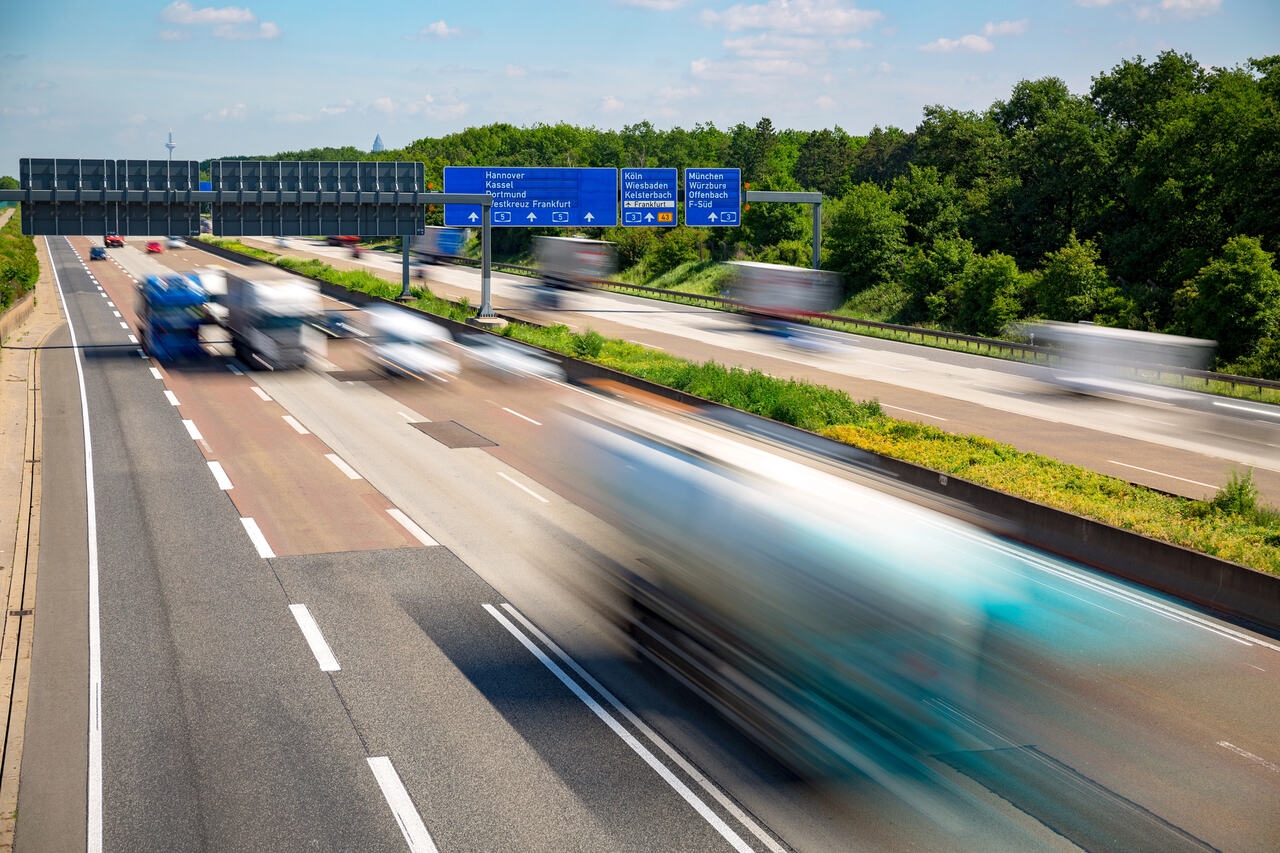
Forecasts for our western neighbor for 2025 are proving less optimistic than recently assumed. This is particularly alarming for Polish carriers and exporters. How is the current macroeconomic situation in Germany affecting the transport industry in Poland?
Germany remains a key trading partner for Poland, which has a crucial impact on the transport industry in Poland. In 2024, the value of exports to Germany amounted to nearly 94.8 billion euros, a decrease of 3.9% year-on-year. Meanwhile, Germany’s share in exports decreased by 1.1 percentage points compared to the same period last year, amounting to 27.0% (according to Statistics Poland data).
Another unfavorable year
According to information from the Federal Statistical Office in Wiesbaden, Germany’s GDP fell by 0.2% in 2024 compared to 2023. A year earlier, a decline of 0.3% was recorded. The last instance of a two-year recession in Germany occurred in 2002-2003.
– Although forecasts for the European economy for 2025 indicate moderate growth, there is a risk that Germany will not benefit from the global recovery. The European Commission predicts that economic activity in the European Union will grow by 1.5%, and in the eurozone by 1.3%. At the same time, the Organisation for Economic Co-operation and Development forecasts global growth at 3.3% – points out Maciej Maroszyk, Chief Operating Officer at TC Kancelaria Prawna, and adds:
– Meanwhile, the German Ministry of Economy, led by Robert Habeck, has lowered its GDP growth forecast for Germany for 2025 to just 0.3%. Interestingly, earlier estimates assumed it would be 1.1%. The 2025 economic report also highlighted the growing risks associated with foreign trade – a 1% decline in exports is expected in both 2024 and 2025.
Main causes of prolonged stagnation
According to analyses by the Ministry of Development and Technology, one of the key factors contributing to the prolonged stagnation of the German economy is high energy costs. The rise in gas prices following the Russian aggression against Ukraine has affected the profitability of German industry. Natural gas costs remain 43% higher than before 2022. This represents an additional burden on GDP of 2.1% per year. By 2026, the launch of 10 GW of gas capacity was planned, but this may be insufficient to meet industrial needs. In addition, declining exports and increasing international competition are alarming – particularly from China, which is gaining market share in the automotive and machinery sectors, traditionally dominated by Germany. For example, Germany’s share of global machinery exports fell to 13.8% in 2024, while China increased its share to 18.9% during the same period. It is also worth mentioning the insufficient level of investment in infrastructure, education, and digitalization – both public and private.
– Excessive bureaucracy and the complexity of administrative procedures are problematic, posing a significant barrier for entrepreneurs. Current demographic changes, i.e., an aging society and a shortage of skilled labor, are also unfavorable. To all this, one should add high interest rates and economic uncertainty – resulting from both global crises and internal problems – lists Maciej Maroszyk, Chief Operating Officer at TC Kancelaria Prawna.
An additional threat is Donald Trump’s tariff policy. The risk of introducing new tariffs on products from the European Union could hit the German automotive industry – one of the pillars of their economy – particularly hard.
How does the slowdown in Germany affect the Polish TSL sector?
Reduced domestic demand across our western border and production cuts in key industries, such as the automotive, chemical, and metallurgical sectors, are leading to a decline in the number of transport orders. Many carriers – both Polish and German – are already struggling with financial problems, resulting in the reduction of transport fleets. Additionally, rising operating costs, including wages and road tolls, are becoming an increasing burden for transport companies. Since December 2023, the German toll for 40-ton truck combinations has increased by as much as 86%, reaching 35.4 euro cents per kilometer.
– The weakening of the German economy directly translates into reduced demand for Polish goods. This is particularly visible in sectors heavily dependent on the German market – such as the automotive, chemical, or furniture industries. This also means lower demand for transport services. Another worrying signal is the increase in the number of bankruptcies of German companies. According to Creditreform, the number of bankruptcies in 2024 increased by 24.3% compared to 2023, which is the highest level since 2015. This creates a risk of problems with timely payments from German contractors – explains the Chief Operating Officer of TC Kancelaria Prawna.
New legal regulations in Germany and Polish transport companies
Last year, Polish carriers accounted for 19.05% of revenue from German road tolls. It is worth recalling that since July 1, 2024, German road tolls have covered all vehicles with a GVW exceeding 3.5 tons. Previously, this only applied to vehicles over 7.5 tons.
– Throughout the European Union, since December 31, 2024, transport inspections have been checking tachograph data for a period of 56 days. Previously, this number was lower, i.e., 28 days. This means that drivers must carry tachograph printouts for a longer period – reminds Maciej Maroszyk, Chief Operating Officer at TC Kancelaria Prawna.
Since September 2024, new regulations regarding the safety of cargo transported by car transporters have been in effect. In turn, zero-emission vehicles remain exempt from road tolls until the end of 2025, but from January 1, 2026, they will have to cover 25% of the standard infrastructure rate and environmental charges. Zero-emission vehicles with a GVW of up to 4.25 tons are permanently exempt from tolls.
– In this context, the result of the German parliamentary elections is important. According to official data after counting the results from all electoral commissions, the CDU/CSU coalition won. The far-right AfD came in second, recording a record increase in support. In the near future, we will be watching the new German government with interest, waiting for its first decisions and their potential impact on the transport sector – adds Maciej Maroszyk from TC Kancelaria Prawna.
Challenges and opportunities for Polish transport companies
The current situation with our western neighbor forces Polish transport companies to be more flexible and innovative in order to adapt to difficult market conditions. Polish companies must diversify their markets or services. Worth noting is the growing demand for the transport of goods requiring special conditions or the shift to partial loads at the expense of full truckloads. Optimizing costs, investing in digitalization, or low-emission fleets is also becoming a necessity. In an era of competition from eastern carriers, responding flexibly to market needs will also be key.
However, the expert from TC Kancelaria Prawna points out that despite the difficulties, the slowdown in the German economy may also create certain opportunities. German companies, looking for ways to optimize costs, may more often choose Polish suppliers instead of more expensive German manufacturers. According to forecasts by Trade.gov.pl, sectors such as household appliances, food, and metal have chances for export growth, which may translate into increased demand for transport services.
Source: TC Kancelaria Prawna