









Digitalization increases efficiency and reduces costs in the TSL industry, which is why it is and will continue to be a key factor shaping its future. It is thanks to digitalization that challenges such as rising operating costs, driver shortages, or ensuring transport safety can be addressed. At the same time, however, it also poses a significant challenge due to the need for large investments and the high dynamics of changes in legal regulations.
Is it worth the effort? Definitely! And today we will tell you a little more about how to play this game, i.e., which tools to choose to get ahead of the competition not by one, but by several steps.
Digitalization as the key to efficiency in logistics
Digitalization in transport and logistics companies takes place at various levels – from fleet management to back-office processes, which means there are many processes to take care of. Where to start, what are the priorities of logistics companies? As shown by the results of a survey conducted in 2023 by S&P Global Market Intelligence, these are: order management (60% of respondents), real-time cargo tracking (58%), and order intake and loading space management (58%). It is therefore worth focusing initially on technological solutions that will allow you to address these 3 areas. It is crucial that these are cloud solutions, because they enable efficient collection, updating, and exchange of even large amounts of data in real time, and provide employees with access to information 24/7/365. A huge advantage of these solutions is also the possibility of integrating all systems used by the company, which in turn allows for full optimization of all operations. There are many cloud solutions on the market, and the most key factors when choosing them are: scalability and flexibility, the possibility of integration with already used solutions, or the speed of implementation. All these conditions are met by the Microsoft Azure cloud, which is why it is worth turning your attention in its direction.
“Using cloud solutions is becoming a standard way of doing business for large and medium-sized companies in the TSL industry. The cloud enables the building of competitive advantages and helps minimize risks related to data protection and process continuity, and is also economically efficient. By investing available funds in such technologies, companies can much more easily identify areas requiring potential optimization and automation, i.e., those where their money is actually leaking, and then implement appropriate solutions.” – Marcin Wojtaszek, CTO at Euvic IT and Infrastructure Director at Euvic.
Professional software as a guarantee of your efficiency
Constant cost increases, high dynamics of regulatory changes, driver shortages, suboptimal use of warehouse space, and inefficient route planning are just a few of the many ailments of the TSL industry. The need to invest in new technologies also causes anxiety, because many companies still do not know which solutions to choose and how to go through the digitalization process painlessly – so as not to waste time and money. However, there is no need to be afraid of digitalization – the benefits that come with it should be enough to convince you that it is worth thinking about.
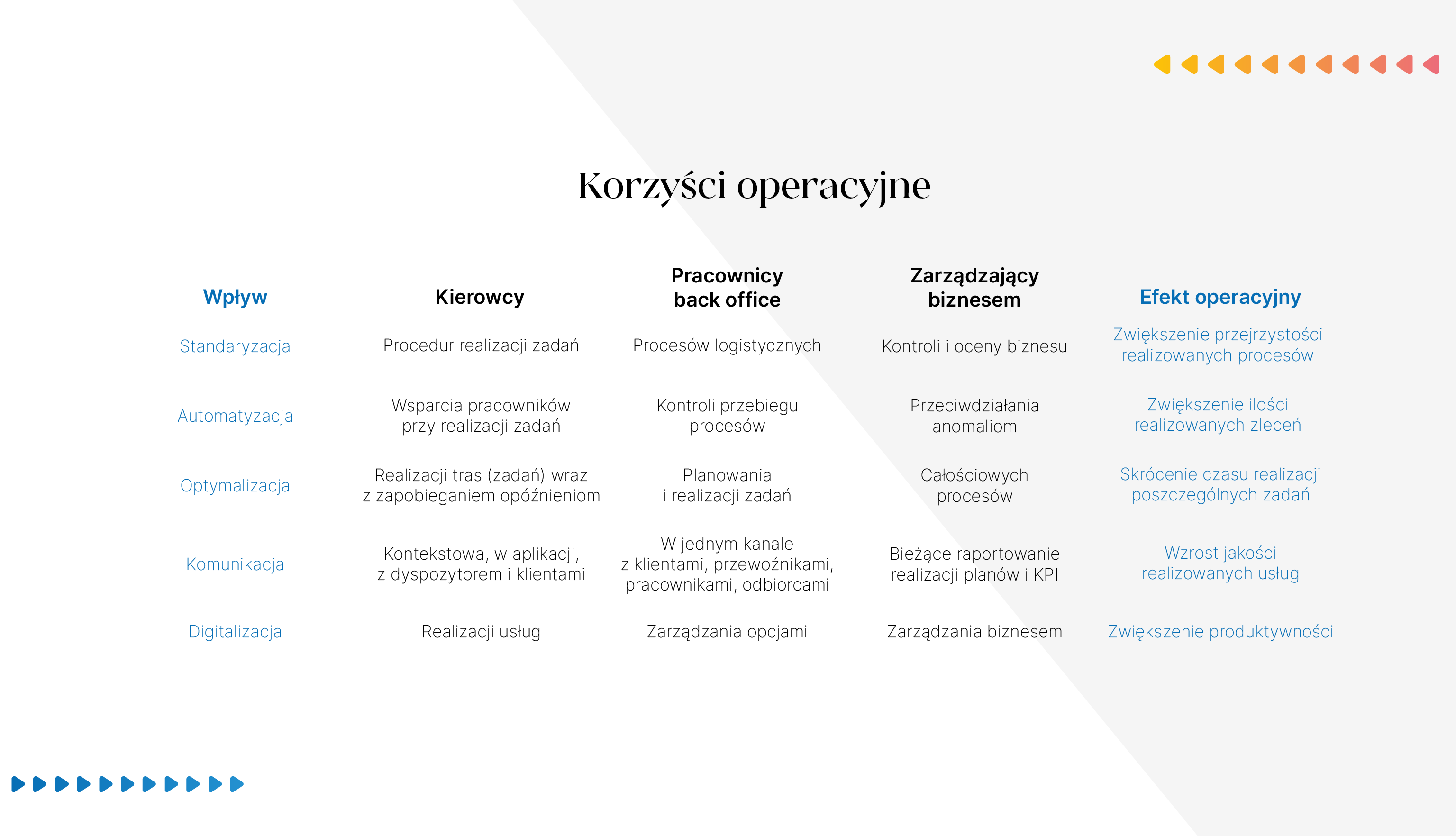
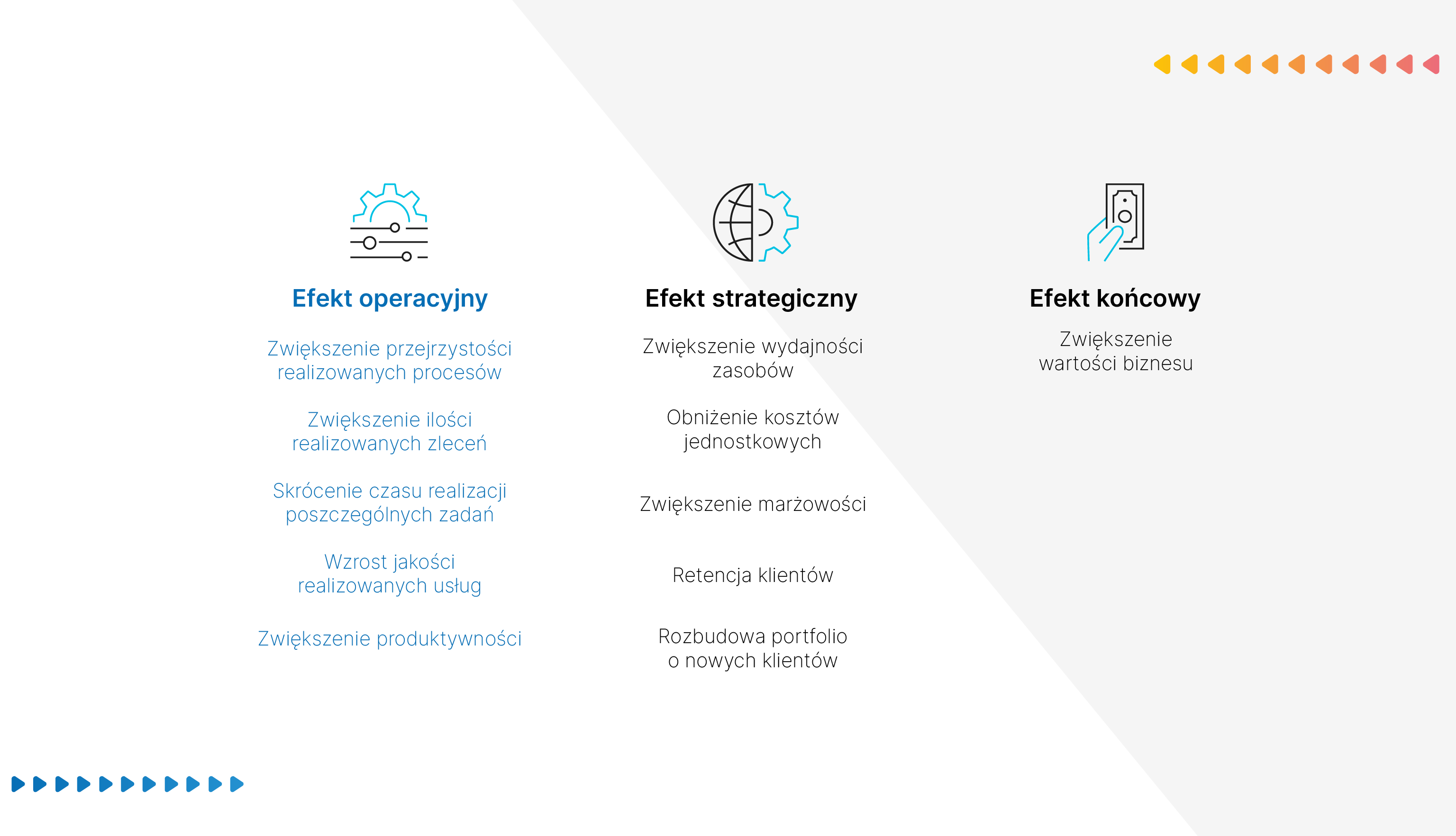
And if the range of benefits is still not enough and the implementation of modern IT systems is still frightening, consider a few more aspects that are key from the perspective of your organization, such as:
- Ease of integration – we enable efficient integration with TMS/WMS systems and any other systems you use.
- 24/7/365 availability – we provide you with full access not only to the system’s functionality but also to technical support.
- Flexibility – we tailor our services to your individual needs and processes characteristic of your organization.
- Multi-level structure – we create advanced permission structures so that you can grant users access appropriate to their needs.
- Intuitiveness – we focus on efficient and easy operation of the provided tools.
- Modernity – we build them in accordance with the latest trends and available technology.
Alright, now that you know what benefits you can achieve, it’s worth considering how to do it.
Monitor, manage, digitize – take your business to the next level
If your key business needs include: monitoring deliveries, monitoring driver work in real time, a full history of task completion in real time, or document digitalization, it is worth taking a look at the ePOD system.
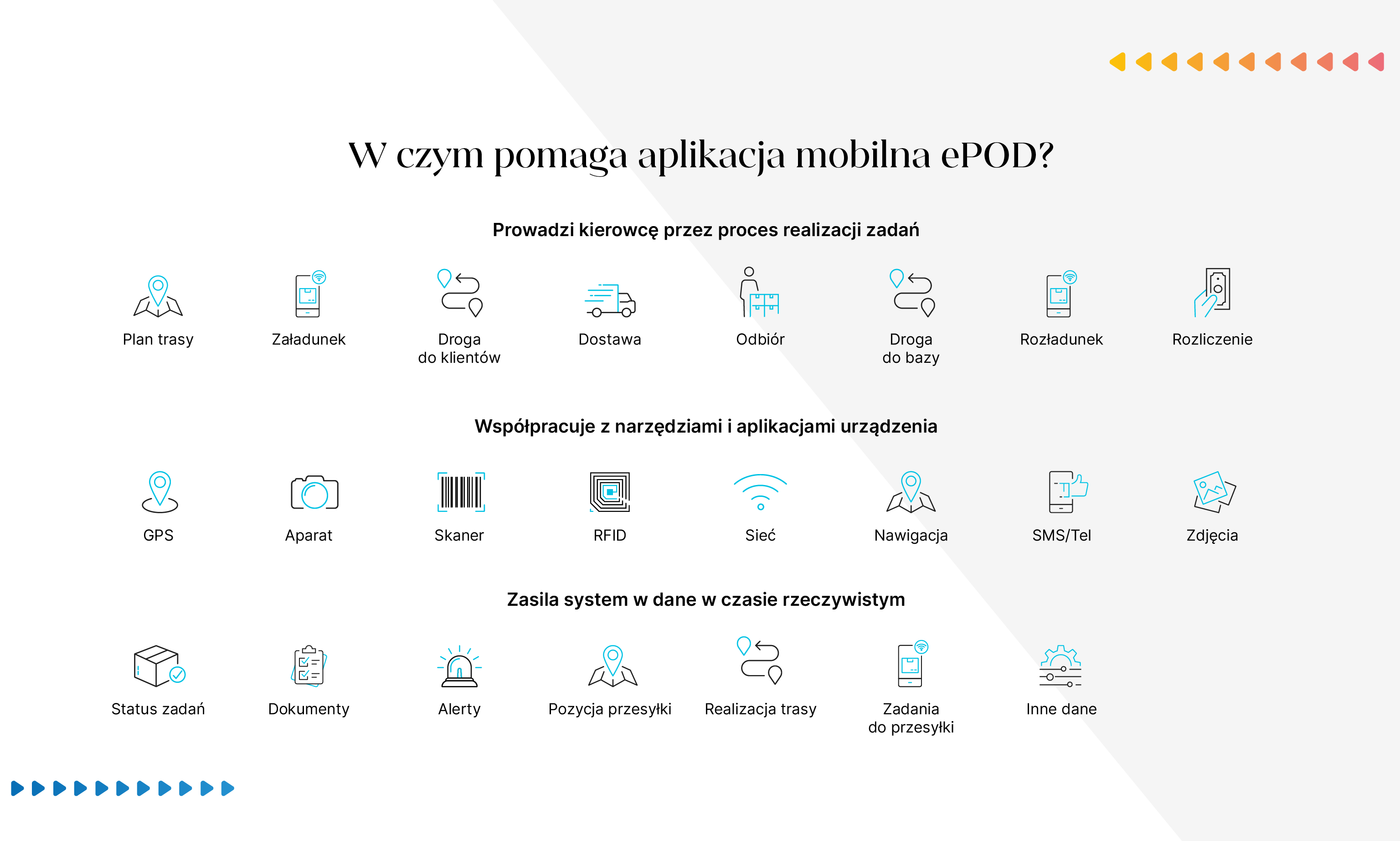
ePOD is a Proof of Delivery class solution with advanced functionalities enabling real-time delivery logistics management. By deciding to use it, you support the driver in all phases of the delivery process (goods collection, transshipment, delivery to the recipient) and gain the ability to track their current position and receive information about the current statuses of completed tasks.
What’s more, the ePOD system will also allow you to visualize routes/loops and communicate effectively with drivers (exchanging messages on a chat with the ability to share photos/files), as well as support the full handling of the complaint process and streamline the entire reporting process.
To make even better use of the ePOD system’s capabilities, it is worth considering:
- Expansion with a carrier portal, i.e., a User Communication Portal class system created for effective support of communication and document flow between carriers, clients, recipients, and the logistics center.
- Integration with external IoT (Internet of Things) systems such as: temperature readers, loading and packing, air humidity, card and BLIK payments, electronic seals, etc.
And if your priority is to relieve the “peaks” of unloading and loading, increase control over vehicle traffic in a given location, reduce delays, or lower operating costs, you should consider implementing a YMS system.
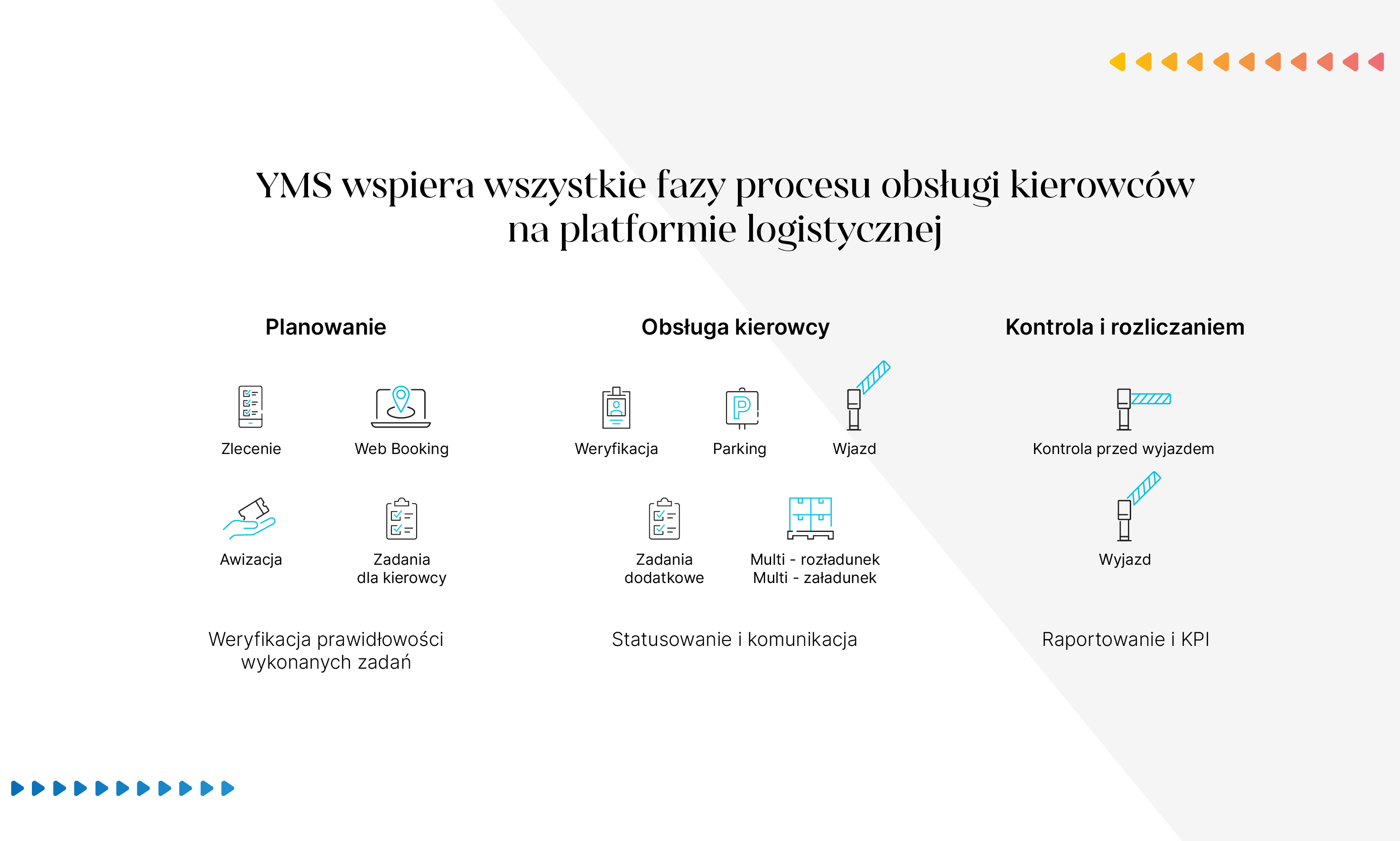
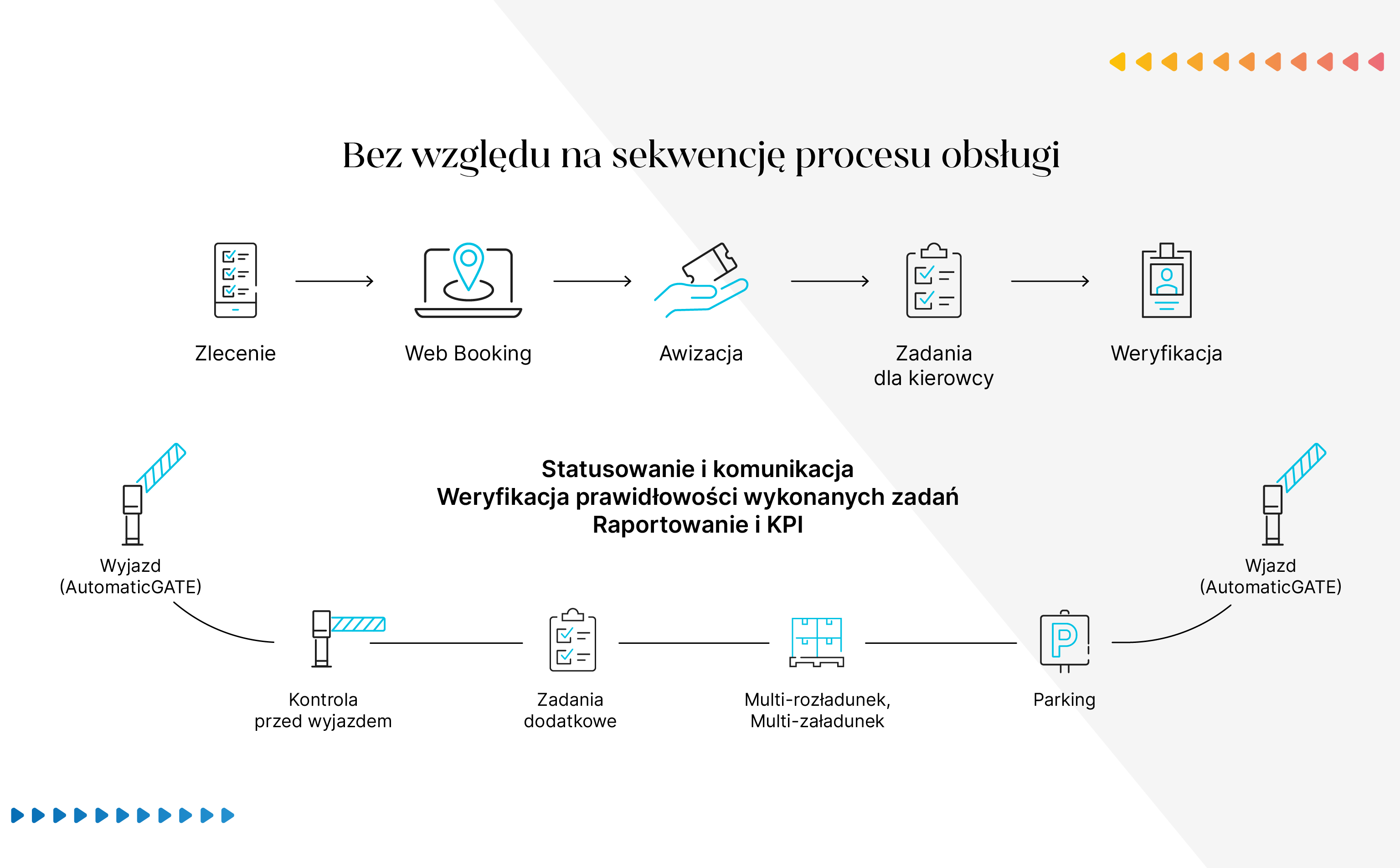
YMS is a Yard Management class system supporting communication and management of all participants in operations at logistics hubs and warehouses, as well as driver service. By using it in your daily operations, you will be able to better manage ramps, parameterize notifications and processes, and you will gain access to the full history of your activities.
To make even better use of its potential, it is worth expanding it with:
- Web booking, i.e., remote booking of notification slots by both clients and drivers, enabling real-time slot management.
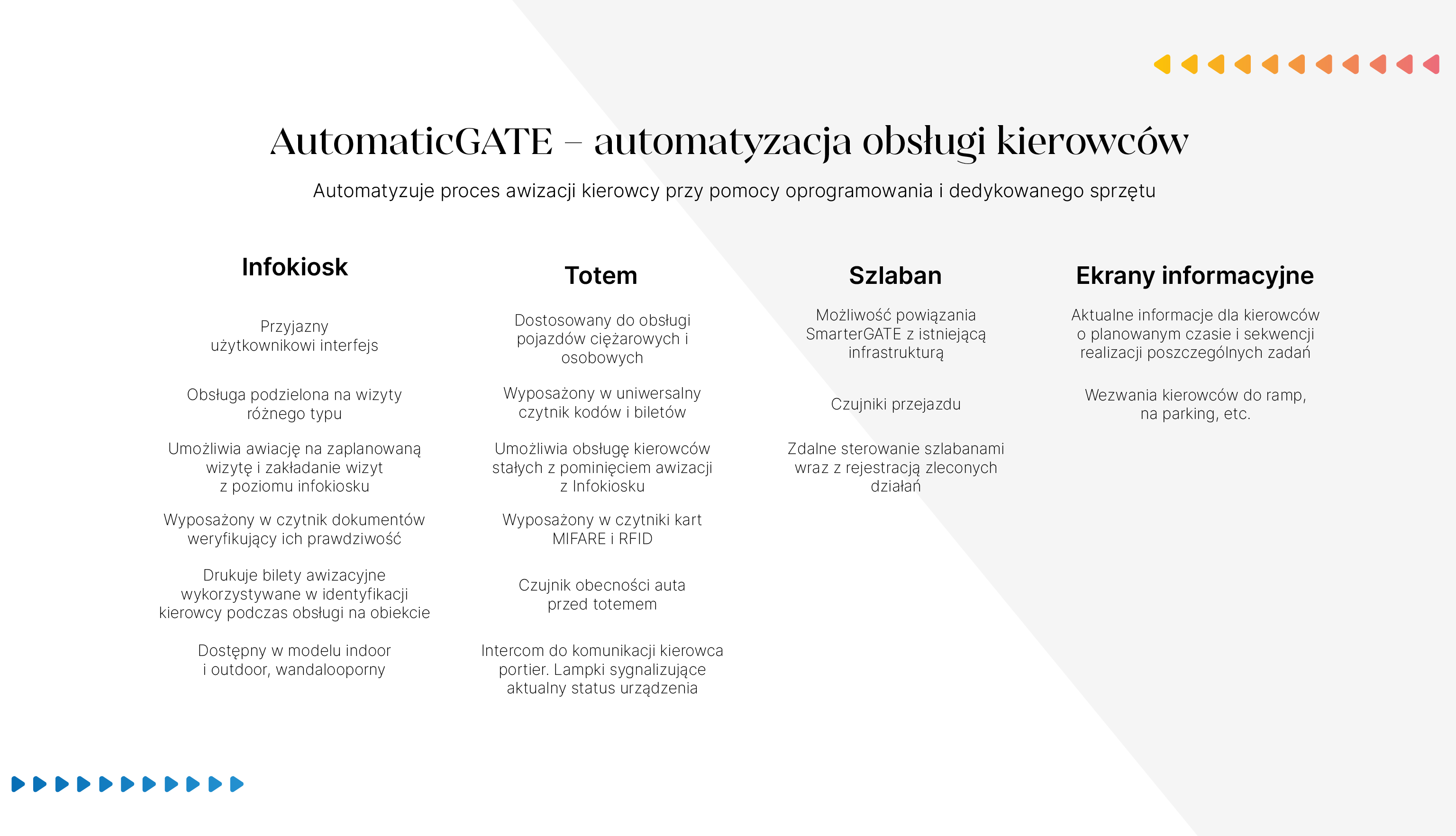
- Automatic Gate, i.e., a Gate Automation class system, enabling the automation of notification processes, driver and vehicle identification, and task allocation for the driver.
Many needs – one tool
Every business is different, has different needs, and its own development plans. That is why, when deciding on the above solutions, you do not have to choose which of them to focus on. You can cover 100% of your needs by combining both systems (ePOD and YMS) and using them as one coherent tool. Both platforms have been designed in such a way that they are easily integrable and support the operation of the TSL sector at every stage of the supply chain – from manufacturers, through logistics operators and transshipment points, to end recipients (B2B/ B2C / B2B2C). Regardless of whether they are used together – as a whole – or as two separate tools – ePOD and YMS are always very effective and efficient, among other things because Microsoft Azure cloud infrastructure was used to build them.
If you are looking for optimization and want to build a competitive advantage, book a free consultation with an expert, during which you will learn more about the possibilities of implementing ePOD and YMS in your organization.
For more information about our solutions for Logistics, go here: https://www.euvic.com/elogistyka/