








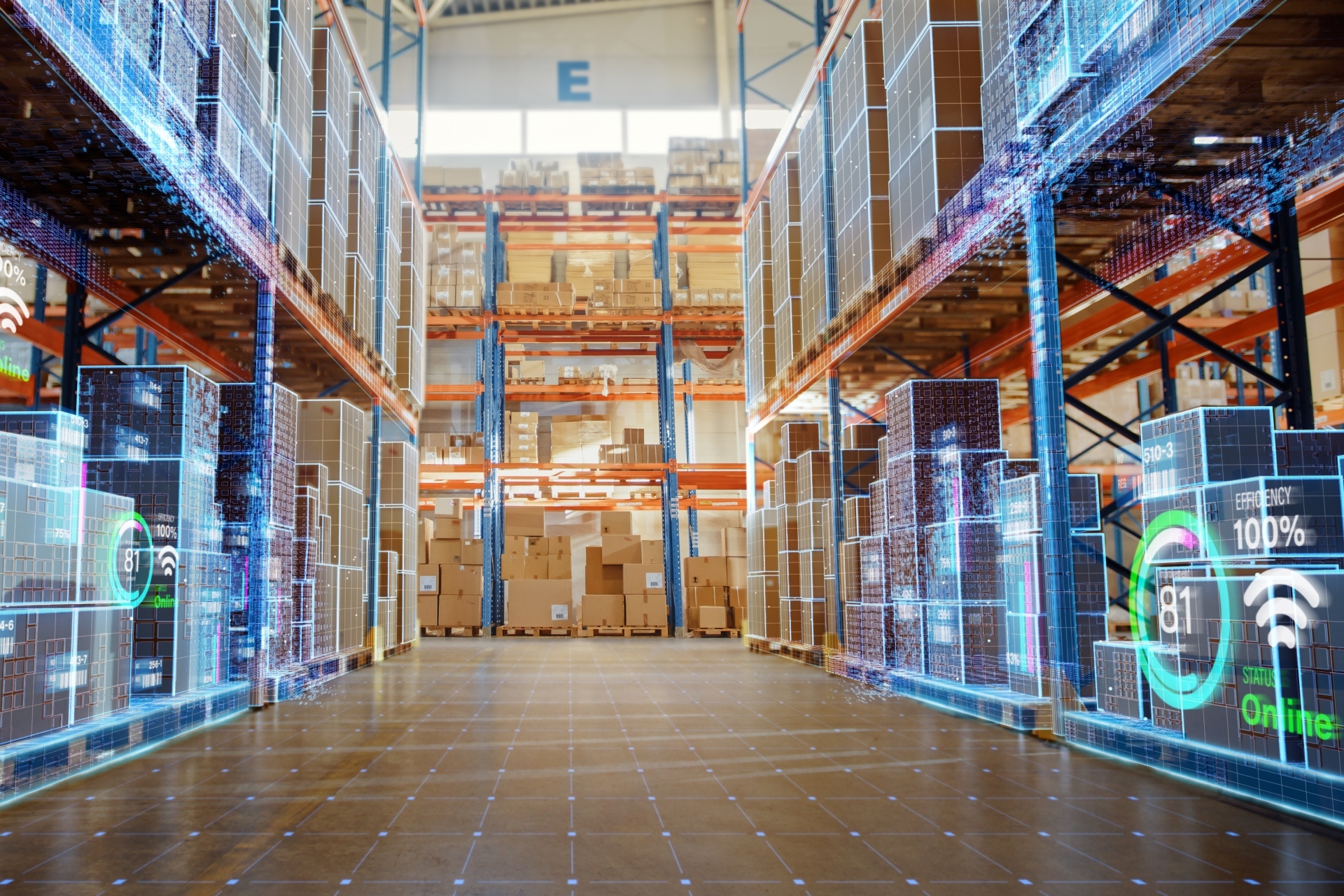
The integration of Artificial Intelligence and the Internet of Things (AIoT) is setting new standards in the transport and storage of sensitive products, such as medicines or food. Thanks to the capabilities of precise monitoring, failure prediction, and real-time process optimization, AIoT is becoming an indispensable tool for minimizing losses and ensuring compliance with legal requirements.
AIoT – the technological tandem as the future of transport and storage of sensitive products
AIoT is the synergy of Artificial Intelligence (AI) and the Internet of Things (IoT), creating systems capable of monitoring, analyzing, and making decisions in real time. These solutions are gaining popularity, as confirmed by market data. In 2023, the global AIoT market was estimated at 126.1 billion dollars, and according to forecasts, its value will grow to 1,319.4 billion dollars by 2032, which means a compound annual growth rate (CAGR) of 30.2% in the years 2024-2032[1]. This growth is driven by the increasing needs of the logistics industry and the necessity to meet strict regulatory standards.
The transport and storage of sensitive products require special care. It is crucial to meet the requirements resulting from HACCP, GDP, EU Regulation 1169/2011, or pharmaceutical law regulations. These requirements include monitoring key environmental parameters, such as temperature and humidity, maintaining stable storage conditions, and conducting regular audits and certifications. AIoT facilitates these tasks by automating monitoring processes and ensuring rapid response to any deviations from the norm. This makes the implementation of AIoT not only improve the quality of logistics processes but also reduce the risk of losses and operational costs.
IoT as a key technology in the transport and storage of sensitive products
IoT technologies are indispensable in the precise monitoring of key environmental parameters, such as temperature or humidity, which are of key importance in the logistics of sensitive products (including medicines, food, and chemicals). Warehouses equipped with intelligent IoT sensors automatically detect changes in the levels of these parameters, which enables a quick reaction to any deviations from the norm. For example, solutions from Blulog, implemented at NEUCA – the largest pharmaceutical wholesaler in Poland – are based on RF radio sensors that monitor conditions at over 1,500 measurement points. These systems help not only in maintaining product quality but also in quickly detecting the sources of potential problems. Another example is DHL SmartSensor technology, which allows for precise control of parameters during the transport of sensitive goods.
IoT also plays an important role in maintaining the continuity of logistics operations, enabling the monitoring of the technical condition of equipment, such as refrigeration systems, and predicting potential failures. According to a Deloitte report, predictive maintenance allows for reducing equipment maintenance costs by 40% and reducing downtime by 50%[2]. In turn, an analysis by McKinsey & Company indicates that the implementation of predictive maintenance can shorten machine downtime by 30–50% and extend their service life by 20–40%[3]. Such an approach not only lowers operational costs but also increases the reliability of systems, which is of key importance in the logistics industry.
IoT technologies offer a wide range of solutions that minimize the risk of damage to sensitive products, while simultaneously increasing the efficiency and quality of the entire logistics process.
Integration of IoT solutions with artificial intelligence
AI in AIoT systems plays a key role, transforming vast amounts of data generated by IoT devices into useful information, as well as supporting decision-making in real time. Such a combination allows for achieving unprecedented precision and efficiency, which makes it an indispensable tool in the logistics of sensitive products, such as medicines, food, or chemicals.
One of the most important applications of artificial intelligence in AIoT are predictive algorithms, which analyze historical data from IoT sensors to predict potential problems in devices or refrigeration systems. For example, subtle changes in parameters such as temperature, humidity, or energy consumption can indicate an impending failure.
Artificial intelligence allows for the automatic processing and selection of data generated by IoT networks. Thanks to this, information crucial for the safety and quality of logistics processes is immediately available, and less important data can be archived or analyzed later.
AIoT systems enable the monitoring of storage and transport conditions in real time, which allows for an immediate reaction in the event of detecting anomalies such as a rise in temperature or humidity. Automating these processes not only minimizes the risk of losses but also significantly speeds up the identification of the source of the problem, which is crucial in the case of products with a short shelf life.
Business and environmental benefits of implementing AIoT
Implementing AIoT solutions in enterprises contributes to achieving significant benefits in the area of operational efficiency, environmental protection, and quality management. These technologies are becoming an inherent part of business strategies, as evidenced by their growing popularity and high return on investment. The number of IoT use cases grew by 53% between 2021 and 2024, and as many as 92% of organizations report a positive ROI from their implementations[4].
The integration of IoT with advanced data analysis supported by AI enables companies to monitor key parameters in real time, such as temperature, humidity, or pressure, which are particularly important in the logistics and production sectors. Thanks to this, it is possible to quickly detect quality deviations and take appropriate actions to prevent the occurrence of defects. For example, AIoT systems analyze data from sensors placed in warehouses or production lines in real time, identifying potential problems before they affect the quality of the final product. Automatic quality control also allows for more effective compliance with norms and standards, such as ISO or HACCP, thanks to which certification processes become simpler and less time-consuming.
According to an FAO report, globally, about 14% of food products are wasted at the transport and storage stage[5]. AIoT enables a significant reduction of these losses thanks to precise monitoring of parameters in real time and the elimination of potential causes of problems, such as improper storage or transport conditions. Thanks to the technology, it is also possible to predict, for example, the failure of refrigeration equipment, which allows for preventing the damage of large batches of products. Such solutions contribute to greater operational efficiency, and at the same time to the reduction of financial losses associated with the loss of goods.
The implementation of AIoT also fosters the realization of sustainable development goals. Thanks to the optimization of logistics processes, these technologies allow for the reduction of energy consumption and CO2 emissions. For example, intelligent fleet management systems use IoT data and AI algorithms to plan transport routes, which leads to a reduction in fuel consumption and the minimization of the negative impact on the environment.
Moreover, AIoT supports enterprises in adapting to growing legal requirements and standards related to environmental protection, such as EU regulations regarding the low-emission economy. Automating processes not only increases efficiency but also helps companies build a more sustainable future.
Summary
AIoT is revolutionizing the logistics of sensitive products, offering precision, efficiency, and savings. Thanks to the integration of IoT with AI, it is possible not only to accurately monitor key parameters in real time but also to predict failures, optimize processes, and reduce losses. Organizations that want to maintain a competitive advantage should plan the application of these technologies in their development strategies. With the current development of AIoT, the possibility of its use in logistics, as well as other industries, is almost unlimited.
[1] https://www.alliedmarketresearch.com/artificial-intelligence-of-things-aiot-market-A180781
[2] https://www.deloitte.com/content/dam/assets-zone2/de/de/docs/about/2024/Deloitte_Predictive-Maintenance_PositionPaper.pdf
[3] https://www.mckinsey.com/capabilities/operations/our-insights/manufacturing-analytics-unleashes-productivity-and-profitability
[4] https://iot-analytics.com/product/iot-use-case-adoption-report-2024/
[5] http://www.db.zs-intern.de/uploads/1571119050-2019FAOFoodWaste.pdf
Source: Blulog sp. z o.o.