








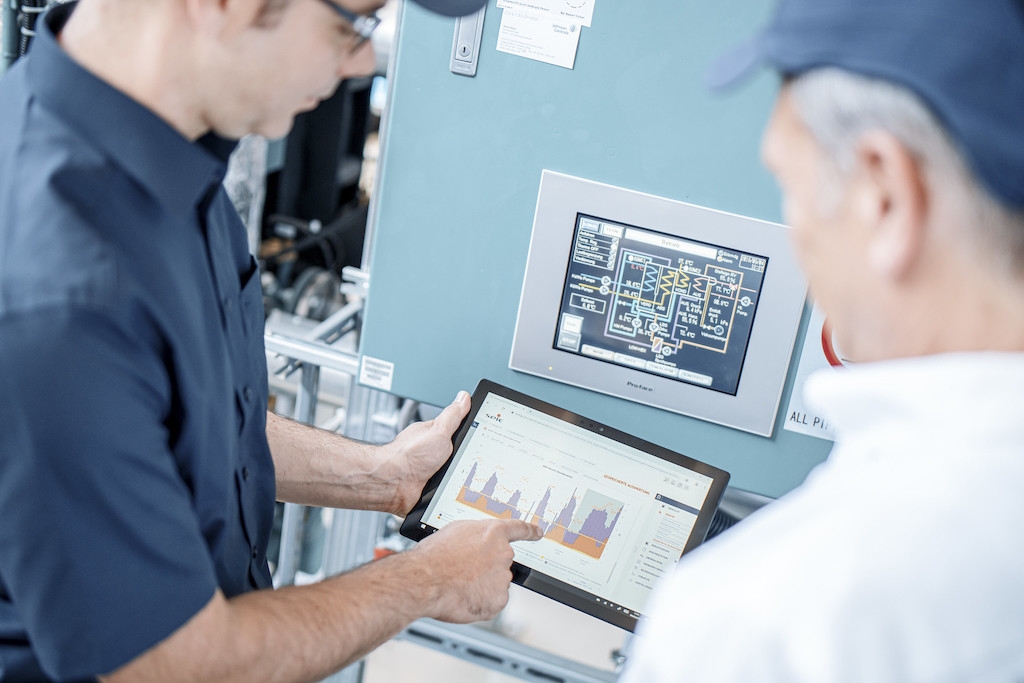
The year 2024 brought significant changes to the facility management (FM) industry, reflecting a transformation in the approach to managing buildings and commercial spaces. Key trends included the modernization of older facilities, the growing importance of environmental certification, and the development of technologies supporting operational optimization. New challenges forced companies to seek innovative solutions that address the needs of a changing market.
Investments in the modernization of older buildings
One of the observed trends was investing in the modernization of older facilities. Property owners are increasingly focusing on improving technical and environmental standards, which helps increase the attractiveness of properties for tenants.
In warehouses, investments were made in technologies such as air curtains at loading docks to reduce heat loss, or rainwater recycling systems used for technical purposes.
– Older buildings are being modernized today in such a way as to reach the level of modern certified facilities, and thus attract tenants. These investments are often more cost-effective than constructing new facilities – notes Michał Owczyński, Regional Operations Manager at SPIE Building Solutions Sp. z o.o.
Diversity of facilities and market changes
The COVID-19 pandemic continues to influence the office sector, where hybrid work has reduced the demand for new spaces. As a result, greater emphasis has been placed on adapting existing offices, creating flexible coworking spaces and shared work zones.
On the other hand, the warehouse market recorded dynamic growth. According to Cushman & Wakefield data, in 2024, the total warehouse space in Poland reached nearly 35 million m², which represents a 10% increase over the year.
– The dynamic development of the warehouse market results from the need for rapid adaptation of facilities to new logistics and production requirements. These transformations are crucial for ensuring competitiveness – explains Michał Owczyński, Regional Operations Manager at SPIE Building Solutions Sp. z o.o.
Environmental certification as a new standard
An increasing number of property owners are deciding to certify buildings according to BREEAM, LEED, or WELL standards. In 2024, there was a noticeable increase in certification for older facilities that were being adapted to environmental requirements.
Certification included actions such as improving energy efficiency, installing photovoltaic systems, or applying heat recovery technologies.
In one of the projects managed by SPIE at a logistics center, a rainwater management system was installed, which allowed for a 30% reduction in drinking water consumption.
– Tenants are paying more and more attention to environmental certificates. Facilities that can boast such solutions are definitely more attractive on the market – emphasizes Michał Owczyński, Regional Operations Manager at SPIE Building Solutions Sp. z o.o.
Technologies of the future in the FM industry
Implementing new technologies was one of the key drivers of change in property management. Solutions based on IoT and data analytics enable the monitoring of building parameters in real-time, which translates into improved operational efficiency.
In offices, HVAC management systems were introduced, which automatically regulated temperature and humidity depending on the number of people in the room.
Shopping centers implemented smart lighting that adjusted light intensity to the time of day, which brought savings of around 20% on energy costs.
– Technologies allow not only for lowering operating costs but also for increasing user comfort. This is one of the most important trends in the FM industry – says Michał Owczyński, Regional Operations Manager at SPIE Building Solutions Sp. z o.o.
Transformation of warehouses into production halls
One of the more interesting phenomena was the adaptation of warehouses for production functions. Such actions required comprehensive modernizations, including structural reinforcement, installation of process gas systems, or advanced ventilation systems.
In one of the SPIE Building Solutions projects, a heat recovery system from production machinery was installed. This enabled the resale of waste heat to an energy distributor, which allowed for a 20% reduction in energy costs.
In another case, modern cooling systems were installed in a 15,000 m² warehouse, enabling the storage of products at low temperatures.
Dynamic development of SPIE Building Solutions
For SPIE Building Solutions, 2024 was a time of significant growth. The company increased its managed area to 10.8 million m², and its team already numbered over 1,200 employees.
– The dynamic development of the portfolio of managed properties is the result of a strategy based on the diversity of serviced facilities. Thanks to this, we can quickly adapt to emerging market changes and match the changing expectations of clients. – summarizes SPIE representative Michał Owczyński, Regional Operations Manager at SPIE Building Solutions Sp. z o.o.
Source: Brandscope / SPIE Building Solutions