








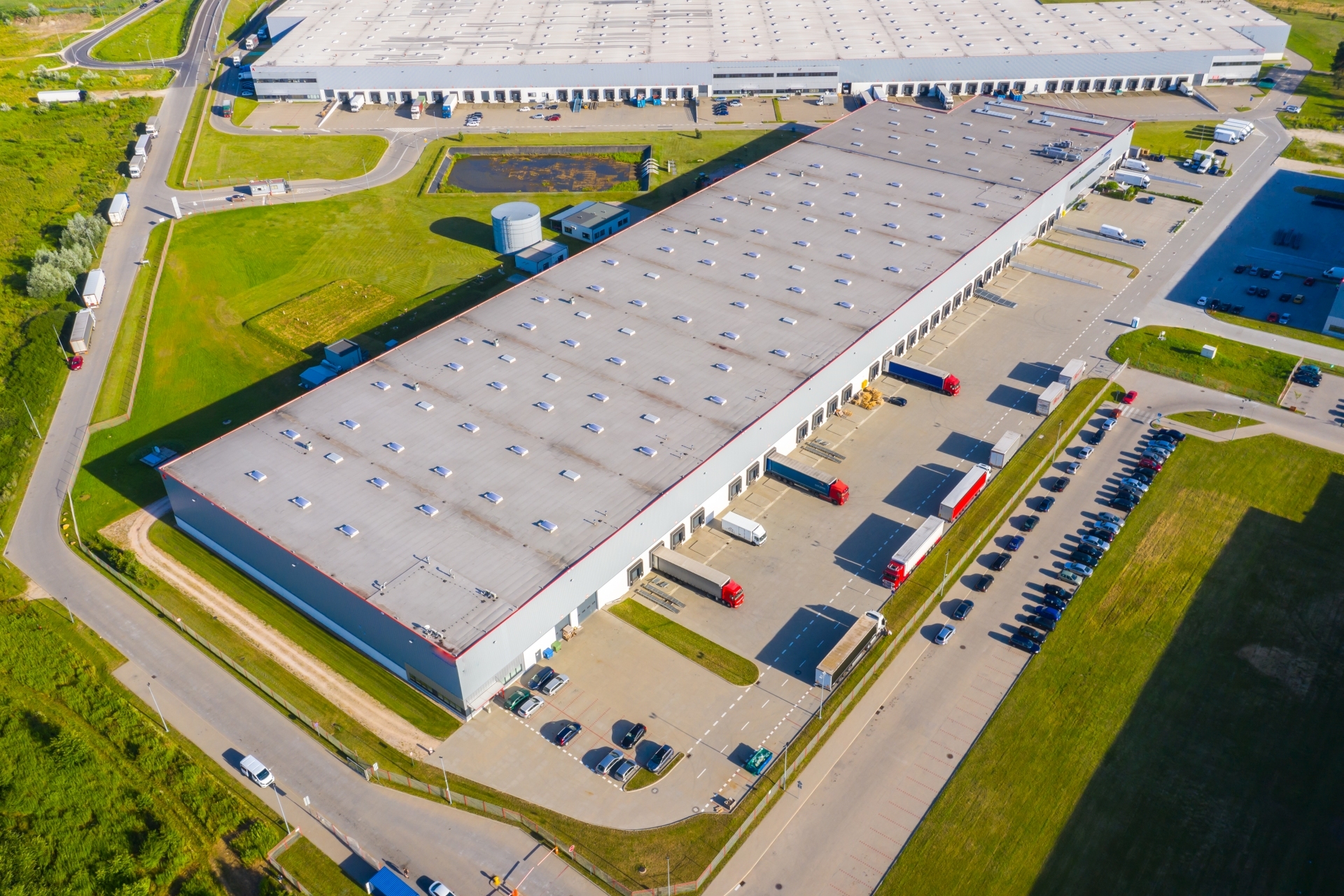
The Łódź region creates ideal conditions for companies that want to grow quickly, but also optimize costs without losing full access to domestic and European markets. Central Poland has for years been at the forefront of the most important regions on the country’s logistics map. With resources of over 4.8 million sqm of modern warehouse and industrial space, it ranks third, surpassed only by Upper Silesia and Warsaw.
High demand and pandemic-era legacies
The last three quarters have shown that manufacturing, logistics, and retail companies want to lease halls in the Łódź Voivodeship. Demand for this type of space has increased by as much as 72.5 percent compared to the same period last year. Companies leased a total of over 636,000 sqm of modern warehouses during this period, and the largest contracts in the Łódź region involve two retail tenants in warehouse parks: Central European Logistics Hub (72,000 sqm) and Hillwood Łódź II Chocianowice (62,000 sqm).
– Despite high tenant activity in recent months, the amount of vacant space in Central Poland has increased slightly, reaching 11.2 percent at the end of September this year. The higher vacancy rate is largely due to decisions made at the beginning of the pandemic, when Central Poland recorded huge demand and developers were starting new investments, including on a speculative basis. Let us remember that in 2021, the Łódź market recorded the highest volume of space under construction in its entire history (almost 850,000 sqm at the end of 2021) – explains Jan Olszewski, advisor in the industrial and warehouse space department at Newmark Polska. The expert also adds that a significant portion of the vacant space is located in older buildings from which tenants have already begun to relocate. – Older buildings (both Class A built more than 15 years ago and Class B) will eventually stop meeting tenant requirements and will also be non-compliant with EU regulations, particularly regarding energy efficiency and the overall environmental impact of the property. This will translate into a further increase in vacancies in such warehouses. Owners of these facilities are looking for new tenants, but this is a short-term solution. In the long term, the oldest buildings will have to undergo major modernization or change their purpose, the first examples of which we are already seeing. One of the older warehouses in Łódź has converted part of its space into a climbing wall – informs the Newmark Polska expert.
Logisticians are where their customers are
If someone wanted to describe the ideal location for a warehouse hub, it would be the location of Łódź – in the very heart of the country, at the intersection of the A1 and A2 motorways and the S8 expressway.
– That is why Central Poland attracts companies like a magnet. Many of them decide to open and develop their central warehouses in the region, from which goods are transported to smaller halls across the country or abroad, and from there directly to stores or target customers, as in the case of e-commerce. It is in Łódź that the largest logistics park in Poland to date is located – the Central European Logistics Hub (CEL HUB), with an area of over 600,000 sqm, whose space is used by companies such as Media Expert, Smyk, Poczta Polska, DPD, BSH, and InPost – says Jakub Dudkiewicz, Senior Associate in the industrial and warehouse space department at Newmark Polska.
Zdzisław Kocoń, Director of Warehouse Logistics at Langowski Logistics, claims that the Łódź region creates ideal conditions for companies that want to grow quickly, but also optimize costs without losing full access to domestic and European markets and customers. – Our partners have business headquarters in Łódź and Warsaw. They want the logistics operator’s warehouse to be nearby. Thanks to the proximity of large urban markets and the development of e-commerce infrastructure, Central Poland is today an excellent base for companies involved in the sale and distribution of goods. Thanks to its location in the very heart of the country, a company can easily serve customers in Poland and react quickly to market needs – emphasizes the director at Langowski Logistics.
Diversity of available modules
The Łódź warehouse market is characterized by great diversity. – We have clients from practically every industry, and their inquiries concern very different spaces. Companies need warehouses starting from 3,000 sqm, and larger players can lease 50,000 sqm and more – says Jan Olszewski. According to the expert, Łódź attracts and retains. Enterprises that associate themselves with the region once usually stay longer – they grow, and their needs for space in logistics centers increase. This was exactly the case for many companies in the clothing industry that took their first steps in Łódź, such as the Tatuum brand. The Łódź Voivodeship is a well-known hub for international manufacturers – more than 20 years ago, the designer and manufacturer of fiber optic cables and telecommunications equipment, Corning Optical Communications, also decided to locate its factories and development center in this region.
Speaking about the advantages of Central Poland, Łukasz Srogosz, Plant Manager at Corning Optical Communications in Stryków, emphasizes that thanks to qualified employees in this region, the company can continue to grow by implementing the most innovative solutions. – Historically, Łódź and its surroundings are a strictly manufacturing region, which, thanks to access to graduates of the Łódź University of Technology, one of the best technical universities in the country, could develop dynamically. Our Stryków campus currently consists of two production plants, a very well-developed research and development department, and laboratories – a total of over 3,000 employees, of which over 500 are engineers, specialists, and other office staff. For several months now, we have been developing new solutions in the Data Center area, supporting AI processes, which is why we are focusing on finding candidates with technical competencies in this area – says Łukasz Srogosz.
More qualified employees
According to Kamil Stróż, Warehouse Team Manager at Igepa Polska, Łódź’s strengths also include favorable conditions for investment, including beneficial tax breaks and access to grants and support from EU funds. – The logistics and warehouse sector in Central Poland is one of the best developed in the country, which also ensures access to highly qualified staff. Although competition for employees is high, the region offers much better opportunities than other areas – says Kamil Stróż, who adds that after the 2020 pandemic, the labor market underwent significant changes, shifting from an employer’s market to an employee’s market. At the same time, Central Poland is one of the fastest-growing regions in the country in the logistics, warehousing, and e-commerce sectors, which causes a huge demand for a qualified workforce. – Very often, employers looking for a warehouse worker offer full training and a UDT forklift operator license course as a bonus, which until recently was a necessary requirement for a candidate’s CV to even be considered – explains the manager at Igepa Polska.
To Łódź for cost optimization
Among the largest warehouse markets in the country, Central Poland is also distinguished by an attractive level of rents. In the third quarter of this year, base rates in the region were at the level of 3.6 – 4.5 euros per sqm.
– In recent months, we have also observed a greater willingness of landlords to negotiate commercial terms, and consequently a decrease in effective rents. We are dealing with a similar situation in most regions with large resources of logistics and industrial space. The reason is quite high vacancy rates and prolonged decision-making processes. Warehouse owners want to lease them, so they have to negotiate – explains Jakub Dudkiewicz. – Before the outbreak of the war in Ukraine, the differences between base and effective rent reached up to 40 percent; after March 2022, developers were increasingly less willing to offer incentives, and at the table, it was only possible to negotiate discounts of up to 20 percent of the asking price. Currently, we are observing a return to more flexible negotiations and an understanding on both sides that although location is what matters most in the real estate market, price is right behind it – adds the expert.
Quietly, but moving forward
The parties must reach an agreement, especially since from January to September of this year, developers delivered 445,000 sqm in the Łódź region, which is over 35 percent more than in the same period a year earlier.
According to Newmark Polska statistics, the most of the nearly 1.7 million sqm of modern warehouse and industrial space completed from 2020 to now were built by: Panattoni (over 38% of this volume), Hillwood (almost 36%), and 7R (almost 12%). – The Łódź Voivodeship enjoys the interest of practically all warehouse developers. CTP, GLP, Logicor, Loogic, Mapletree, MDC2, MLP, P3, Prologis, Reino, and Segro are also present here. In the recent period, however, we have seen a decrease in the number of investments started and underway. At the end of September this year, only 238,000 sqm of warehouses remained under construction, mainly in investments by companies: Panattoni (almost 45% of the volume under construction), P3, Prologis, and MLP. And although developers are ready to start new investments, they often hold off on decisions, studying the market, the level of leasing of available space, and vacancies – says Jan Olszewski.
According to Jakub Dudkiewicz, this does not change the fact that Central Poland still is and will be in the sights of developers. – This is best evidenced by the large number of plots secured for warehouse and industrial investments. An additional impulse for the logistical development of the region could be the Central Communication Port (CPK) awaited by business. Such a large investment, related to the transport of goods from all over the world, would certainly influence a greater demand for warehouse space and further strengthen the position of Central Poland not only in Poland but also in Central and Eastern Europe – concludes the Newmark Polska expert.
Source: Newmark Polska