









56% of freight forwarders surveyed by Transcash admitted that they are considering initiating a restructuring process in 2024, and 4% are currently in the process. The TSL Industry Financial Index shows a decline in sentiment among representatives of the freight forwarding industry. More than half of our respondents from this sector declared that their companies’ situation had worsened in the last 6 months of 2024, which is a consequence of rising operating costs, payment delays, and a decreasing number of orders.
The TSL Industry Financial Index created by Transcash is the result of a survey conducted among representatives of the sector. We asked our respondents, who included freight forwarders and carriers, about their self-assessment of their companies’ condition over the last six months, taking into account the factors shaping it.
Finances are normal, but there is no optimism
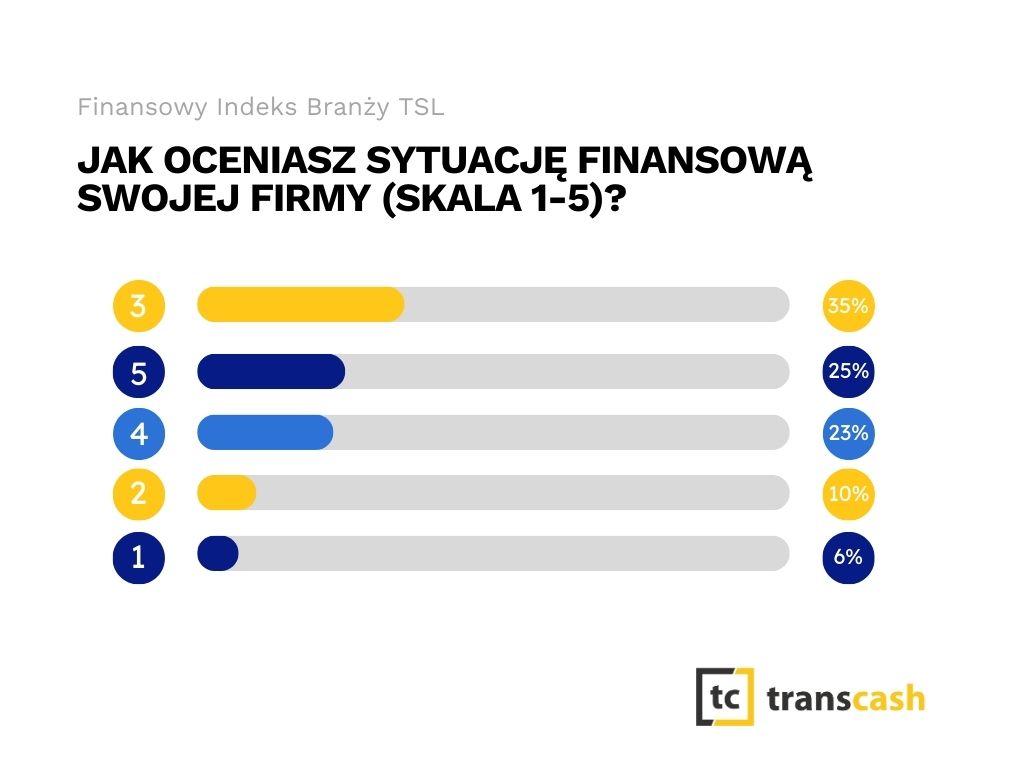
As the survey shows, sentiment among freight forwarders is worse compared to that among carriers. More than half of our respondents representing freight forwarding companies declared that their companies’ situation had worsened over the last 6 months. At the same time, however, nearly half of the respondents assessed their company’s financial situation positively, rating it 4 or 5 points on a five-point scale. The largest percentage of respondents, i.e., over 35%, rated it at 3 points.
Fixed contracts are the basis for profitable freight forwarding operations
There is a consensus in the industry regarding the issues that have contributed to the deterioration of the company’s situation. Like carriers, freight forwarders listed rising employment costs, payment delays, a lower number of orders, and lower rates for their execution as the leading factors.
– When asked about ways to improve the company’s situation, freight forwarders focus on acquiring fixed contracts and resigning from unprofitable orders. Both groups therefore point to a strong need for stabilization and replacing inherently unpredictable spot orders with fixed contracts, which provide the ability to control the company’s operations in the long term – explains Agnieszka Nosal, Marketing & Sales Area Leader at Transcash.eu.
External financing is not for freight forwarders
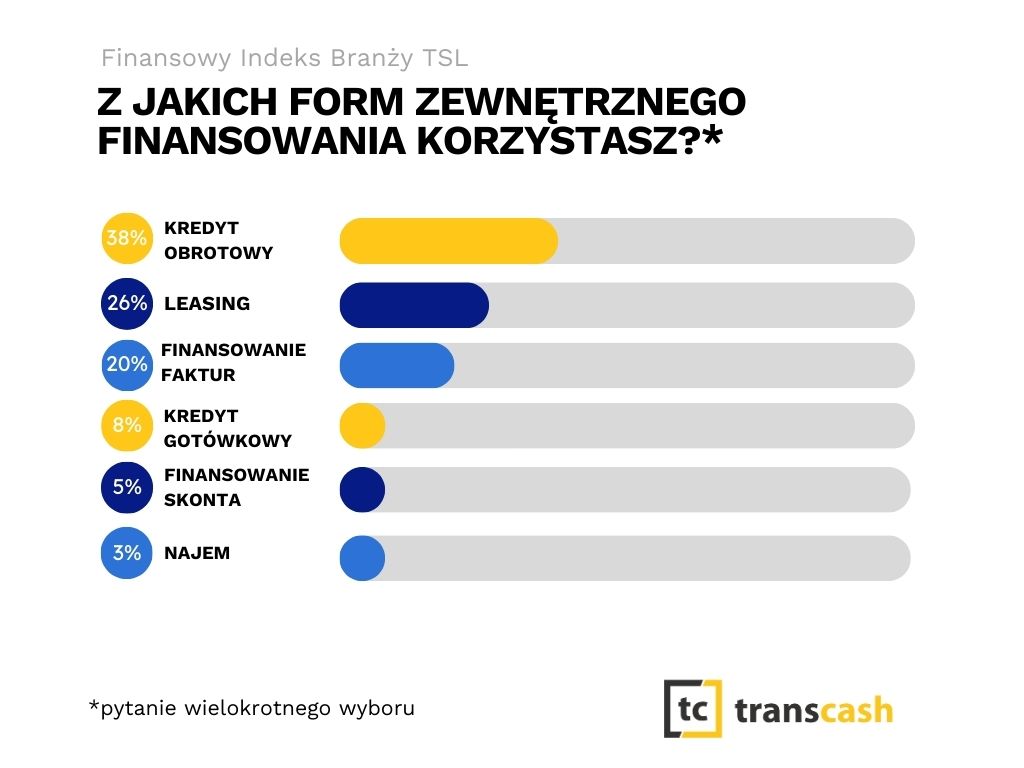
Freight forwarders are reluctant to use external financing – just over 35% of them declared using it. In this group, revolving credit, leasing, and factoring are the most popular. In this case, leasing applies to freight forwarders with their own fleet who also provide transport services. This relatively low popularity of external financing among freight forwarders may indicate, on the one hand, greater financial stability in this part of the TSL industry, and on the other, high costs and difficulty in obtaining external funds due to strict criteria for their granting by banks.
– Freight forwarders are the link between principals and carriers, which complicates their situation in the context of payment deadlines. They do not decide on payment on their own, but are dependent on principals and their willingness to settle obligations on time. Their delay often means a delayed payment for the carrier executing the order. Tools such as reverse factoring can help freight forwarders improve settlements with carriers. Within its framework, the factor pays the carriers cooperating with them on time, and can extend the payment to itself, which supports the financial liquidity of the freight forwarder – comments Agnieszka Nosal from Transcash.eu.
Financial alternatives for freight forwarders
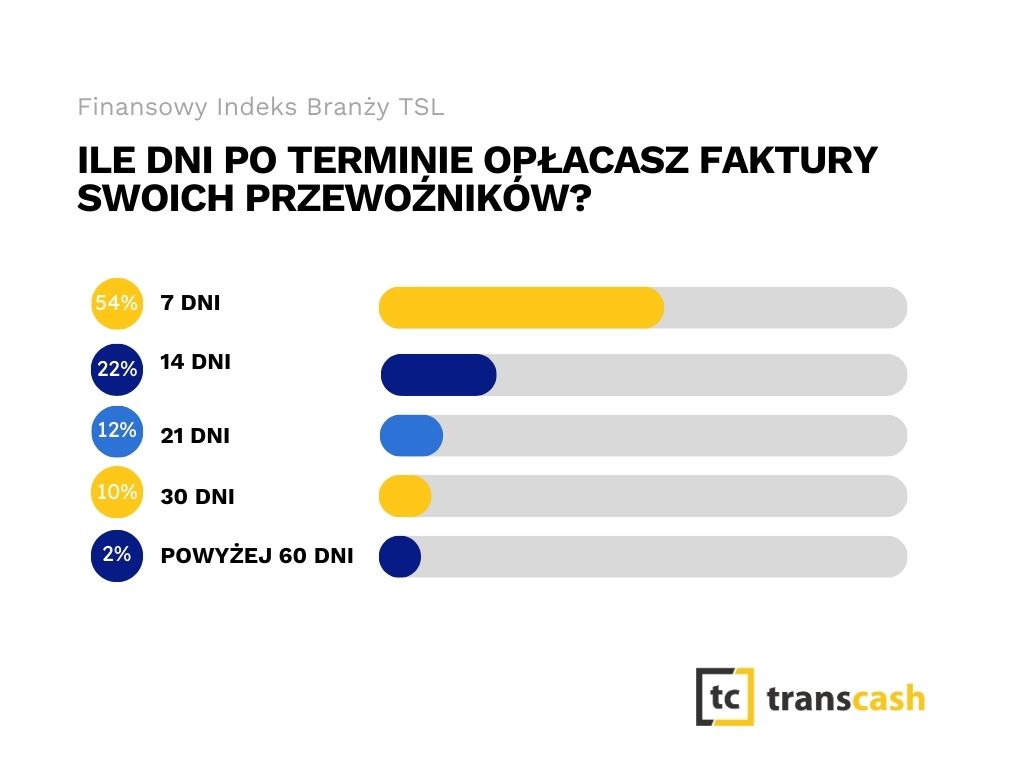
Traditional factoring is the financing of invoices before their due date. It is used by invoice issuers who do not want to wait for payment from contractors. Reverse factoring is for companies receiving invoices that want to settle their obligations on time but cannot do so, for example, due to a temporary lack of funds. Such a state of affairs may result from the principal’s delay, which affects both the situation of the freight forwarder and the carrier cooperating with them. 40% of our respondents admitted that they do not pay invoices issued by carriers on time, with the vast majority ensuring that the payment delay does not exceed 14 days.
Using reverse factoring allows the freight forwarder to pay carriers on time and settle the obligation to the factor later, for an additional fee.
– At Transcash, we decided to expand our services for freight forwarders to include reverse factoring to support their financial condition. The advantage of this product, apart from timely payment to carriers and extending the payment deadline for the freight forwarder, is the daily calculation of the commission, which allows for making the costs of this financing realistic – explains Agnieszka Nosal from Transcash.eu.
As data from the Polish Factors Association shows, the popularity of reverse factoring is growing. 13 out of 19 entities associated with the PZF that offer this service recorded increased interest in reverse factoring, which translated into an increase in the volume of invoices financed this way by over 20% year-on-year. At the same time, interest in factoring in the transport industry remains low, generating about 3.5% of the total turnover of factors associated with the PZF.
The Transcash.eu report “TSL Industry Financial Index” will be published in December 2024 and will include both aggregate data on the financial condition of companies in the transport industry and an assessment of the situation of carriers and freight forwarders, taking into account the specifics of their operations
Source: Transcash