








Sustainability in the logistics industry, especially in the area of air services, seems crucial for the future of the environment, the economy, and society. The European Environment Agency predicts that logistics will account for as much as 40% of global carbon dioxide emissions by 2050 unless appropriate steps are taken.[1] This, in turn, poses many challenges for companies. However, the changes do not only concern large businesses. Being eco-friendly has ceased to be just a trend and has become a real necessity for action to reduce emissions.
More and more companies are aware that responsibility towards the planet and future generations should be an integral part of their business strategy. However, companies must remember about authenticity in their actions, which may prove crucial for strengthening brand image and gaining a competitive advantage. This is also particularly important in aviation, especially when we take into account IATA data. The organization states that demand for air freight in March 2024 increased by 10.3% compared to March of the previous year, and according to industry experts, the current year looks promising in this sector, among other things due to growth in global cross-border trade and industrial production[2]. Therefore, one must think about development on various levels.
Acting in a spirit of care for the environment is possible through the implementation of innovative technologies or the use of more ecological solutions. However, although electric vehicles are becoming increasingly popular in logistics as well – as shown by the Electromobility Counter launched by PZPM and PSPA, the number of registered delivery vans has increased significantly in the last year[3] – the electrification of the air fleet is still a dream of the future. It is therefore worth focusing on the possibilities that are available here and now, e.g., Sustainable Aviation Fuel (SAF). These are various blends of conventional jet fuel (JET-A1) and biofuel. The latter can be produced from waste, residues from the circular economy, or crops grown specifically for this purpose. The resulting blend can contribute to reducing greenhouse gas emissions by up to 80% over the entire life cycle of the fuel compared to the conventional fuel used in aviation.
Decarbonization within reach?
According to data published by IATA, in 2023, the amount of SAF exceeded 600 million liters, which means it doubled compared to 2022, when 300 million liters were produced. SAF accounted for 3% of total renewable fuel production, with 97% of renewable fuel production going to other sectors[4]. In 2024, the production of Sustainable Aviation Fuel (SAF) is expected to triple, reaching 1.875 billion liters. This would represent 0.53% of the demand for aviation fuel and 6% of the total production capacity of renewable fuels[5]. Although SAF production is growing, it still has a small share in total production compared to other types of renewable fuels. This, in turn, makes the decarbonization of aviation not achievable for everyone, for example, due to the persistently high prices of SAF. However, financial issues are not the only, and certainly not the key, challenge in this area. Much more difficult is the lack of increased production of this type of fuel – supply is already failing to meet growing demand. Another element is the need to adapt infrastructure at airports to ensure access to SAF. Although aircraft can be powered by SAF without the need for modifications and additional investment in machines, storage facilities or refueling systems must be taken into account. In Poland, as in all of Europe, airports must be adapted to requirements related to, among other things, fuel storage. The process is complex, however, because it requires cooperation on many levels between governments, airports, and fuel suppliers.
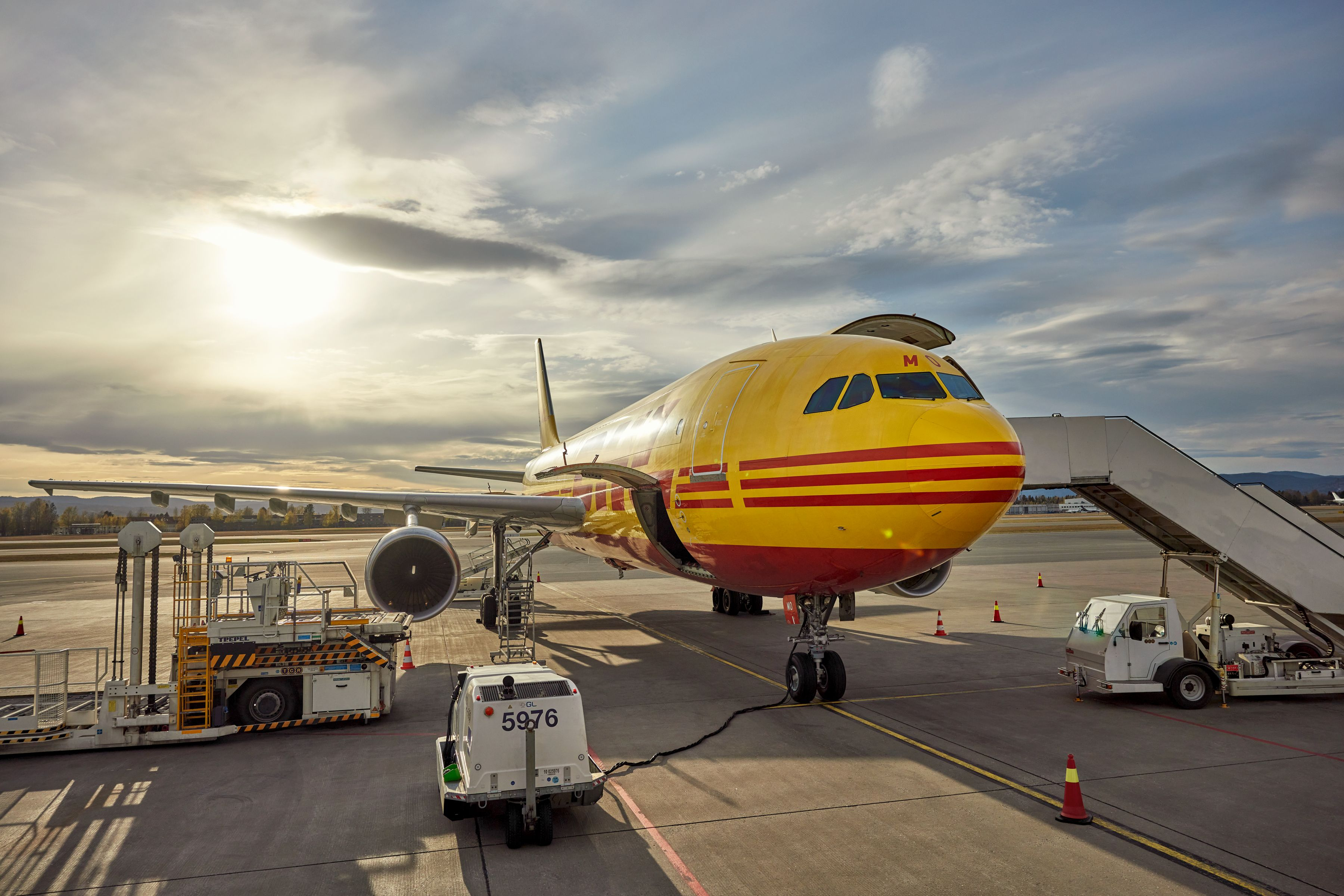
These factors perfectly show that zero-emissions is a major challenge for carriers. DHL Express, however, approaches this in stages and has been using SAF fuels extensively since 2020. What potential does the company see in the Polish market?
The Polish perspective
DHL Express was one of the first global express carriers to launch the GoGreen Plus service, which allows customers to reduce the carbon dioxide emissions associated with the transport of their shipments, precisely through the use of sustainable fuel. DHL Express customers can opt for GoGreen Plus and purchase SAF for all or only selected shipments. Their contribution will be 100% used to purchase more of this fuel, and DHL Express will not make any profit from it. This also applies to Poland – one can observe an increasing interest in sustainable aviation fuel (SAF) among customers in the domestic market, who use GoGreen Plus for an average of 6 shipments per month. Importantly, the number of shipments covered by this service between the third and fourth quarters of 2023 increased by over 4,200%. According to DHL Express data, companies from the technology, consumer, and retail sectors are leading the way in choosing sustainable fuels for transport. In turn, the highest expenditures on transport using SAF were recorded among customers from the technology, consumer, engineering and manufacturing, automotive, and retail sectors. Many DHL Express business partners are interested in tailor-made solutions in this area, and comparing the third to the fourth quarter of last year, there is a noticeable increase in customers using GoGreen Plus of over 3,000%.
Data from DHL Express shows that despite the many challenges faced by companies investing in innovative aviation fuels like SAF, a new chapter in the history of logistics is opening. Although it is currently impossible to predict how the demand for sustainable fuel will shape up, the interest of customers in the Polish market in solutions that reduce the carbon footprint allows for an optimistic look into the future.
[1] Climate Change (carboncare.org)
[2] https://www.iata.org/en/pressroom/2024-releases/2024-04-30-02/
[3] https://www.pzpm.org.pl/pl/Elektromobilnosc/LICZNIK-ELEKTROMOBILNOSCI/ROK-2023/GRUDZIEN-2023
[4] https://www.iata.org/en/pressroom/2023-releases/2023-12-06-02/
[5] https://www.iata.org/en/pressroom/2023-releases/2023-12-06-02/
Source: Edwin Osiecki, Vice President of Marketing and Sales at DHL Express Poland