








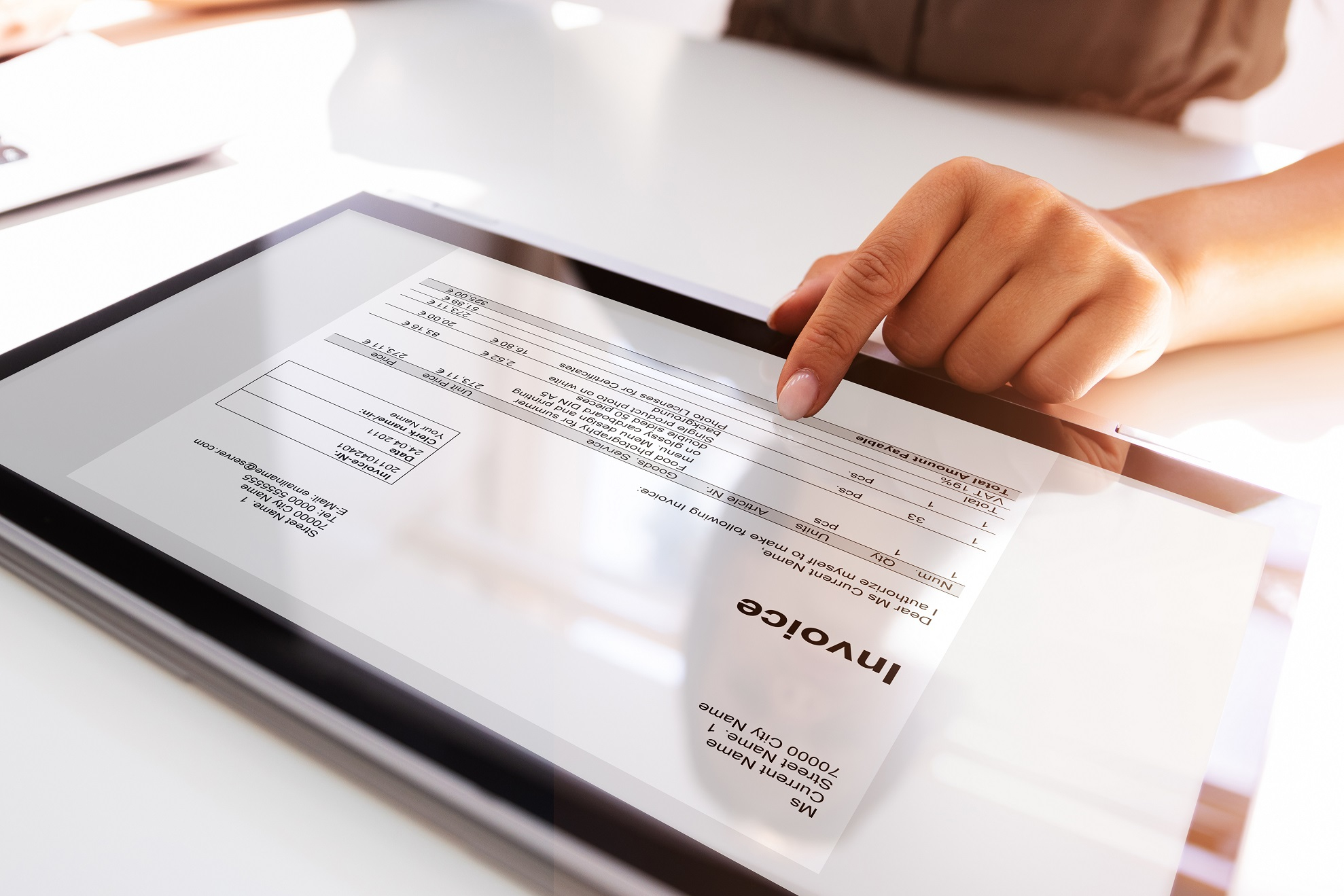
60 days have passed since the invoice for the completed transport was issued, and there is no payment – does this sound familiar? Unfortunately, the lack of properly delivered documents confirming the completed transport is the most common cause of payment delays in the transport industry.
Until recently, it was standard practice to extend payment terms and impose contractual penalties for failure to deliver original documents by mail. Extensive case law on this subject has confirmed that these penalties are mostly ineffective. The essence of a contract of carriage is the timely transport of goods from point A to B, not the shipment of documents within 7 days of completing the transport.
Recently, carriers are increasingly not receiving payments despite sending documents by mail. The reason is often a clause in the transport order requiring shipment to a specific email address or via an online portal.
Watch out for the form of document delivery
Transport orders increasingly contain provisions such as:
“Please send complete Proof of Delivery (PODs) as a PDF file via email immediately after the transport is completed to the address abcdefg@transport.com – invoices and delivery confirmations sent by mail will not be accepted and will be destroyed without processing!”
– Freight forwarding companies use similar provisions to speed up the payment process. However, carriers, accustomed to old habits, still send documents by mail for fear of penalties and extended payment terms. Meanwhile, sending documents to a specific email or via a portal may be necessary for self-billing in the given digital forwarding system and for the automatic issuance of a credit note/Gutschrift with a specific payment deadline – explains Paulina Eliasz-Pietrusewicz, a lawyer at TC Kancelaria Prawna.
In the transport industry, time is of the essence when concluding transactions. However, considering that transactions are concluded with contractors from different EU countries, and transport orders and their provisions are in different languages, it is worth establishing the method of sending documents at the contract negotiation stage. If this is not specified, the first step after completing the transport should be to check the transport order to see what form of document shipment is required. Such action will save not only postage costs but also time and stress caused by debt collection.
The form of shipment does not affect the validity of the contract of carriage
Referring to legal regulations, it should be recalled that Article 4 of the CMR Convention states that the absence, irregularity, or loss of the consignment note does not affect the existence or validity of the contract of carriage. Both the issuance and subsequent delivery of the consignment note are secondary to the contract of carriage and are not essential elements such as the designation of the transport route, the determination of the carrier’s remuneration, and the subject of transport. Therefore, failure to deliver transport documents in the manner indicated in the order cannot result in a refusal to pay for a properly performed transport operation.
How to avoid problems with document delivery?
– From experience, we know that the law says one thing and practice says another. If a carrier has not delivered documents in accordance with the order, they often have to prove their case in court to receive payment for the freight. To avoid this, it is worth establishing the form of document shipment at the contract of carriage negotiation stage and checking whether it complies with the final provisions of the order. It is also important to verify the address (physical or email) for any potential typos – warns Paulina Eliasz-Pietrusewicz.
If email shipment has been agreed upon, after sending the message with the documents, it is good to ask for confirmation of receipt of the documents and to check their content. If it is necessary to send them via a link to a portal indicated in the transport order, it is worth taking a screenshot confirming the transfer of documents and then sending an email to the contractor asking if the documents have arrived.
In the case of receiving a Gutschrift/credit note from the contractor, you should check whether the payment deadline and bank account number are correct. In the case of sending documents by mail, it is worth keeping the shipment tracking number to have proof of sending the documents.
e-CMR to the rescue
A solution to problems with sending documents may turn out to be e-CMR, i.e., an electronic consignment note. Thanks to e-CMR, sending a paper CMR will not be necessary, because each party will have a view of the document in real-time in a specially dedicated application. Such electronic document circulation will definitely facilitate and speed up the payment process, and will also prevent the imposition of penalties for late document shipment.
Source: TC Kancelaria Prawna