








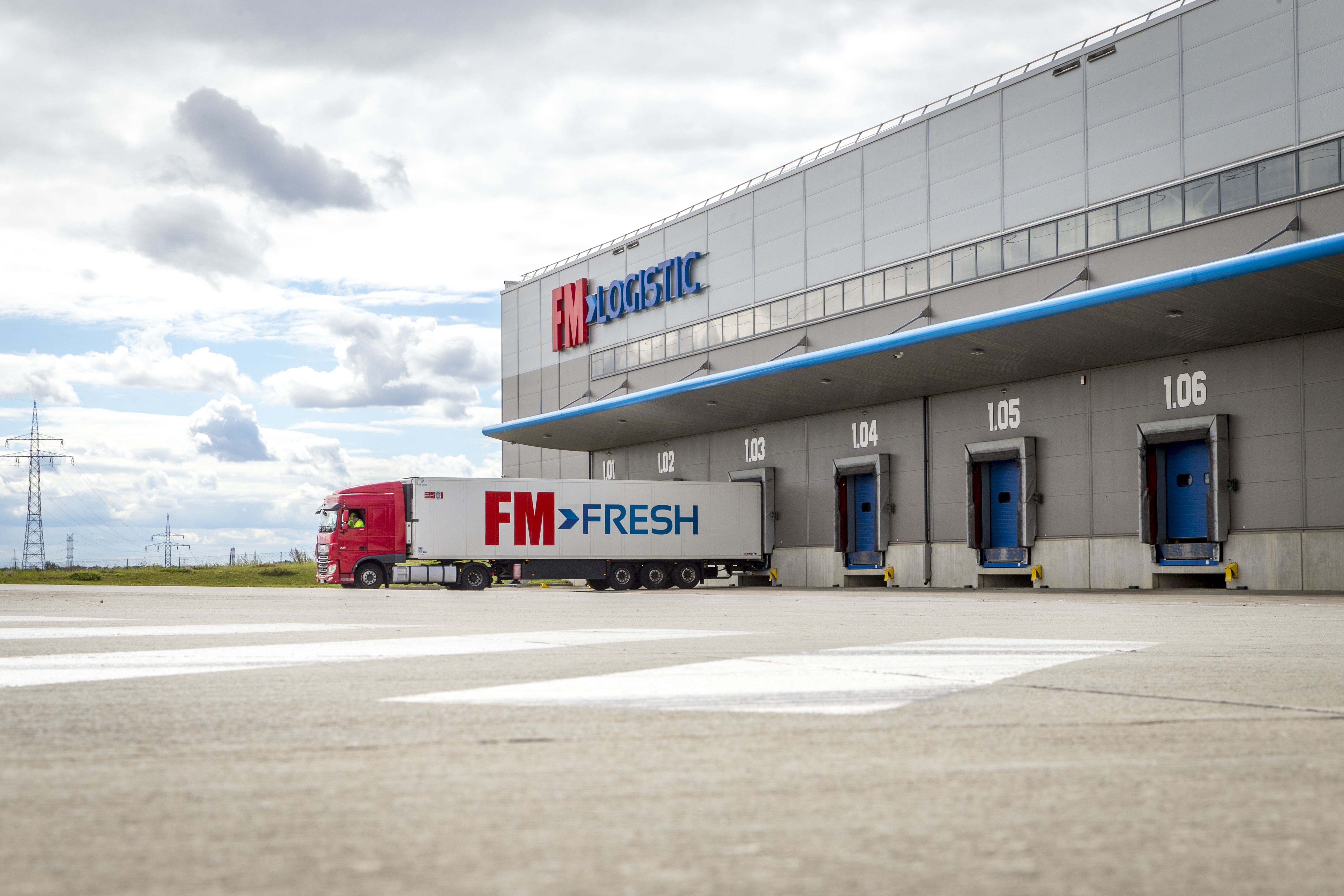
The growing interest in less-than-truckload (LTL) transport and the desire to distribute goods to multiple destinations are leading logistics operators to focus increasingly on creating offerings dedicated to these specific needs. A solution that allows for cost optimization and efficient processes in LTL transport is cross-docking, i.e., transshipment terminals. An extensive network of these terminals is a huge advantage for an operator.
The economic situation, including high inflation and a decline in household purchasing power, has forced many manufacturers to decide to reduce production. As a result, the demand for LTL transport has increased. – Every day, we ship about 8,000 pallets from our transshipment warehouses. At the cross-dock in Lućmierz, which has over 60 docks, we handle up to 3,000 pallets daily and transship about 650 trucks per day – says Maja Talarek, Customer Care Senior Manager, FM Logistic CE. In cross-docks, the operator consolidates shipments from various clients, which are then sent in one direction, effectively maximizing truck load space. Thanks to this, they can offer a favorable deal even for small volumes. Additionally, if the operator has a sufficiently developed network of cross-docks and carries out regular transport, cargo consolidation proceeds very quickly and enables efficient distribution. – Over 200 clients use our LTL services. Every night, about 180 line-haul trucks and about 300 distribution trucks travel between FM Logistic terminals, delivering cargo from the terminal directly to end customers. Therefore, goods do not have to wait long for transport at any stage – explains Maja Talarek. As you can see, thanks to the cross-dock system, even small volumes are handled quickly, and their transport is optimized for costs.
Cross-docks form a solid backbone for the national LTL transport network. – 29 transshipment points in Central Europe allow us to optimally consolidate shipments and efficiently transport them to over 2,000 points daily – says Maja Talarek. And as it turns out, transport “with a transfer” does not have to be more complicated than direct transport. After collection from the client, the goods go to the nearest terminal, from where they are directed to line-haul transport to a transshipment hub. From there, shipments are transferred for direct distribution to final destinations. This is a beneficial solution for everyone. The logistics operator optimally uses its resources, the client receives a favorable offer, and the entire process means lower CO2 emissions into the environment than in the case of transporting individual loads.
Cross-docking is used when goods are delivered to a warehouse from many places and then sent to one recipient, but also in the case of deliveries of goods from one manufacturer that go to many points of sale. – 60% of the shipments we handle are distributed to retail chains – confirms Maja Talarek, an expert from FM Logistic. Such orders require exceptional competence from the logistics operator. Here, time and precision count above all. This is because deliveries to chains are planned in so-called “time windows.” This means that the shipment must be delivered by a set deadline and at a specific time, usually within a range of 30 to 60 minutes. However, this is not the only challenge facing an operator serving retail points. There are more situations that require individually planned operations. – One of our clients has 1,800 points throughout Poland, and each of them must receive goods at least once a week or more often. This requires the execution of over 2,000 connections per week and deliveries during night hours – cites Maja Talarek as an example.
Transport, like most services, is constantly evolving, which is why operators who want to remain competitive must be open and listen to the needs of the market. – We have many optimized processes that we carry out regularly, but when we see that a client needs a unique solution, we look for one – says Maja Talarek. One such situation is when LTL volumes are included among LTL transport orders, which are, however, difficult to classify as “small.” For such clients, the solution is an intermediate option, i.e., full pallet cross-docking. – If shipments exceed about 30 pallets at a time, they bypass the sorting facility and go directly from the terminal to the final recipients. This shortens delivery time and reduces the number of transports between the terminal and the place of delivery – says Maja Talarek. As a result, costs are minimized, and the client gains comprehensive transport and logistics service.
Cross-docking is a modern logistics model that allows for more flexible supply chain management. This distribution method eliminates the warehouse, turning it into a transshipment point, and therefore requires good coordination of all supply chain participants. An extensive network of transshipment warehouses is a sign to clients that the logistics operator is ready for the challenges of modern transport.
Source: FM Logistic Central Europe