











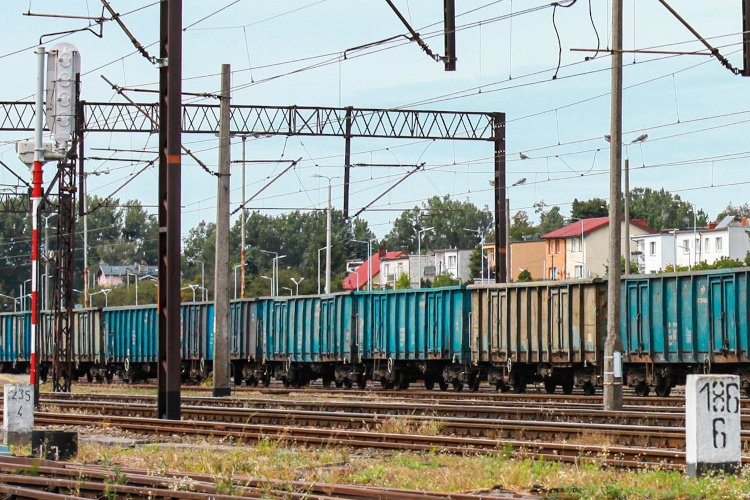
Intensifying the role of rail in the national transport development strategy, increasing funding for development projects, and fostering cooperation between individual freight transport sectors – these are, according to respondents, the most important issues that can contribute to increasing the attractiveness of rail freight transport. The Office of Rail Transport (UTK) has developed its third “Report on consultations with the freight market”.
Over the last two years, the rail industry has operated under conditions of great uncertainty caused first by the state of the epidemic, and later by the outbreak of the war in Ukraine, rising fuel prices, inflation, and economic stagnation in Europe. In the context of environmental protection, rail freight, as the mode of transport with the lowest emissions, has vast development opportunities. At the same time, despite these favorable trends, it is not competitive against road transport, which, in the opinion of UTK consultation participants, is cheaper and more flexible. According to the respondents, road transport has been privileged in transport policy for many years, which currently manifests itself in disparities in access to infrastructure, higher formal requirements, and additional costs associated with rail. In the opinion of those surveyed, the rail industry needs targeted infrastructure investments, better availability of freight yards and terminals, and improvements in the quality and punctuality of freight transport. Respondents also suggest the need to verify existing administrative procedures and operating costs, which currently make rail uncompetitive compared to road transport.
Intermodal transport has enormous potential and can play a significant role in shifting cargo from road to rail. Its further development, however, requires additional support. Most consultation participants indicated that promoting containerization and ensuring a greater number of transshipment points for other intermodal units, such as semi-trailers, entire sets, swap bodies, etc., is important for increasing this type of transport. Respondents also point to the need to increase the intermodal discount, which would contribute to lowering infrastructure access charges. According to the study participants, a measure supporting rail could be the introduction of administrative and legal restrictions so that rail would have a privileged position over alternative modes of transport (e.g., introducing a mandatory requirement to transport goods by rail over distances exceeding 350 km).
– The market is calling for a level playing field between road and rail transport. The role of rail transport must be strengthened in the national transport development strategy. In the opinion of market representatives, this should manifest itself in ensuring infrastructure access costs at a level comparable to road transport, simplifying formal procedures on the railway, or financing development projects. Rail has untapped potential for transporting various groups of goods, which is why it is necessary to popularize this type of transport and begin work on dedicated infrastructure investments – writes Ignacy Góra, President of UTK, in the introduction to the report.
The President of the Office of Rail Transport conducts consultations with entities and organizations involved in rail freight transport at least once every 2 years. In the two previous editions, consultations were carried out with specific groups. The current edition, conducted in 2023, was aimed at everyone who wanted to express their opinion on the functioning of the rail freight market in Poland. Participants included, among others, consignors, consignees, freight forwarders in rail transport, as well as railway undertakings, and the presented report contains the conclusions from the study.
The information obtained through the surveys made it possible to collect opinions on the functioning of rail freight transport in Poland. In particular, barriers were defined which, in the opinion of the respondents, have prevented domestic rail freight transport from significantly increasing its share in total freight transport over the last few years.
The report is available at the link.