











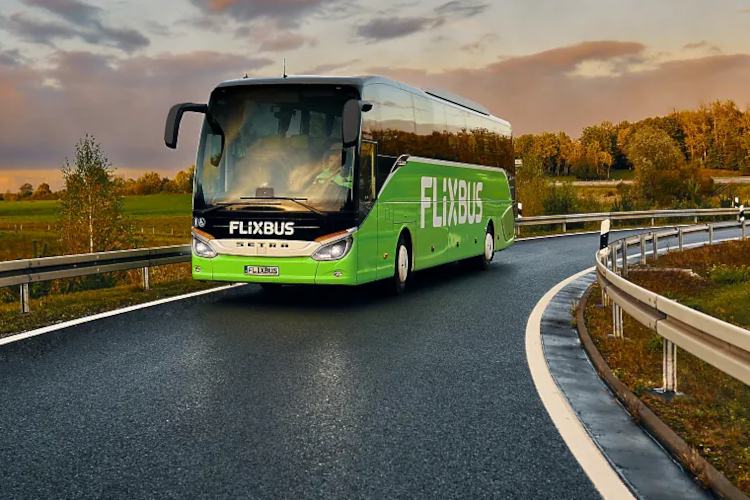
FlixBus is using Webfleet’s video solution to help protect bus drivers, passengers, and other road users. By promoting a defensive driving style, FlixBus is also reducing its own carbon footprint.
FlixBus, a global mobility provider that offers convenient and affordable travel, is using Webfleet video telematics solutions to make Europe’s largest long-distance bus network even safer. The solution from Europe’s largest fleet management provider combines vehicle and trip data with cameras and AI-based technology. This gives FlixBus full visibility into how its fleet behaves on the road. By promoting defensive driving, FlixBus helps protect drivers, passengers, and other road users, while also reducing its own CO2 emissions.
“Road safety is a vital part of the daily work for bus operators. One way to protect passengers, drivers, and vehicles from the consequences of road accidents is to use artificial intelligence and video-based solutions like Webfleet. AI-based warning systems can improve driving safety, reduce the risk of accidents in bus fleets, and protect drivers from false accusations, while simultaneously increasing vehicle profitability. Video solutions using artificial intelligence identify various types of dangerous driving behaviors and warn drivers so they can take immediate corrective action. Video recordings also help determine potential fault in the event of an accident or vehicle damage,” explains Wolfgang Schmid, Webfleet Central Region Director.
Andy Breitsprecher, Operations Manager at FlixBus DACH GmbH, outlines the benefits of Webfleet for FlixBus: “Webfleet Video helps us protect our drivers, passengers, and other road users. The dashcam acts as a digital ‘co-driver,’ supporting our bus drivers in driving more defensively and, therefore, more safely.” The company also plans to incorporate footage of critical situations into its training programs: “This way, we can teach drivers how they can improve their driving style using real-life examples from their daily journeys.”
Driving with greater caution also helps drivers reduce fuel consumption on the route, which in turn has a positive impact on the company’s carbon footprint and costs. Most importantly, according to Breitsprecher, the goal is also to protect the drivers themselves—for example, against false accusations from other road users: “Thanks to the outward-facing camera, we can accurately reconstruct the course of a road incident involving a third party at any time. This allows us to protect them if they fall victim to dishonest claims.”
Flix is a pioneer in long-distance public transport, offering green alternatives for convenient and affordable travel through its FlixBus and FlixTrain brands. Thanks to its unique business model and innovative technology, Flix has built the largest long-distance bus network in Europe in a very short time and is also represented with FlixBus in the United States, Canada, Chile, Brazil, and Poland. As a pioneer in sustainable transport, Flix launched the first green long-distance trains with FlixTrain in 2018, initiated a pilot project for fully electric long-distance buses that same year, and introduced the first biogas-powered long-distance buses in the EU in 2021.
Flix is responsible for technology development, network planning, operations management, marketing and sales, quality management, and continuous product expansion, while established Flix partners—mostly from the traditional SME sector—handle daily route operations. The unique combination of a tech startup, e-commerce platform, and traditional transport company has made Flix a market leader in the face of major international corporations and has permanently changed the global mobility landscape.