








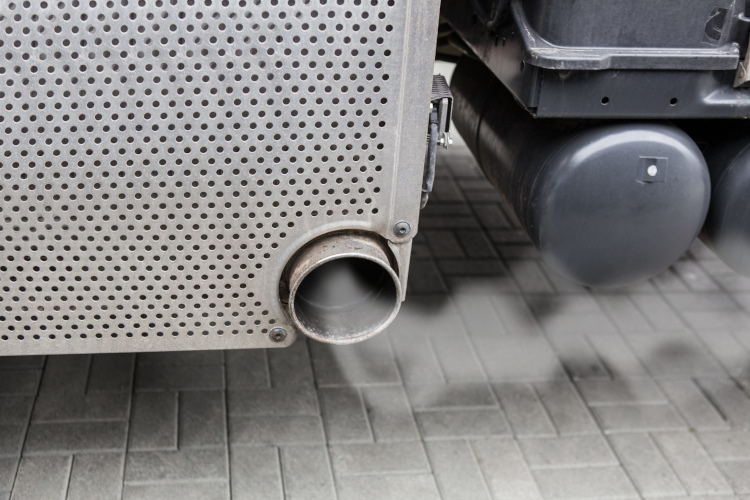
Without a clear 100% emission reduction deadline set by the EU, diesel-powered vehicles will pollute our lungs and the planet for much longer than necessary. This makes achieving the net-zero emissions target difficult.
Under the new EU plan, polluting trucks could remain on sale after 2040. According to climate advocates, this decision will prevent Europe from reaching its net-zero emissions goal. Transport & Environment (T&E) argues that the currently proposed 90% CO2 emission reduction target for truck manufacturers practically guarantees that diesel vehicles will still be on the roads a decade later, in 2050. Therefore, it has called on MEPs and government representatives to set a zero-emission deadline for 2035.
“Failing to set a deadline for ending the production of polluting trucks is a cowardly concession to the manufacturers of these vehicles. By 2035, virtually all new electric trucks will be cheaper to operate than diesel vehicles, while offering the same range and payload. But without a clear 100% emission reduction deadline set by the EU, diesel vehicles will pollute our lungs and the planet for much longer than necessary,” said Rafał Bajczuk, senior policy analyst at the Electric Vehicles Promotion Foundation (FPPE).
According to the new proposal, by 2030, truck manufacturers would only have to reduce the average CO2 emissions of new vehicles by 45% compared to 2019/2020 levels. The target set by the EU is less stringent than the plans of the truck manufacturers themselves. According to T&E, lawmakers should mandate a 65% CO2 emission reduction by 2030, which corresponds to the zero-emission truck sales targets already announced by Daimler Truck and Volvo Trucks.
Adopting the Commission’s proposal would mean mandating the sale of only zero-emission city buses by 2030. T&E welcomed the extension of climate targets to this sector, while adding that—to enable vehicle manufacturers to keep up with cities’ demand for clean buses—it is essential to set this target earlier, for 2027. In the case of new coaches, similar to the truck category, the Commission proposes a 90% emission reduction by 2040.
“Ambitious EU climate regulations, which are already driving the electrification of cars, are also essential for trucks. Without establishing stricter targets for 2030, many polluting diesel trucks will continue to drive on our roads in the coming decades. A lack of decisive action also means investment uncertainty for Europe in the battery production and metal processing sector, and consequently, the risk of losing companies to the United States due to their Inflation Reduction Act,” said Rafał Bajczuk, senior policy analyst at the Electric Vehicles Promotion Foundation (FPPE).
Under the EU plan, battery-powered, hydrogen fuel cell, and hydrogen combustion trucks—in the case of using existing engine technology—would be classified as zero-emission vehicles. The climate regulations would apply to all heavy-duty vehicles, with the exception of certain specialized vehicles, such as construction trucks, ambulances, or fire engines, which account for about 10% of heavy-duty vehicles sold in Europe.
The European Parliament and member state governments will debate the proposal before agreeing on the final version of the law later this year. Trucks account for only 2% of all vehicles, but are responsible for 30% of CO2 emitted by road transport in the EU. Road transport and heavy-duty vehicles are also one of the largest sources of particulate matter (PM) and nitrogen oxides (NOx) pollution, which cause about 350,000 premature deaths annually in the EU.