











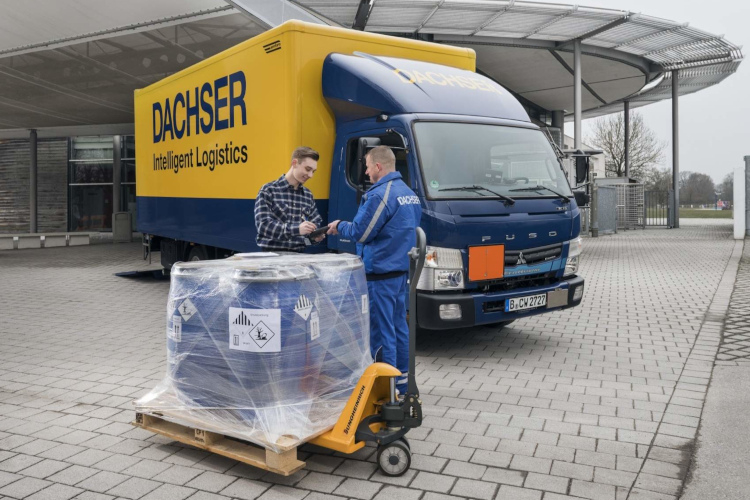
In accordance with the new provision of the ADR Agreement, companies involved in the transport of dangerous goods solely as consignors were required to appoint a Dangerous Goods Safety Adviser (DGSA) by December 31, 2022, at the latest. This legal requirement applies to companies that carry out transport operations both on their own behalf and on behalf of another company.
Point 1.6.1.44 of the ADR Agreement (Agreement concerning the International Carriage of Dangerous Goods by Road), drawn up in Geneva on September 30, 1957 (Journal of Laws of 2011, item 641), concerns companies that were not previously required to appoint a Dangerous Goods Safety Adviser (DGSA). These include, among others, companies that act as a consignor in the transport document for dangerous goods or distribute dangerous goods, while logistics are handled by an external company. The new regulation also applies to freight forwarding companies that do not usually appear on transport documents but carry out transport operations on behalf of another company. Failure to comply with the obligation to appoint a DGSA will result in severe financial penalties, which can reach up to 5,000 PLN.
Another important change in the regulations concerning the transport of dangerous goods is a change in the title – the word “European” has been removed from the name of the ADR Agreement. This means that from January 1, 2023, ADR obligations must also be observed by countries outside the European Union that participate in the transport of goods within member states.
It is worth knowing that the transport of dangerous goods by land is regulated in Poland by numerous legal acts, the most important of which are: the ADR Agreement, the CMR Convention (Convention on the Contract for the International Carriage of Goods by Road), and the Act on the Road Transport of Dangerous Goods of August 19, 2011 (Journal of Laws 2011 No. 227, item 1367).
Transport under special supervision
The change in the ADR Agreement means that every company whose business is based on shipping and transporting dangerous goods and the associated packing, loading, or unloading should appoint one or more DGSA safety advisers.
The cooperation of freight forwarding companies with DGSA safety advisers concerns several important issues. Among them are conducting training for employees responsible for shipping dangerous goods, monitoring compliance with requirements regarding the transport of dangerous goods, advising the company on the transport of dangerous goods, and preparing an annual report on the company’s activities in the field of transport of dangerous goods for the company’s management or, as appropriate, for local authorities. Such reports should be kept for five years and made available to national authorities upon their request.
– At DACHSER, all participants in this complex process are perfectly familiar with their responsibilities, ADR regulations, and requirements regarding transport documentation. These are issues that are important not only from the perspective of carrying out the correct process of shipping hazardous materials for transport. They are also a key matter for the safety of the supply chain and the provision of transport services at the highest level. Currently, DACHSER employs as many as 250 regional DGSA advisers – said Ewelina Staszewska-Kobiela, Business Development Manager at DACHSER Chem Logistics in Poland.
The transport of dangerous goods requires maximum caution and adherence to strict restrictions. Employees must be up to date with transport law regulations and the obligations of freight forwarding companies in the area of packaging, labeling of shipments, and their documentation. That is why at DACHSER, DGSA safety advisers conduct annual training on current regulations and solutions regarding the shipping or transport of dangerous goods for over 11,650 employees performing activities related to the transport of such materials.
Dangerous goods are a special type of shipment due to the level of risk during their transport. Their transport involves the need to ensure maximum safety for people, the environment, and property.
– Transporting dangerous goods is a huge challenge, especially when we talk about international transport. Therefore, it is necessary to be up to date with legal regulations regarding the transport of dangerous goods by a given means of transport and guidelines on how to pack, secure, and label such goods. Every such transport undergoes strict inspections of the vehicle and the loading itself. We provide our employees with comprehensive emergency kits, which are equipped with a full set of instruments and accessories necessary for providing first aid, as well as personal protective equipment – adds Ewelina Staszewska-Kobiela.
Dangerous Goods Safety Adviser (DGSA)
The task of a DGSA safety adviser is to support the company’s operations in the field of dangerous goods transport and to strive to facilitate the conduct of this business in accordance with relevant requirements and in the safest possible way. This position can be held by a person who, among other things, has a higher education degree and a valid adviser certificate in the field of road and/or rail transport of dangerous goods. Detailed requirements are specified in the Regulation of the Minister of Infrastructure and Development of May 7, 2015, on obtaining a certificate for a safety adviser for the transport of dangerous goods (Journal of Laws 2015, item 718, as amended, Journal of Laws 2018, item 2422, and Journal of Laws 2021, item 1168).