








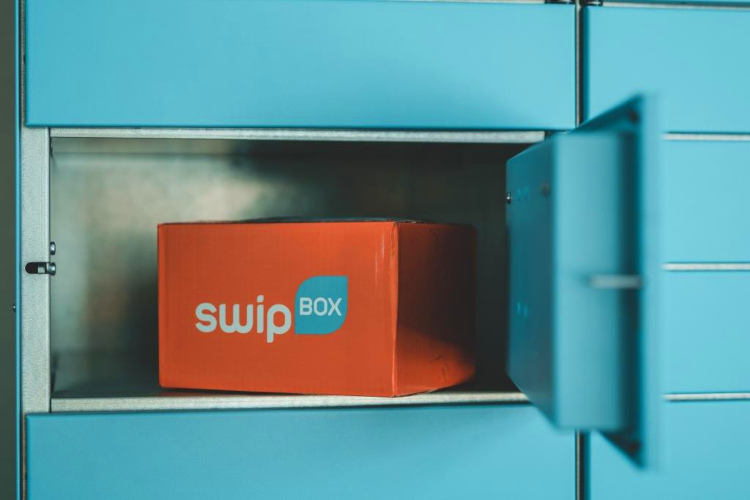
Parcel locker manufacturer SwipBox has introduced a 10-year battery warranty for new outdoor devices from the Infinity line.
Technologically advanced, outdoor Infinity lockers are operated via a dedicated app using Bluetooth and do not require a power connection. This makes their installation easy and fast, as there is no need for an external power source or an Internet connection.
– We know that the batteries in our lockers can last up to 10 years. However, there has been a lot of skepticism in the market regarding our claim. That is why we have covered the batteries used with a warranty to remove any doubts our partners might have about trusting us. If for any reason a battery stops working before the specified period, it will simply be replaced by us. It is a very easy process that can be carried out by any of us – said Jens Rom, CEO of SwipBox.
The new 10-year battery warranty is part of SwipBox’s overall strategy, which aims to ensure the lowest possible total cost of ownership for the lockers.
– Infinity devices have been designed in such a way that they can be installed in less than 10 minutes. They do not require dedicated power, Wi-Fi, or mobile connectivity, which significantly reduces installation costs. Basically, they only need a flat surface. We have over 400 lockers installed north of the Arctic Circle. We have thus ensured that the batteries perform as expected even in the most extreme conditions – added the CEO of SwipBox.
SwipBox closed 2022 with a record number of over 15,000 lockers produced, which is due to new, large contracts.
– We hope that in 2023 we will grow at a similar pace as in previous years. We see no reason why the growth trajectory should not continue, especially since we are constantly seeing great interest in our products. Our plans are based on Infinity lockers, but also on a tool called the “Location Generator,” which was launched in November – concluded Jens Rom.
The Location Generator is based on artificial intelligence and is a self-learning tool that supports companies in finding suitable locations for their lockers. It combines public data sources, maps, and Google Street View to enhance efficiency in planning a dense network of devices.