








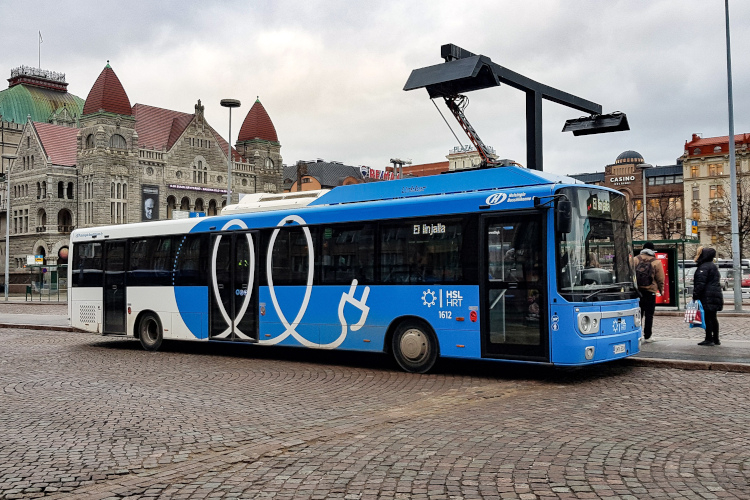
As many as 950 electric buses could be operating in Polish cities by the end of the first half of 2023 – nearly 1/3 more than in June 2022. This will be the result of orders placed in previous years. Future investments in zero-emission public transport may be limited by the significant rise in energy prices and the difficult situation of local governments. What actions are necessary to accelerate the electrification of Polish bus fleets?
In accordance with the “Energy Policy of Poland until 2040” adopted by the government, every tender for buses in cities with over 100,000 inhabitants should, from 2025 onwards, exclusively concern zero- and low-emission buses (electric and hydrogen). The first impulse for the development of zero-emission, collective public transport in Poland in the form of concrete legal solutions was provided by the Act on Electromobility and Alternative Fuels, which entered into force on February 22, 2018. Based on Article 36(1) of the Act, from January 1, 2028, a local government unit, excluding municipalities and counties with a population not exceeding 50,000, shall provide or commission public transport services to entities that collectively ensure a share of zero-emission buses or buses powered by biomethane in the area of that local government unit of at least 30%. The current regulations also set interim targets. The share of zero-emission or biomethane-powered buses should be at least 5% from January 1, 2021, 10% from January 1, 2023, and 20% from January 1, 2025.
Although most obligated municipalities did not meet the targets set by the Act on Electromobility and Alternative Fuels on time, the current regulations have contributed to a significant increase in the number of zero-emission bus registrations in Poland. Based on data from the Ministry of Climate and Environment from April 2022, 88 municipalities were required to submit reports on the implementation of the aforementioned obligations. The minimum limit set by Article 36(1) of the Act on Electromobility and Alternative Fuels, which was to be met by January 1, 2021, was achieved by 33 local governments (38% of all obligated). On the other hand, 39 municipalities did not take any action to fulfill the statutory obligation, while in 2 municipalities, the share of e-buses ranged from 1% to 5%. Importantly, 5 municipalities already met the limit set for January 1, 2028 (assuming the electrification of at least 30% of the bus fleet) in 2022.
– It is worth emphasizing that the level of fulfillment of the obligations regarding the electrification of bus fleets specified in the Act is significantly higher than the level of fulfillment of obligations regarding the electrification of car fleets and the expansion of publicly accessible charging infrastructure. This proves that the statutory targets in the area of public transport were set in a proportionally more optimal manner, especially since the failure to achieve the aforementioned targets was not subject to any sanctions, and the provisions (Article 37(1) of the Act) open a loophole for some local governments to free themselves from the necessity of fulfilling statutory obligations – says Maciej Mazur, Managing Director of PSPA.
Subsidies boost the e-bus market
While the main factor stimulating demand for zero-emission buses in Polish local government units is the Act on Electromobility and Alternative Fuels, the factor facilitating, and in most cases even enabling, the implementation of these investments by local government units is an extensive support system for the development of zero-emission public transport based on financial resources from both EU and national sources. Subsidy programs in Poland cover the purchase of electric (including school) and hydrogen buses, the installation of charging stations, driver training, and the development of electromobility implementation strategies. Many state institutions at the central and local levels have been involved in the implementation of support instruments. Practically every electric bus driving on Polish roads has been subsidized with public funds. E-bus buyers could or can still take advantage of support under instruments such as the “Regional Operational Programs 2014-2020”, “Operational Program Infrastructure and Environment – development of public collective transport in cities (POIiŚ)”, “GEPARD – Emission-free public transport”, or “GEPARD II – low-emission transport Part 2) Electromobility development strategy”. In 2019, the National Fund for Environmental Protection and Water Management (NFOŚiGW) also launched the “Kangaroo – Safe and ecological way to school” program, which covered the financing of zero-emission school buses purchased by rural and urban-rural municipalities. Due to attractive support conditions, another Fund program launched in 2021, “Green Public Transport”, was particularly popular among beneficiaries. The total budget of the two calls for proposals conducted so far under the program amounted to PLN 2.5 billion, of which PLN 2.1 billion was allocated for non-repayable forms of funding (grants).
According to the latest edition of the PSPA report “Polish EV Outlook 2022”, as of June 30, 2022, there were 717 electric buses in Polish cities. This is almost 5.9% of the entire urban bus fleet in Poland (as of December 31, 2020). The largest fleet – consisting of 160 e-buses – was operated by MZA Warszawa. Subsequent places were taken by entities such as MPK Kraków (79 units), MPK Poznań (58 units), PKM Jaworzno (50 units), and MZK Zielona Góra (43 units). More than half (50.3%) of all electric buses registered in Poland were part of fleets operating in certain cities with over 300,000 inhabitants (Warsaw, Krakow, Poznan, Szczecin, Lodz, Lublin). According to IGKM data, as of June 30, 2022, 233 electric buses were awaiting delivery to the fleets of Polish operators. They were to be received by 41 companies operating in the field of public collective transport. Assuming that all contracted (or planned) e-bus deliveries were to be completed by the end of June 2023, the electric bus fleet in Poland could reach 950 units, which means it will increase by 32.5% compared to the state as of June 30, 2022.
Difficult situation of local governments
Regardless of environmental factors, obligations resulting from the Act on Electromobility and Alternative Fuels, as well as subsidies enabling their implementation, a very important argument for purchasing electric buses for a long time was the relatively low operating costs of such vehicles. This resulted, among other things, from appropriately lower electricity prices in relation to diesel fuel. Based on information obtained from the Zielona Góra MZK, currently, the operating costs of e-buses are about 30% lower compared to comparable vehicles with diesel engines. The advantage of electric buses in this regard is also emphasized by representatives of other public transport companies.
– The average net cost of only the electricity consumed for the needs of electric buses for the months from June to October 2022 amounted in our case to PLN 128/100 km. This is a cost PLN 186.6/100 km lower compared to a diesel bus when comparing only fuel consumption and the costs of their net purchase – said Jacek Szemraj, Director of PKM Gdynia.
However, the difficult geopolitical and economic situation has meant that 2022 has been marked by sharp increases in fuel costs, including electricity. Based on data from the Polish Economic Institute, in the period from January to October 2022, average energy prices in EU member states increased by about 45% year-on-year. Everything indicates that in 2023 the situation will be even more difficult. This puts local governments that have a high share of electric buses in their public transport fleets in a particularly disadvantageous position. Based on the “Electromobility Counter” maintained by PSPA and PZPM, at the end of October 2022, a total of 790 electric buses were registered in Poland. In the first ten months of this year, 140 such vehicles appeared on the roads. This is almost 1/3 less than in the corresponding period of 2021. However, it is difficult to equate the decline in registrations with the current economic situation – tenders for the currently delivered e-buses were issued many months ago. However, the rise in energy prices and the growing costs of operating a zero-emission fleet create a risk of a decline in local governments’ interest in investing in further electric buses. Especially since the calls for proposals under the NFOŚiGW “Green Public Transport” program have ended, and a possible date for their resumption has not been announced. Some local governments, however, are planning further investments in an electrified fleet. An example is Warsaw, which intends to purchase an additional 12 buses. The deadline for the implementation of this investment has not yet been set.
– So far, the high cost of purchasing electric buses has been balanced by low operating costs, primarily electricity. Galloping electricity prices are, of course, causing us major problems – the increase in general operating costs caused by expensive gas, diesel, and electricity is counted in tens of millions of zlotys. In such conditions, it is obviously more profitable to operate combustion-engine buses, but we hope that this is an anomaly resulting from the ongoing war, and that electricity prices will eventually start to fall – said Adam Stawicki, Spokesperson for Miejskie Zakłady Autobusowe in Warsaw.
The central administration has attempted to improve the situation of local governments. On November 4, 2022, the Act on Emergency Measures Aimed at Limiting Electricity Prices and Supporting Certain Consumers in 2023 entered into force. Based on Article 2(1)(b) of the aforementioned Act, in the case of local government units, the maximum price of electricity is to be PLN 785/MWh. In turn, Article 2(2)(d) states that the subject limit will also cover energy used for the performance of commissioned tasks and own tasks, including services provided in the general economic interest, including in the field of collective transport. Does the new act have a chance to increase the interest of Polish local governments in electric buses?
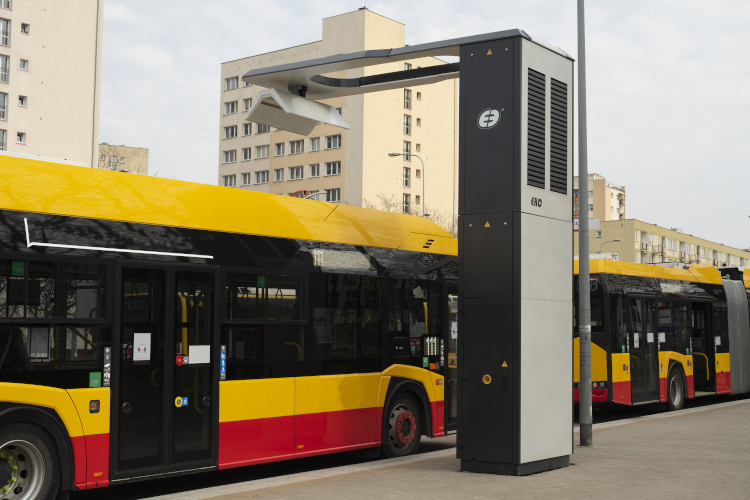
In March 2023, Zielona Góra plans to take delivery of 12 electric buses (including 4 articulated ones). Furthermore – despite the rise in energy prices – by the end of 2023, the city intends to additionally purchase another 14 e-buses of various lengths. Wrocław is currently at a different – initial – stage of electrifying its fleet. Currently, MPK Wrocław is awaiting the delivery of 13 electric buses purchased as part of funding from NFOŚiGW. – The price of energy in 2023 will be a maximum of PLN 785 net/kWh. Although this is an increase compared to 2022, this price enables the operation of public transport at an unchanged level – said Małgorzata Jelińska, Head of the Customer Service and Public Procurement Department at MZK Zielona Góra – one of the leading Polish carriers in terms of the number of electric buses in its fleet.
Based on the signed contracts, the vehicles will be delivered to the capital of Lower Silesia in the 3rd and 4th quarters of 2023.
– The real cost of a 100 km journey by an electric bus under Wrocław driving conditions will only be available at the beginning of 2025 – that is, after a full year of operating electric buses. Additionally, the difficulty in estimating costs is influenced by the lack of a currently signed contract for the sale of electricity by the Municipality of Wrocław for 2023 and the lack of information about planned increases in electricity distribution costs by the company acting as the Distribution System Operator in the area where the chargers for electric buses will be located – said Barbara Balicka, PR Specialist at MPK Wrocław.
According to the estimates of the Wrocław company, the Act on Emergency Measures will play a key role in terms of the profitability of e-bus operations. Assuming that the distribution cost remains at the current level, taking into account the increase in power in the area where the chargers will be located, and depending on the signed contract with the electricity supplier, the cost of a 100 km journey by an electric bus without “price freezing” would be as high as PLN 598. MPK Wrocław forecasts that thanks to the act, it will be significantly lower – reaching a level of about PLN 220 per 100 km. At the same time, traveling a similar distance by a diesel-powered bus involves an expense of PLN 313. However, while MPK Wrocław assumes that in terms of operating costs, e-buses will maintain an advantage over their combustion-engine counterparts next year, there is much less optimism in the statements of other industry representatives.
– At the proposed preferential price of PLN 785/MWh, the operating cost of electric vehicles will likely be comparable or only slightly lower compared to operating a diesel bus – said Jacek Szemraj, Director of PKM Gdynia.
Information provided to us by MZK in Toruń shows, in turn, that even in 2022, the use of e-buses was more expensive. Traveling 100 km by an electric bus (taking into account only energy costs) cost PLN 318, while by a diesel-powered bus – PLN 232. However, as emphasized by the Spokesperson for the Toruń MZK, Sylwia Derengowska, it can be expected that the operating costs of e-buses will decrease as drivers improve their driving techniques. Electric buses have been serving passengers in Toruń only recently – MZK received its first zero-emission vehicles on May 31, 2022. In 2023, the delivery of another four e-buses is planned.
How to accelerate the electrification of bus fleets?
– In the context of significant increases in energy prices, companies that are pioneers of e-mobility in Poland, having a high share of zero-emission vehicles, have found themselves in a difficult situation. Entities that took the risk and started fleet electrification early are particularly exposed to sharp increases in the operating costs of their fleet. The act “freezing” energy prices is certainly a step in the right direction, but the government should monitor the situation on an ongoing basis and take further necessary steps in case of a deterioration of the situation on the energy market, including by lowering the maximum price limit set in the currently applicable regulations in relation to energy used for the implementation of tasks in the field of collective transport – says Maciej Mazur, Managing Director of PSPA.
Public transport companies emphasize that the main barriers to the development of electromobility in public collective transport remain the high costs of purchasing e-buses and the necessary charging infrastructure. It is therefore necessary to continue support programs and maintain funding at a level of about 80% of eligible costs. Alongside the high costs of purchasing electric vehicles and rising energy prices, many transport companies point out that the pace of replacing the fleet with zero-emission ones is still negatively affected by insufficiently developed power infrastructure, which limits the possibilities for efficient e-bus charging.
– To ensure night charging at the depot for just 20 buses, a connection power of 1 MW is needed (if we want to charge all vehicles during a 5-hour break in service), and that can already be a problem. Especially since the demand is highest at night, so the use of photovoltaics can be problematic. Perhaps a solution would be local energy storage and large renewable energy sources – said Artur Bartnik, Director of the Municipal Transport Board in Elbląg.
However, charging electric buses takes place not only in depots but also in other locations in the city using fast pantograph chargers. The barrier to the expansion of such infrastructure is, among other things, frequent difficulties in obtaining the right to use the properties on which they are to be located.
– The expansion of charging infrastructure for the needs of zero-emission collective transport is very often prevented by exactly the same barriers that we encounter in the case of stations intended for electric passenger cars. To limit them, it is necessary to optimize the law. PSPA, in cooperation with partners, including leading charging network operators, has prepared a number of legal postulates addressing these challenges. It is therefore necessary, among other things, to significantly shorten the time for the construction of connections for publicly accessible charging stations to the DSO network, or to implement mechanisms facilitating and stimulating DSOs to invest in the expansion of distribution networks. Due to the difficult economic situation, the number of e-bus registrations in the second half of next year may fall significantly. The potential lack of introduction of necessary legal changes and the continuation of support programs, combined with rising energy prices, create a risk of wasting the positive results of the bus fleet replacement process achieved so far. This will negatively affect not only residents and local governments but also the Polish e-mobility industry and, consequently, the national economy – concludes Maciej Mazur, Managing Director of PSPA.
Source: Elektromobilni.pl