











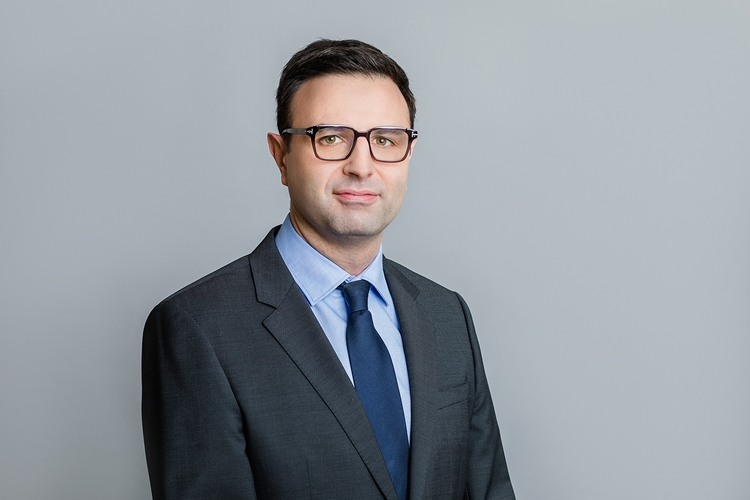
The events of the last few years, such as Brexit, the pandemic, or the war in Ukraine, have caused many logistics companies to accelerate their plans for implementing solutions based on automation, robotization, and the digitalization of logistics processes in order to support customer operations more effectively and strengthen their business. We talk about how to operate effectively in uncertain times and about current trends in the logistics industry with ARNAUD LAINÉ, Director of Business Development at GXO in Central Europe.
Michał Koralewski: Director, how can one be an effective leader in a VUCA world – volatile, uncertain, complex, and ambiguous?
Arnaud Lainé: Many experts today claim that the VUCA world has been replaced by BANI. BANI stands for brittle, anxious, nonlinear, and incomprehensible. I think both of these descriptions, VUCA and BANI, are accurate. We have the lingering effects of the pandemic, record inflation, an energy crisis that is much more severe than the one we faced in the 1970s, the threat of a global recession, the war in Ukraine, and many other challenges. We live in times where it is extremely difficult to be an effective leader. However, I believe that one way might be to free oneself from thinking in terms of VUCA, and especially BANI. Perceiving the world as incomprehensible makes it impossible to make good decisions, while anxiety paralyzes and causes inaction, and these are certainly not the traits of a good leader. Even in a VUCA and BANI world, an effective leader must be able to develop and communicate clear goals, a transparent strategy, and a way to implement it by adapting to unpredictable situations. When effective leaders take action, they do not think about failure or how they will explain it. At GXO, we have clearly defined goals and a strategy for achieving them. We are able to adapt quickly to changing circumstances, which is why our company possesses the traits of an effective leader.
M.K.: We started talking loudly about “black swans” with the outbreak of the coronavirus pandemic. The logistics industry felt the negative impact of restrictions and broken supply chains very strongly. In the meantime, logisticians fought with the effects of the Suez Canal blockage, and then with the effects of the war in Ukraine. What is the current sentiment among logistics operators?
A.L.: The sentiment is, of course, different depending on the logistics operator. Malcolm Wilson, CEO of GXO, recently said at a meeting with investors: “We are confident about 2023.” This confidence is given to us by contracts concluded in 2022, agreements signed with new clients, and the expansion of the scope of cooperation with existing clients with whom we have very good relationships. We are also constantly observing the development of warehouse outsourcing. In times of economic uncertainty in which we currently operate, it is typical for companies to turn to operators like GXO to optimize logistics operations by reducing costs, increasing efficiency, and improving consumer experiences. We are dealing with such a phenomenon all over the world. This is confirmed by a study conducted by Interos, which in its report on resilience in logistics indicates that “almost two-thirds of respondents plan to make significant changes to their supply chains.” The growth of the trend related to the outsourcing of logistics operations definitely works in GXO’s favor.
M.K.: How have the aforementioned events affected the functioning of international logistics operators such as GXO?
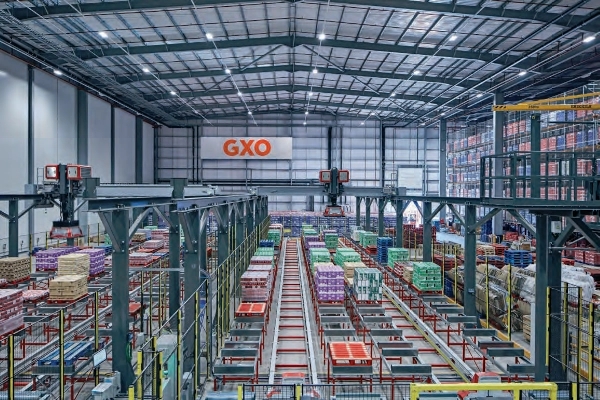
A.L.: GXO has always focused on innovation in automation and new technologies, excellent customer service, and continuous development, so these unpredictable events, such as the pandemic, high inflation, and lack of economic stability, did not affect us in terms of changing our commitments. These events caused us to accelerate even more in implementing solutions that support clients in growing their businesses and strengthen our competitive advantage in the logistics industry. For example, our technology deployments in North America and Europe are more than 50% higher this year than in 2021. When we deploy robots and collaborative robots, or cobots, in our warehouses, we see that they help optimize operations by increasing productivity, improving accuracy, and reducing costs. Technology also plays a significant role in building employee satisfaction, improving their safety, and enabling professional development and the desire to stay with the company. These benefits are particularly important as we are constantly focused on making GXO an attractive employer. Another example of how we bring the benefits of automation and technology to our clients is our partnership with a global investment platform that connects corporations and high-potential technology startups. Thanks to this, we have access to innovative ideas and scalable solutions that address the biggest modern supply chain challenges such as: variable throughput, higher productivity, employee safety, and waste reduction.
M.K.: At the Łukasiewicz – Poznań Institute of Technology, we have been observing the most important trends in the development of logistics for years. Solutions based on the sharing economy are gaining more and more importance. You have specific implementations and successes in this area. Can you tell us about them?
A.L.: Our solution based on the sharing economy is called GXO Direct, and its rapid growth is evidence of great interest. GXO Direct is an agile, cost-effective way for strategic business growth. We provide warehouse space exactly at the time and place where our clients need it, enabling them to react quickly and effectively to dynamically changing demand. In the current economic environment, this is definitely a challenge for many companies. Thanks to this solution, our clients can reduce their fixed costs and eliminate the need to invest in a dedicated warehouse. They also gain access to our global scale, vast experience and knowledge, industry-leading technology, predictive analytics, and other benefits.
M.K.: Staying on the topic of modern trends, it is impossible to ignore the importance of automation and robotization of warehouse processes, as well as the use of artificial intelligence and autonomous vehicles. What business benefits does investing in innovation bring?
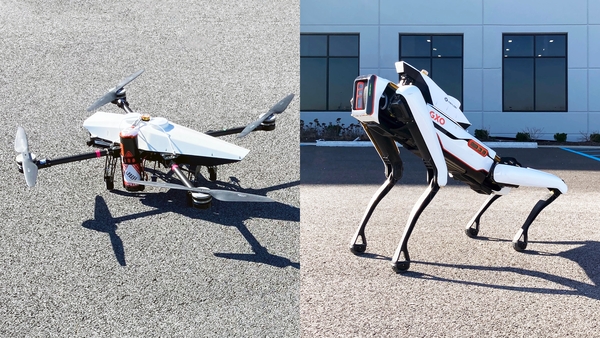
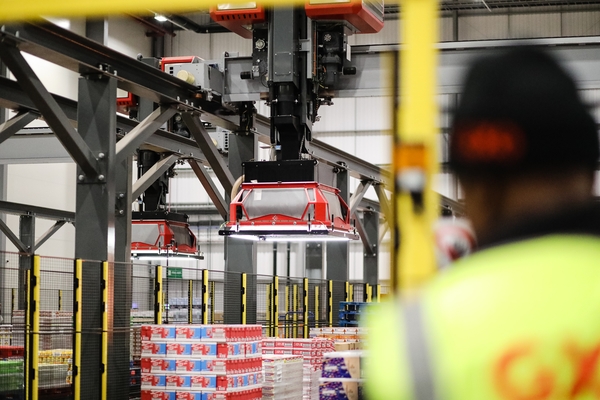
A.L.: I mentioned earlier that robots and cobots can increase productivity, improve accuracy, and create a more attractive workplace. Here are some numbers confirming the return on investment: we achieve 4-6 times higher efficiency using “goods-to-person” robotic systems. Our employees working with cobots are twice as efficient, and automation reduces picking time by 40%. In turn, the use of technology reduces training time by up to 80%, and employee turnover by up to 30%. We also use technology to improve safety and security. In June of this year, we launched an advanced DroneDog and DroneSentry security system at a facility of over 90,000 m2 that requires 24/7 monitoring. The drone protects our employees and our clients’ products, providing a continuous live video feed with an infrared camera for night patrols. Over the next year, we plan to significantly increase the number of automated security systems, which will make GXO one of the world’s largest fleets of aerial and ground security robots. We are also working with solution providers to develop and implement pioneering AI-based technology that tracks error patterns and autonomously minimizes downtime and human intervention in the picking process. An example of this is the Körber Operator Eye system, which reduced picking errors by 75%. Investing in innovation brings almost countless benefits. We want to make sure we can continue to do so. That is why, at the beginning of this year, we entered into an exclusive agreement with a manufacturer of mobile collaborative robots, providing our clients with significant, sustainable growth in operational efficiency. This is a guarantee of rapid deployment of popular collaborative robots in our warehouses to ensure a competitive advantage for our clients.
M.K.: Modern, automated warehouses with kilometers of conveyors, automatic sorters, picking robots, and pallet machines are an increasingly common landscape in Polish logistics parks. Where in this entire robotic world is there a place for humans? What cannot be automated yet?
A.L.: That is a very apt question, which has remained relevant ever since we started implementing solutions based on robotics and artificial intelligence in the 2000s. In times when there are AI programs that can beat the world’s best chess player and write classical music almost indistinguishable from the works of great composers, the answer to the question of what cannot yet be automated is not so easy. However, without a doubt, regardless of the level of automation, we need employees at every stage of our operations. Whether working with robots or cobots, or using data analytics to improve processes, our team members are essential to the success of our operations.
M.K.: Let’s talk for a moment about the concept of sustainable development, which is so close to you and your company. We hear more and more often about the need to take action to protect the environment. But environmentally friendly solutions require compromises in terms of the work efficiency of logistics companies. Is the idea of development with respect for the environment and people just a trendy slogan or is it already a necessity?
A.L.: Personally, I cannot agree with the statement that “environmentally friendly solutions require compromises in terms of the work efficiency of logistics companies.” I will give an example of the lighting necessary in our warehouses. We are investing in LED lighting to reduce energy costs and gain control over our lighting usage, which was impossible with previous systems. Another example is packaging. Our SOAP solution is a machine that not only increases packaging efficiency but also automatically measures items and then cuts boxes to size, reducing cardboard waste by 10%-15%, or about 50 tons, and eliminating about 100,000 plastic envelopes. We are also investing in technology that can help our clients reduce the number of returned products that end up in landfills from an average of 25% to less than 1%. Therefore, responsible development of an environmentally friendly business is not just a slogan, but a necessity. GXO has concrete and ambitious goals related to environmental protection. Our clients are increasingly willing to use our expertise in this area, and their end customers are increasingly making their purchasing decisions based on an assessment of brands’ attitudes toward the environment.
M.K.: How can a logistics operator take care of development in harmony with ecology?
A.L.: I am convinced that the best way to develop in harmony with ecology is to set clear and ambitious goals for yourself. Meagan Fitzsimmons, GXO’s Chief Compliance and ESG Officer, repeatedly says that at GXO, “how” we do business is just as important as “what” we do. To keep this commitment, we have developed and published concrete and measurable goals regarding reducing the amount of waste sent to landfills and greenhouse gas emissions, increasing the use of LED lighting and renewable energy, as well as carbon neutrality. GXO CEO Malcolm Wilson, whom I quoted earlier, summarized it perfectly by saying: “Together with our clients and partners, we are implementing new equipment and solutions to reduce our collective impact on the planet.” GXO is growing at a fast pace, but we are growing in harmony with the environment.