











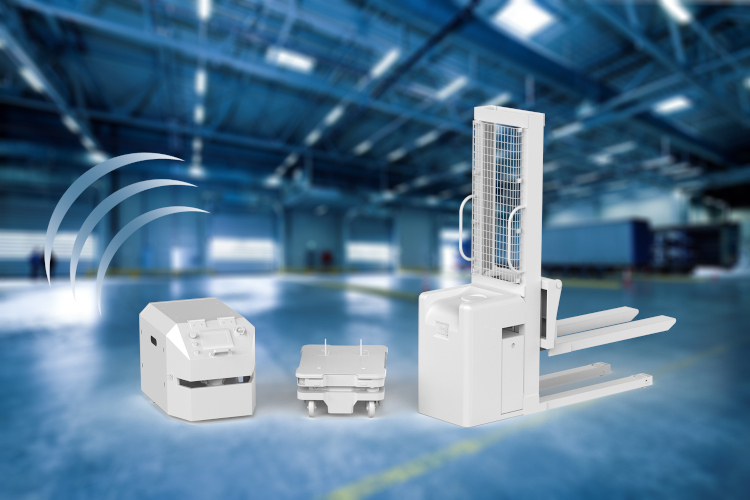
Communication and safety challenges facing mobile robot manufacturers.
Mobile robots can be found everywhere – from warehouses to hospitals – they are even visible on the streets. Their popularity is easy to understand; they are cheaper, safer, do not require a recruitment process, and are more productive than flesh-and-blood employees. Robotic solutions can be easily scaled or connected with other machines. Because mobile robots collect a lot of data in real-time, companies can use them to start their IIoT journey.
However, to operate efficiently, mobile robots require secure and reliable communication. This article presents the main industrial safety and communication challenges faced by mobile robot manufacturers and presents an easy way to overcome these problems, allowing them to keep moving constantly.
What are mobile robots?
First, let’s define what we mean by mobile robots.
Mobile robots transport materials from one place to another and come in two types: Automated Guided Vehicles (AGVs) and Autonomous Mobile Robots (AMRs). AGVs use guidance infrastructure (wires, reflectors, or magnetic strips) to follow fixed routes. If an object blocks the AGV’s path, it stops and waits for the object to be removed.
AMRs are more dynamic. They move using maps and use data from cameras, built-in sensors, or laser scanners to detect their surroundings and choose the most efficient route. If an object blocks the planned route for an AMR, it takes a different path. Because AMRs do not rely on guidance infrastructure, they are faster to install and can adapt to logistical changes.
What communication and safety challenges do mobile robot manufacturers face?
1. Establishing a wireless connection
The first challenge for mobile robot manufacturers is choosing the most appropriate wireless technology. This usually involves determining requirements, evaluating standards, and choosing the best fit. Unfortunately, this is not always possible for AGV/AMR manufacturers, as they often do not know where the machine will be located or what the exact details of the target application are.
Sometimes a Bluetooth connection will be optimal because it provides a stable connection without congestion, while other applications will require a fast, secure cellular connection. For mobile robot manufacturers, a network technology that can be easily changed to meet specific requirements would be optimal.
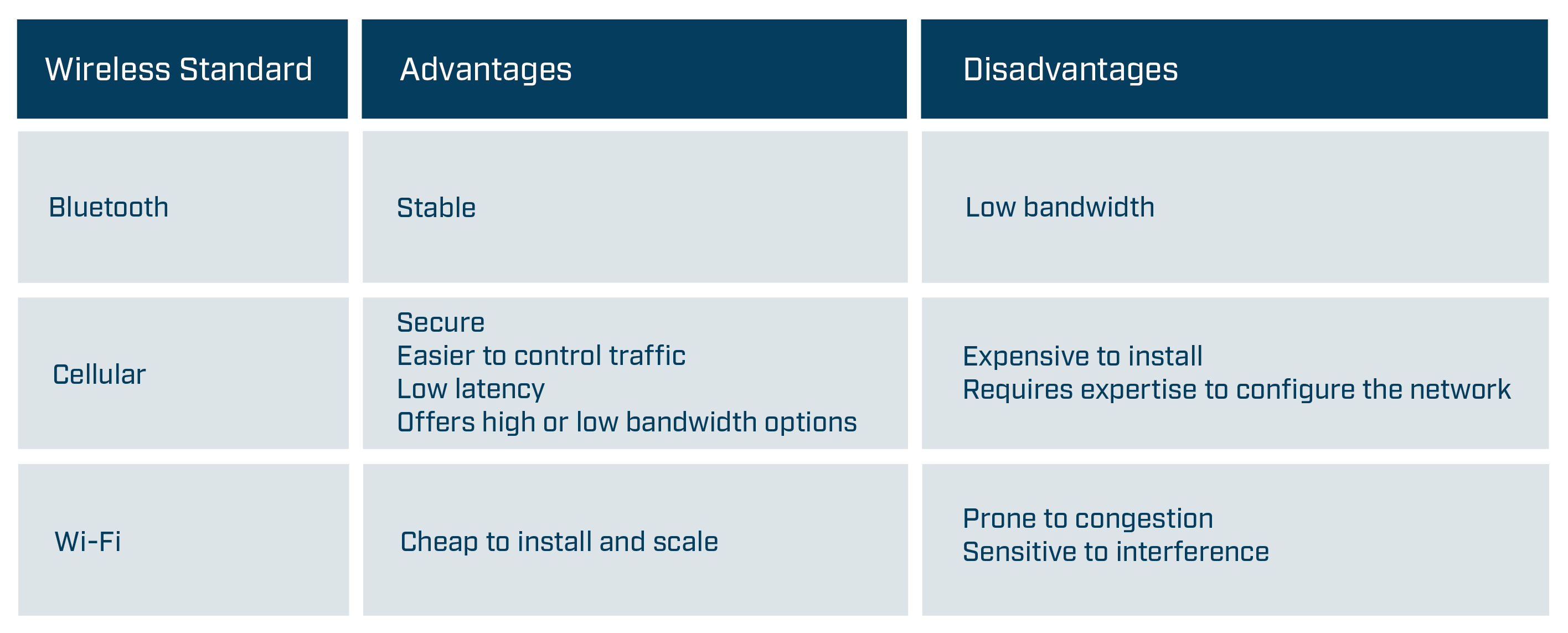 Fig. 1 Wireless standards – main advantages and disadvantages
The second challenge is ensuring the installation works as planned. Before deploying a wireless solution, a predictive site survey should be performed based on facility drawings to ensure that automated vehicles have sufficient signal coverage throughout the location. The site survey should determine the optimal location of access points, the correct antenna type, the optimal antenna angle, and how to mitigate interference. After installation, wireless sniffer tools should be used to verify the design and adjust access points or antennas as required.
2. Connecting mobile robots to industrial networks
Mobile robots must communicate with controllers in the right place, even though they often use different industrial protocols. For example, an AGV might use CANopen, while the controller might use PROFINET. Furthermore, mobile robot manufacturers may want to use the same AGV model in a different location where the controller uses a different industrial network, such as EtherCAT.
Mobile robot manufacturers must also ensure that their automated vehicles have sufficient performance to process the required amount of data. This will vary depending on the size and type of the installation. Large installations may use more data because routing algorithms must cover a larger area, more vehicles, and more potential paths. Navigation systems, such as vision navigation, process images and therefore require more computing power than installations using other navigation systems, such as reflectors or magnetic tapes. As a result, mobile robot manufacturers must meet the following challenges:
1. They need network technology that supports all major fieldbuses and industrial Ethernet networks.
2. Changing network technology must be easy so that the mobile robot can communicate without hardware design modifications on the same industrial network as the controller.
3. The applied network technology must provide sufficient performance and functionality to process the required amounts of data.
3. Creating a safe system
Creating a system where mobile robots can safely transport materials is crucial and a demanding task. Mobile robot manufacturers must create a system that takes into account all the diverse types and designs of mobile robots and the presence of humans in the industrial environment. They must ensure that mobile robots respond to external actions, such as opening a safety door or pressing an emergency stop button, and that the network solution can process various safety protocols and interfaces. They must take into account that AMRs move freely and manage collision risks accordingly. Sensor technology is constantly evolving, and AGV/AMR manufacturers must keep up with developments to ensure their products remain as efficient as possible.
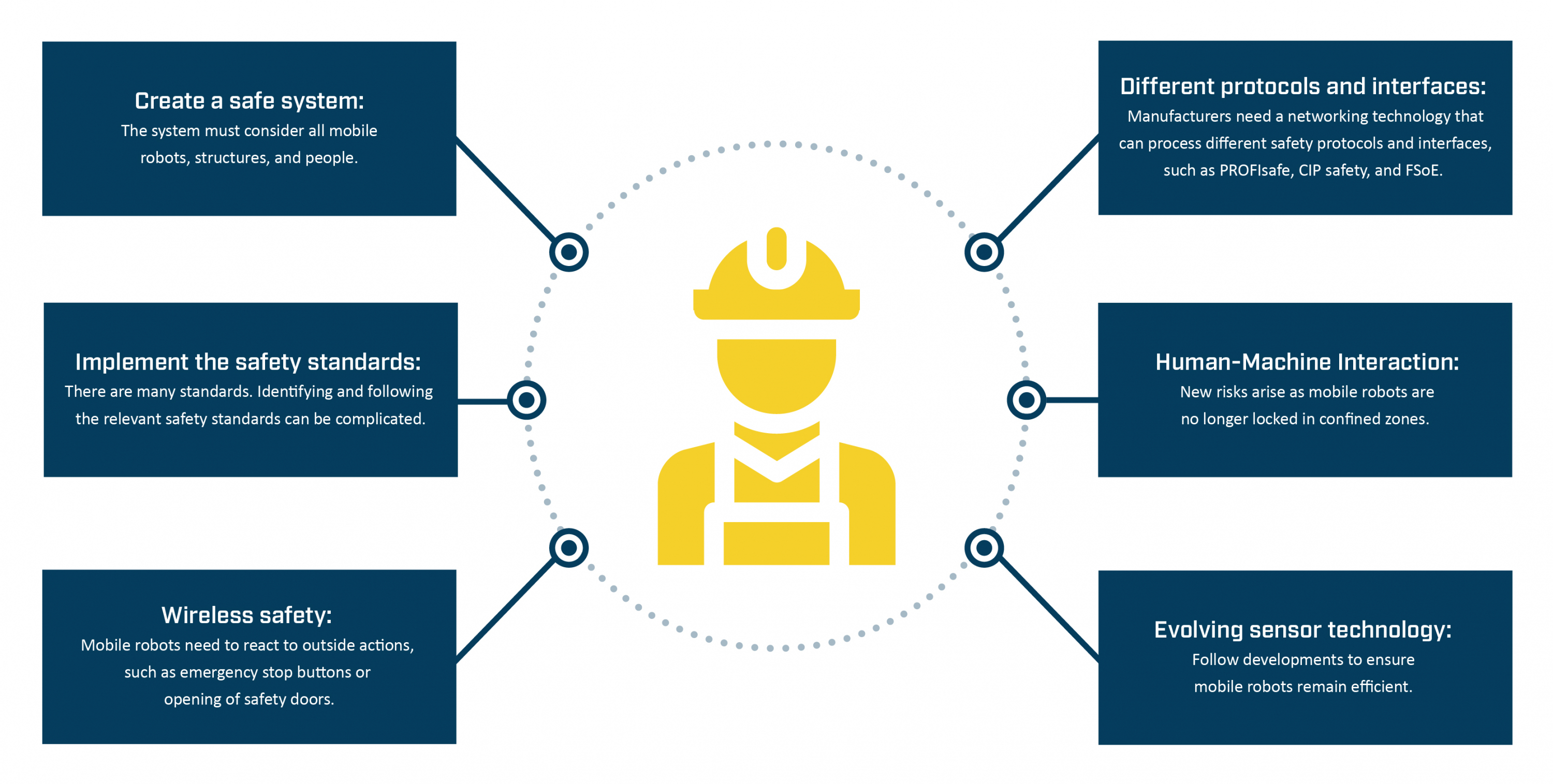 Fig. 2. Overview of safety challenges for mobile robot manufacturers
Safety standards.
Safety standards contain guidelines for implementing safety-related components and preparing the work environment and maintenance of machines or equipment.
Although compliance with various safety standards (ISO, DIN, IEC, ANSI, etc.) is mostly voluntary, machine builders in the European Union are legally required to follow the safety standards contained in the Machinery Directives. The Machinery Directive 2006/42/EC always applies to mobile robot manufacturers, and in some situations, Directive 2014/30/EU may also be relevant, as it regulates the electromagnetic compatibility of equipment. The Machinery Directive 2006/42/EC describes the requirements for the design and construction of safe machines placed on the European market. Manufacturers can affix the CE marking and supply machines to their customers only if they can prove in the declaration of conformity that they have met the requirements of the directive.
Although other safety standards are not mandatory, manufacturers should follow them because they help meet the requirements of the Machinery Directive 2006/42/EC. For example, they can follow the guidelines contained in the ISO 12100 standard to reduce identified risks to an acceptable level of residual risk. They can use ISO 13849 or IEC 62061 to find
the required safety level for each risk and ensure that the appropriate safety-related function meets specific requirements. Mobile robot manufacturers decide how they achieve a specific safety level. They are able, among other things, to reduce the speed of mobile robots to lower the risk of collision and the degree of injury to an acceptable level. They can also ensure that mobile robots operate only in designated zones where human access is prohibited (defined as restricted zones in ISO 3691-4).
Determining the right standards and implementing the requirements is the best way for automated vehicle manufacturers to create a safe system. However, as this summary suggests, it is a complex and time-consuming process.
4. Ensuring reliable CAN communication
As a reliable and easy-to-implement standard since the 1980s, this type of communication based on CAN technology is still gaining popularity, mainly due to its application in various rapidly growing industries, such as E-Mobility and Battery Energy Storage Systems (BESS). CAN is a simple, energy-efficient, and cost-effective solution. All devices on the network have access to every piece of information, and because it is an open standard, it means that users can customize and expand messages to suit their needs.
For mobile robot manufacturers, establishing a CAN connection becomes even more important because it allows for monitoring lithium-ion batteries increasingly used in the drive systems of automated vehicles, both in retrofitted systems and in new installations. To this end, manufacturers must perform the following steps:
1. Establish a reliable connection with CAN or CANopen communication standards, which will allow them to check their devices, e.g., for monitoring battery status and performance.
2. Ensure the systems are protected against electromagnetic interference (EMI), as this can destroy installed electronics. The risk of EMI is significant in the case of retrofits, as adding new components, such as a battery placed next to a communication cable, introduces high-frequency electromagnetic interference.
5. Remote access to mobile robots
The ability to remotely access a machine’s control system can help mobile robot suppliers or engineers solve most problems without having to travel to the site.
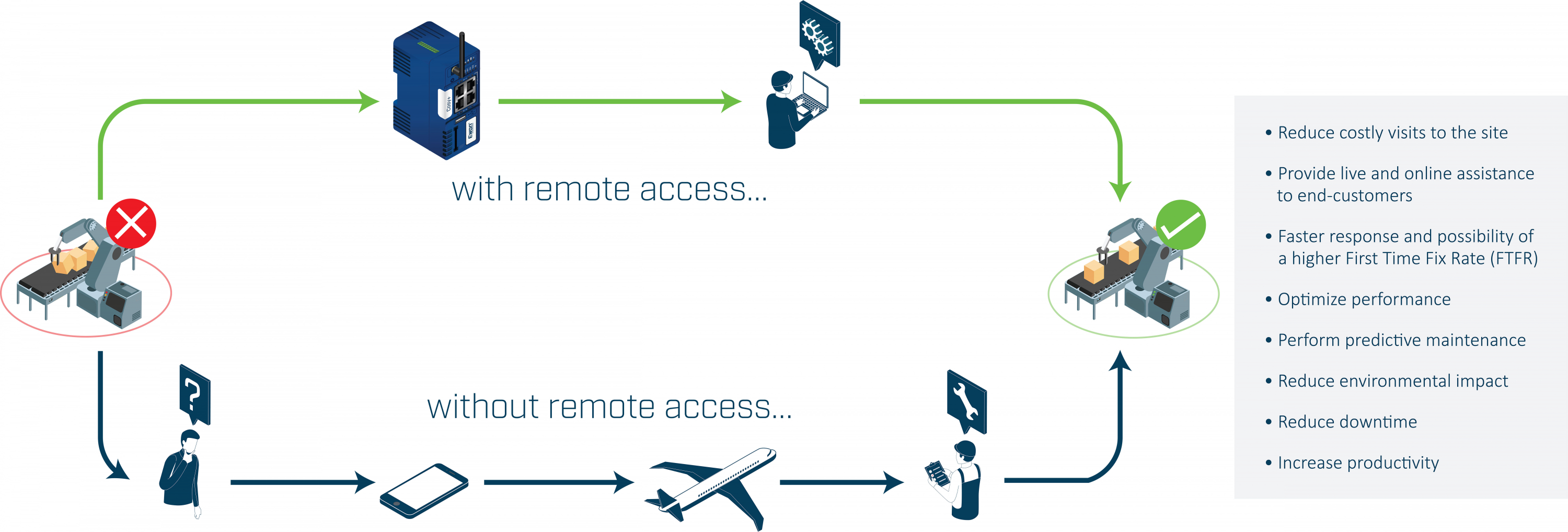 Fig. 3. Benefits of a remote access solution
The challenge is to create a remote access solution that balances the requirements of the IT department with the expectations of engineers or suppliers.
The IT department wants to ensure that the network remains secure, reliable, and maintains integrity. As a result, the remote access solution should include the following types of security:
- Using outbound connections instead of inbound connections to minimize the impact on the firewall.
- Separating critical traffic from the rest of the network.
- Encrypting and protecting all traffic to ensure its confidentiality and integrity. Guaranteeing that suppliers operate in accordance with relevant safety standards, such as ISO 27001, or are certified for compliance with them.
- Guaranteeing that suppliers conduct regular security audits.
The engineer or supplier wants a simple-to-use and reliable system. Users should be able to easily connect to mobile robots and access the required information. If the installation can change, the number of robots should be easy to scale according to requirements. If mobile robots are located in a different country than the suppliers or engineers, the network infrastructure must provide sufficient coverage and redundancy to guarantee availability worldwide.
Summary
As highlighted above, mobile robot manufacturers must face many challenges related to communication and network security. They must establish a wireless connection, transfer data across different networks, ensure safety, connect to CAN systems, and have secure remote access to the robots. As if that were not complicated enough, every installation must be re-evaluated and adjusted to on-site requirements.
Best practices for implementing mobile robot communication systems
Mobile robot manufacturers are rarely experts in communication or safety. Consequently, it may turn out that developing the required communication technology on their own will be too time-consuming and expensive for them. Using specially designed third-party communication solutions not only solves communication problems but also provides further benefits.
Modern communication solutions have a modular design that allows mobile robot manufacturers to remove one network product designed for a specific standard or protocol and replace it with a product designed for another standard or protocol without affecting any other part of the machine. For example, Bluetooth may be the most appropriate wireless standard in one installation, while Wi-Fi may provide better coverage in another installation. Similarly, one location may use PROFINET and PROFIsafe protocols, while another may use different industrial and safety protocols. In both scenarios, mobile robot manufacturers can use communication products to change network technology to meet local requirements without making any changes to the hardware design.