Over the course of six years, the number of Poles interested in purchasing an electric vehicle has increased from 12% to 42.4%, according to this year’s edition of the PSPA New Mobility Barometer. The Barometer is the only recurring public opinion survey that illustrates the breakthrough changes that have taken place in the awareness and purchasing preferences of Poles regarding eco-friendly transport since 2017.
The “New Mobility Barometer 2022/23” is the 6th edition of the recurring PSPA report, which contains conclusions from a public opinion survey on electromobility, including the purchasing potential of Poles regarding electric cars and their preferences related to charging infrastructure. The Barometer is based on responses obtained from a representative group of Polish drivers who are realistically considering the purchase of a new vehicle within the next 3 years.
– This year’s edition of the “New Mobility Barometer” answers a number of questions related to how Poles perceive electromobility. Our report contains information on the purchasing potential in the e-mobility segment, changes in preferences related to the operation of electric cars and charging infrastructure, as well as the profile of potential EV buyers in Poland. Over the 6 years that have passed since the first edition of the “Barometer” was published, we have surveyed almost 7.5 thousand people, asked 673 questions, and obtained 984 thousand responses – says Maciej Mazur, Managing Director of PSPA.
The power of generations
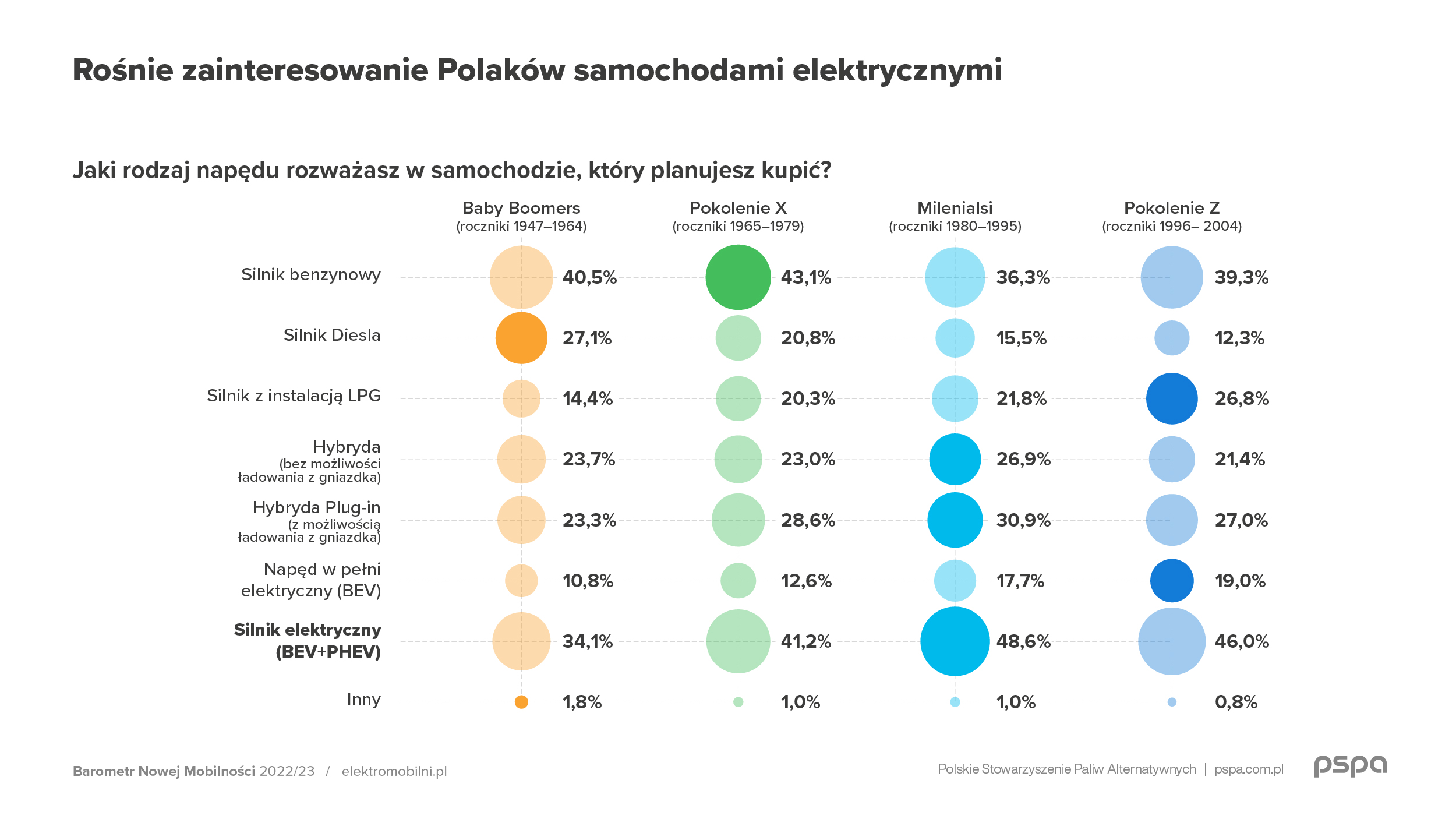
Unlike previous editions of the “New Mobility Barometer”, this year the respondents were divided by age. The respondents were divided into 4 generational groups: Generation Z (born 1996 – 2004) – people aged between 18 and 26, Millennials (born 1980 – 1995) – people aged between 27 and 42, Generation X (born 1965 – 1979) – people aged between 43 and 57, and Baby Boomers (born 1947 – 1964) – people aged between 58 and 75. Electric drive turned out to be the most frequently indicated choice by Millennials (48.6%). It enjoys similar popularity among Generation Z (46%). Representatives of Generation X (41.2%) and Baby Boomers (41.2%) show significantly less interest in electromobility.
– Observing the electric car category on OTOMOTO, we see that the supply trend is also clearly upward – in 2022, there were 50% more offers for the sale of zero-emission cars on the platform than a year ago. However, the results of the “Barometer”, which say that 1/3 of Poles are still afraid of the price of a car, are not surprising – when looking for an electric car on OTOMOTO this year, one could most often find offers for vehicles more expensive than 200,000 PLN – there were 130% more ads in this segment than in the previous year – says Agnieszka Czajka, General Manager of Otomoto.
Getting closer to electromobility
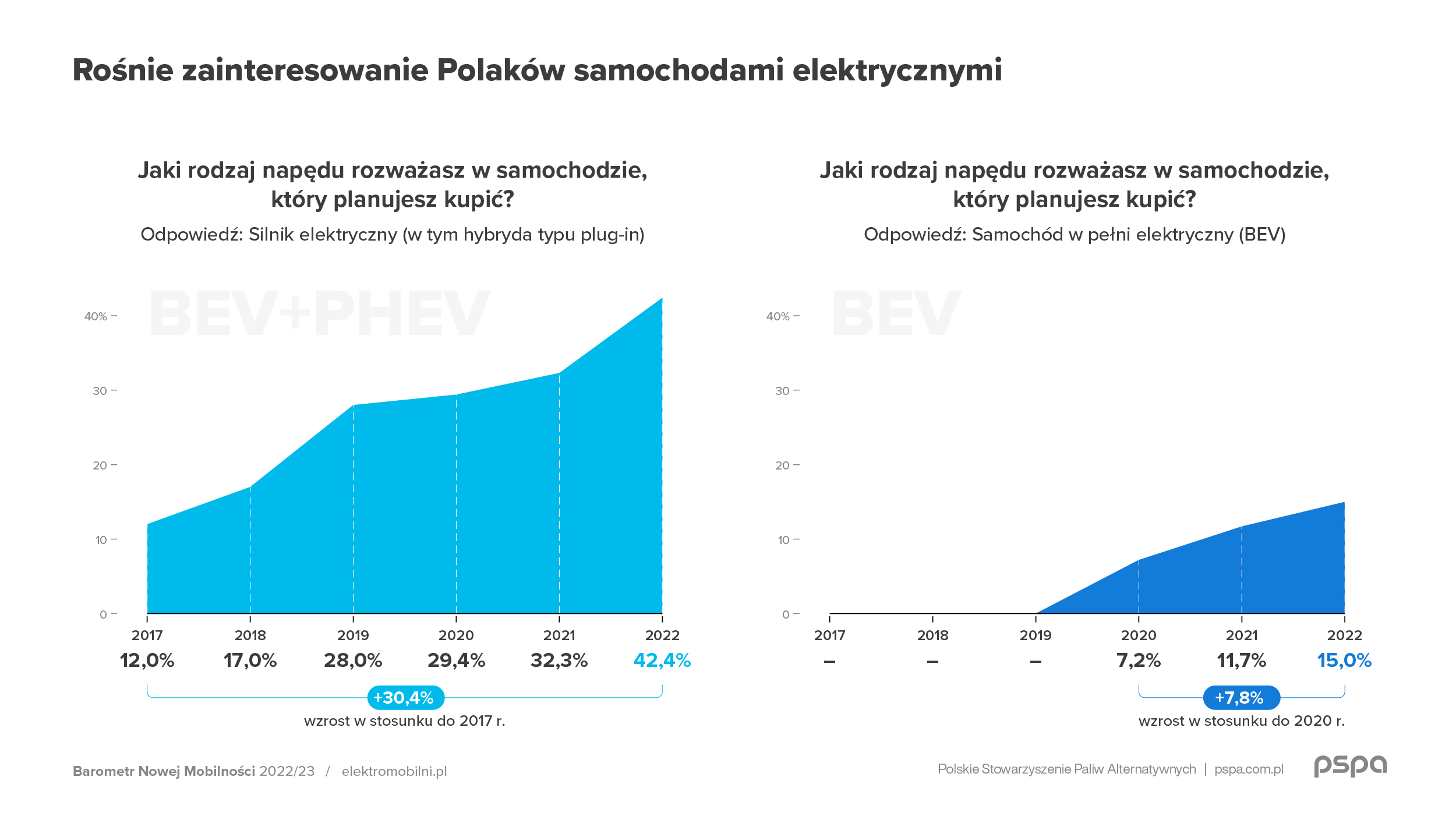
The latest edition of the “Barometer” shows that in 2022, an increase in interest in electric vehicles among Poles was recorded once again. Back in 2017, only 12% of respondents declared that the next type of drive they would choose in a car would be electric. In 2020, this percentage rose to 29.4%, and currently, 42.4% of respondents express such readiness. This means an increase of 30% over six years. In the case of fully electric variants (BEV), an increase from 7.2% in 2020 to 15% in 2022 was recorded.
– Among the most interested recipients of BEV vehicles is Generation Z. 19% of this group plans to purchase a zero-emission car. Millennials also indicate great interest in such a choice (17.7%), unlike Generation X (12.6%) or Baby Boomers (10.8%). The main factors encouraging respondents to choose a BEV are lower operating costs (51.3%), environmental awareness (47.8%), as well as the possibility of obtaining a subsidy for the purchase of a vehicle (39%) – says Jan Wiśniewski, Director of the PSPA Research and Analysis Center.
Inflation affects prices
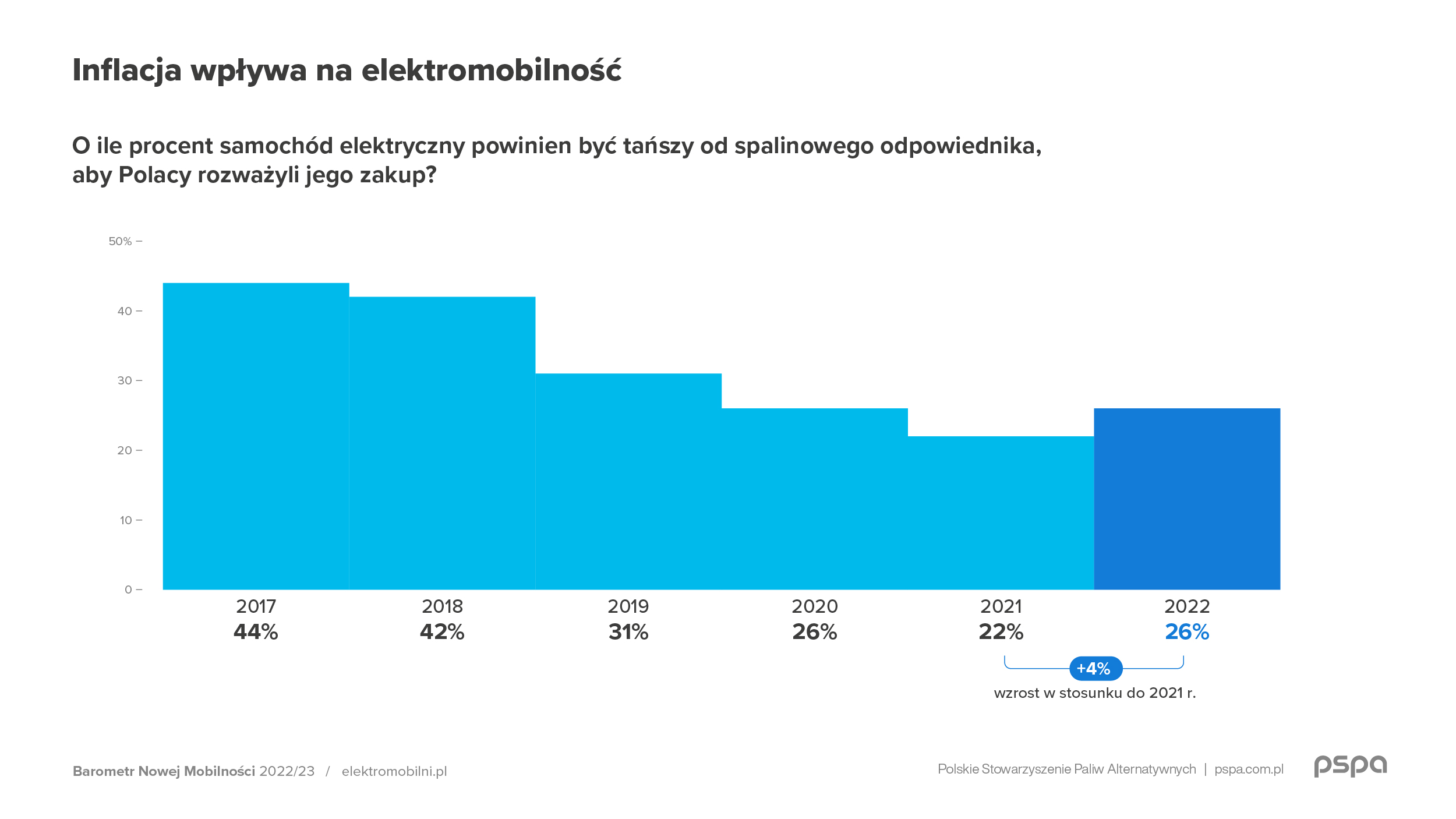
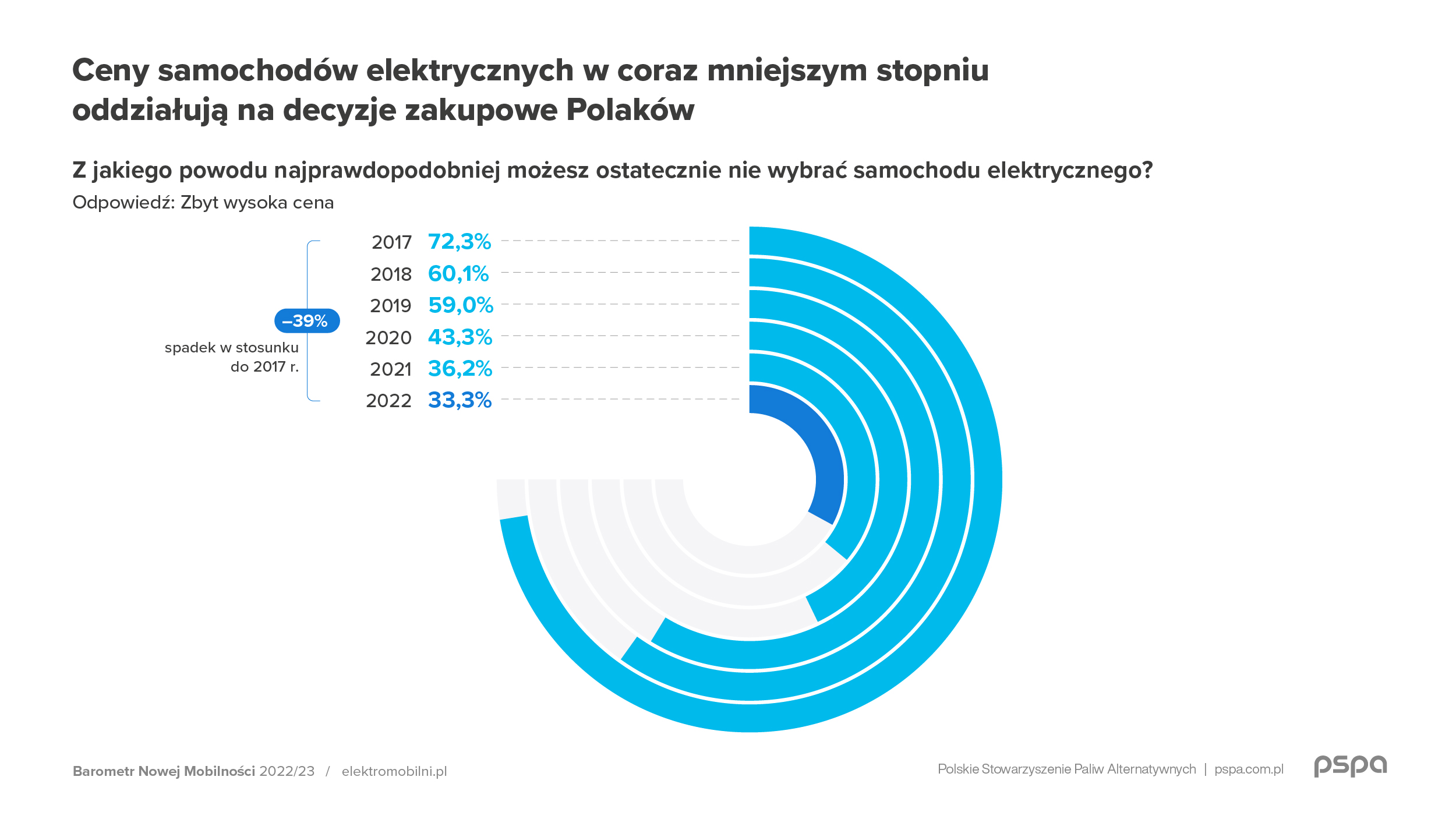
When choosing a vehicle, Poles are guided primarily by pragmatism. Back in 2017, 72.3% of respondents indicated that the main factor discouraging them from buying an electric car was the price being too high. After six years, this percentage has decreased to 33.3%. In current times, inflation is raising concerns among potential customers. One of the most frequently mentioned reasons for choosing a vehicle other than electric is the fear of rising energy prices, which in effect may translate into a lack of assumed operating savings (19.2% of Millennials indicated this). In this context, respondents also pointed to the too slow expansion of publicly accessible charging infrastructure (23.3% of respondents from Generation X indicated this).
Used electric cars are becoming more popular
In the 6th edition of the “New Mobility Barometer”, respondents also answered questions regarding used electric cars. When asked about the possibility of purchasing an EV from the secondary market, 48.8% of respondents answered positively. On the other hand, 13.8% of respondents rate the availability of used e-vehicles as good. 56.4% have no opinion on this matter.
– Among the biggest concerns before buying a used electric car, respondents pointed to uncertainty regarding the technical condition of the battery (18.7%), the short range of models available within the assumed budget (16.4%), a significantly higher price compared to combustion engine counterparts (15.5%), limited functionality (14.4%), or concerns about high depreciation (11.9%) – says Albert Kania, Senior New Mobility Manager at PSPA.
Charging via app
Along with the development of the Polish electromobility market, one can observe a trend consisting of changing preferences for methods of paying for charging depending on the generational group. Baby Boomers still prefer transactions via payment card. 63.4% of respondents opted for this method of payment. Representatives of Generation X (71.3%) and Millennials (48.9%) had a similar opinion. Generation Z has a completely different approach, preferring payments using an application with a linked card (69.1%).
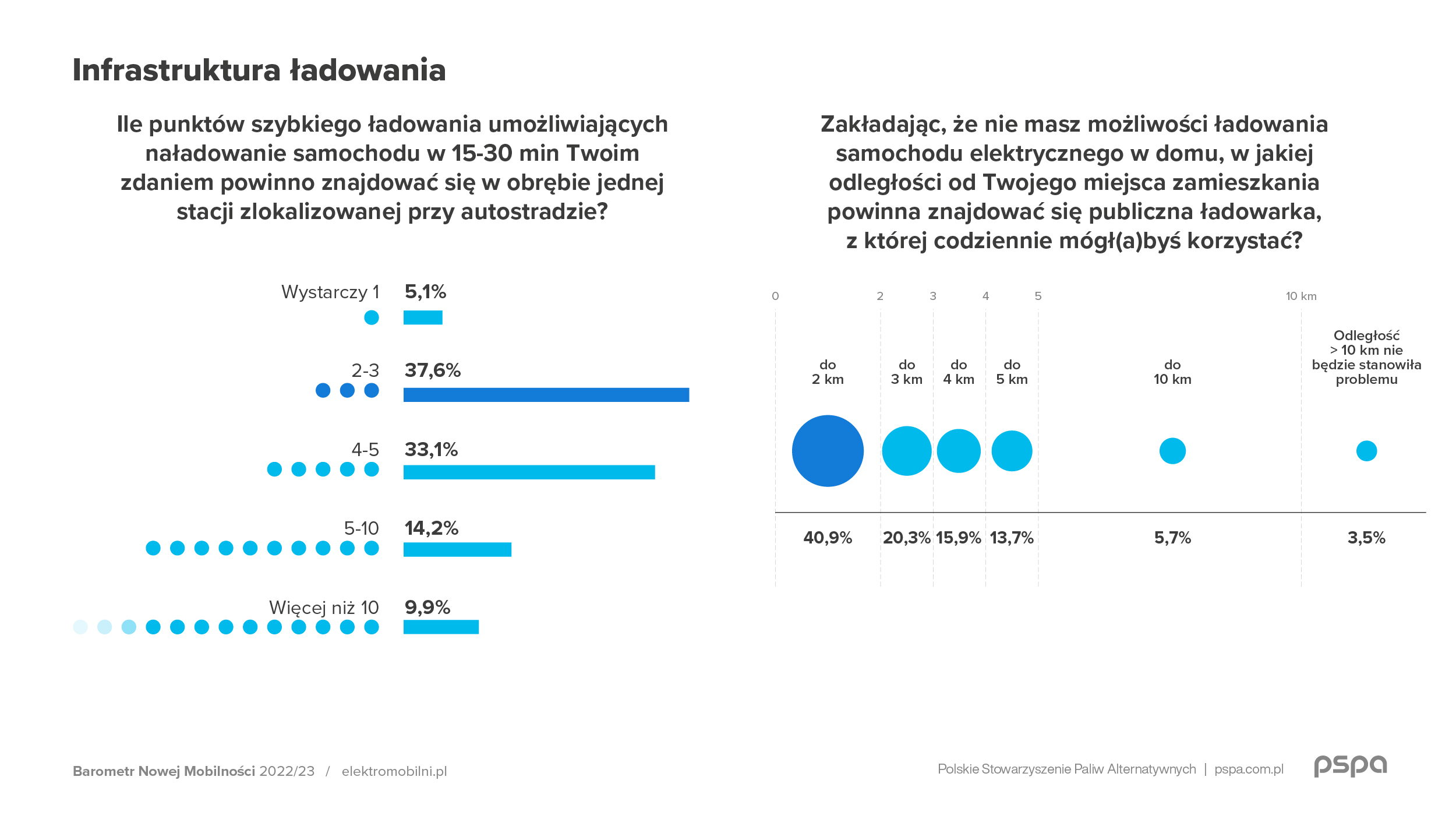
– Listening to the voices of drivers, we notice that one of the main electromobility needs is the expansion of infrastructure. This year’s edition of the “New Mobility Barometer” showed that in the absence of the possibility of charging an electric vehicle at home, the distance to the charger should not be greater than 2 kilometers. This is what 40.9% of respondents say. 20.3% would accept a distance of up to 3 kilometers – points out Łukasz Lewandowski from EV Klub Polska.
Electromobility awareness
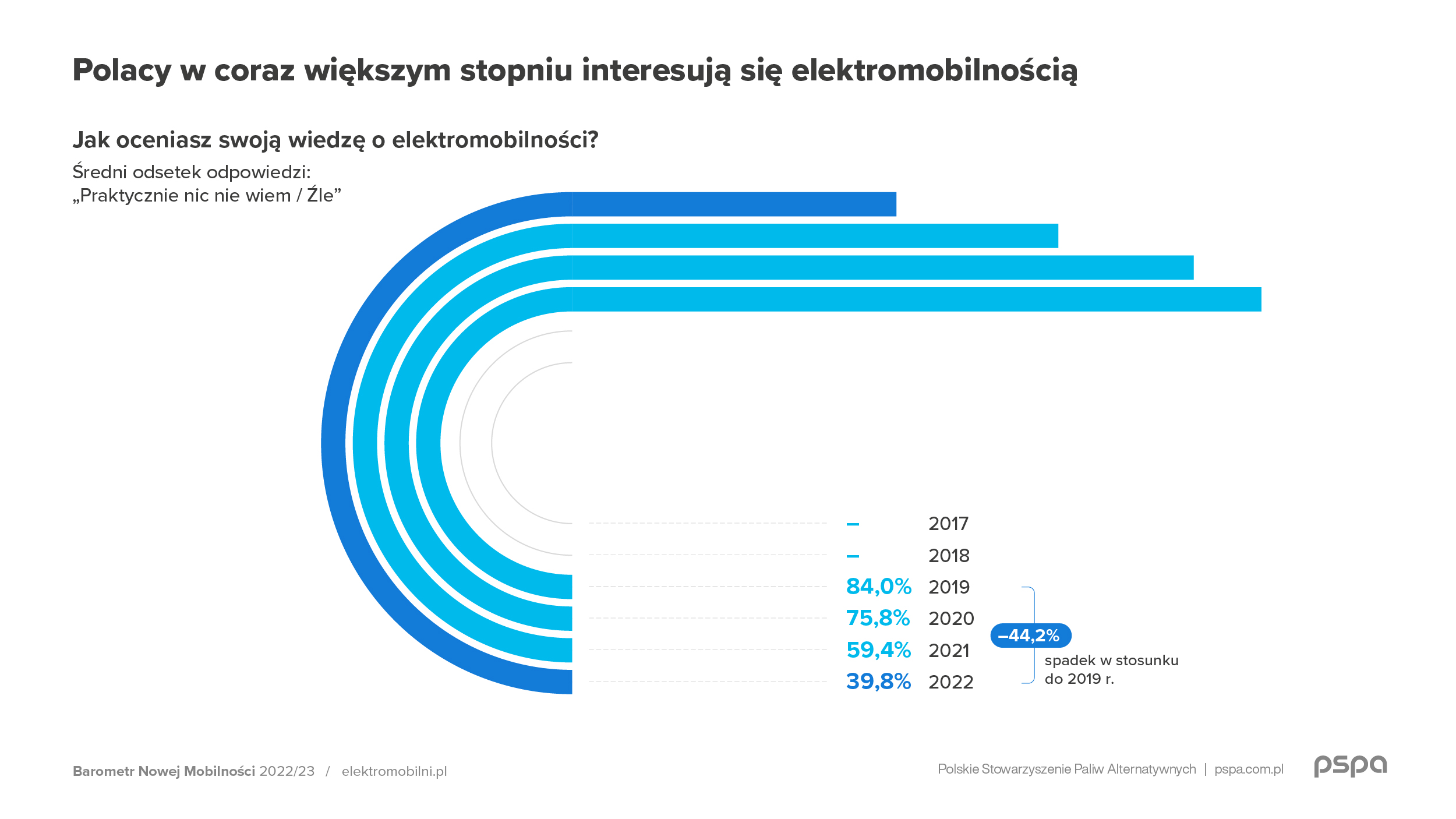
The “New Mobility Barometer 2022/23 study” showed that Poles have increasing knowledge about electromobility. Only 39.8% of respondents indicated that they know practically nothing about the e-mobility sector. This is a result 44.2% lower compared to 2019, when 84% of respondents declared a lack of knowledge. A lack of familiarity with issues related to electromobility is a problem for many Baby Boomers. As many as 53.2% of them declared that their knowledge about e-mobility is poor. 43.3% of respondents from Generation X also rate their knowledge in this area poorly, while among Millennials this result is 28.8%.
About the study
The “New Mobility Barometer 2022/23” study was conducted in November 2022 on a group of over 1,515 respondents using the online interview method by the SW RESEARCH agency. The strategic partner of the New Mobility Barometer 2022/23 is Otomoto. The substantive partner is SW RESEARCH.