








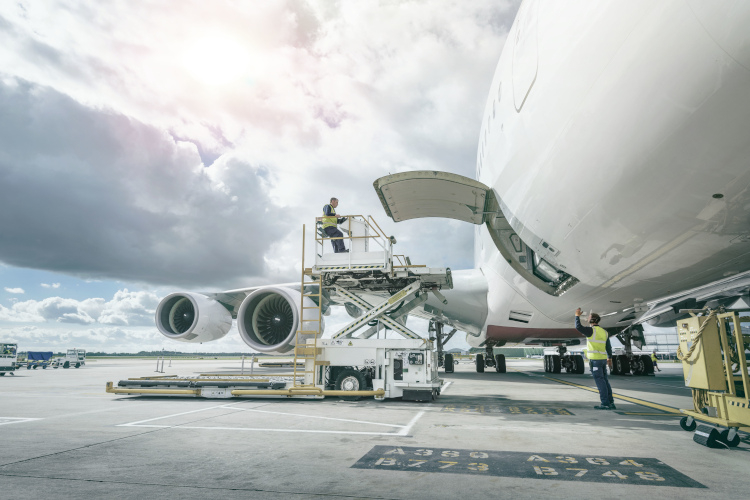
DB Schenker is expanding its portfolio of climate-friendly logistics solutions, opening another chapter in the history of green air freight. Customers can now choose Sustainable Aviation Fuel (SAF) for their shipments to any destination worldwide, regardless of the aircraft type or airline. Thanks to the virtual allocation of biofuel, it is possible to avoid CO2 emissions by up to 100%.
“We are very proud of our pioneering project, which we started with our trusted partner, Lufthansa Cargo. Today, we are taking the next step by launching a global green air freight network. We have purchased large quantities of biofuel to accelerate the decarbonization of the logistics industry. DB Schenker customers can now virtually book SAF on all trade lanes covering thousands of airports around the world. Flexibility is the key factor for both our success and the good of the climate. Every ton of biofuel counts,” – says Jochen Thewes, CEO of DB Schenker.
“Reducing the carbon footprint in supply chains is not just about the distant future; it is possible today. True, sustainability has a price. But now we are providing a choice: No DB Schenker customer has to use conventional fuel for air transport anymore. We hope this news will give even greater momentum to the development of sustainable aviation. Customers who have already tested or regularly use our SAF offer are very satisfied,” adds Thorsten Meincke, Global Board Member for Air & Ocean Freight at DB Schenker.
SAF is a proven alternative fuel produced from renewable waste and residue raw materials, such as used cooking oil. The CO2 released during the combustion of this fuel in an aircraft engine is only the CO2 removed from the atmosphere during the photosynthesis phase of the plants from which the SAF is refined. DB Schenker uses only biofuel certified to be free of palm oil. Currently, SAF is 3-5 times more expensive than conventional fossil fuel.
As part of ESG reporting, customers who choose to bear the additional costs of virtual SAF allocation for their air shipments receive a certificate regarding the exact value of greenhouse gas emissions that have been avoided. The actual use of SAF may take place on different flights. However, the environment is protected because the specific CO2 emission value that a flight using conventional fuel would have generated is avoided. This process is called “virtual allocation” and can also be applied to emissions from the production and transport of the biofuel itself.
The new global offer complements DB Schenker’s unique weekly route between Germany and China, launched in the spring of 2021. It remains the world’s only regular air cargo connection fully covered by SAF. More than 150 round-trip flights, operated by Lufthansa Cargo, have avoided the emission of over 40,000 tons of CO2e. Individual SAF agreements with other airline partners, such as the recent SAF purchase by Singapore Airlines, will also continue.