











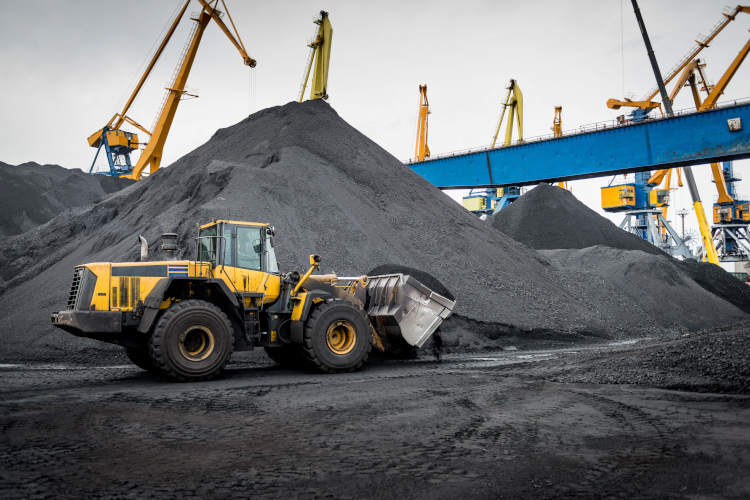
Coal clearance requires specific procedures. To secure the needs of individual consumers and companies during the current heating season, Poland is importing coal from various regions of the world. Efficient and smooth customs clearance of coal is of great importance – the faster the goods are released for free circulation in the EU, the sooner they will reach distribution.
What should freight forwarding companies that handle coal importers know?
- Poland has increased coal imports from countries such as Colombia, South Africa, Indonesia, the United States, Australia, and Kazakhstan;
- Freight forwarding companies that handle coal importers must be familiar with the applicable procedures and know what documents are currently required to clear it;
- Efficient customs clearance of coal is of great importance because it will reach recipients faster
The introduction of an embargo on coal imports from Russia and Belarus has led to Poland having to import it from other countries, such as Colombia, South Africa, Indonesia, the United States, Australia, and Kazakhstan. To accelerate the distribution of coal across Poland, efficient clearance is necessary. Therefore, transport and forwarding companies that handle importers must be well-versed in the required procedures and know what documents are currently essential for the import clearance of this commodity.
– The entity must be registered in PUESC, i.e., the Electronic Customs and Tax Services Platform, and possess an EU EORI (Economic Operators’ Registration and Identification) number. It is used to identify the company in dealings with customs authorities throughout the European Union. It is granted once and is unique for the entire EU – explains Joanna Porath, owner of the AC Porath customs agency.
An importer dealing in coal as an excise good is subject to registration in the Central Register of Excise Entities and is placed on the list of coal intermediary entities. They must have their registered office or place of residence in the territory of the country that issued the permit for conducting business involving the supply of excise goods.
– To perform import clearance of coal, the customs agency must receive from the company an authorization to represent it before customs and tax authorities in two originals. It can be temporary or permanent. Furthermore, the company importing coal must possess the original certificate of origin of the goods, which must be delivered to the agency before the date of clearance. This is to allow for its potential presentation during document checks by the customs office. This is a standard process during the clearance of this type of cargo – explains Joanna Porath.
The mere fact of having a complete set of documents does not mean they were issued correctly – a customs agent always checks all data contained in the documents with the utmost care. Sometimes the validity of a document is determined by whether it was issued before or after the date of loading onto the means of transport.
Another important document is the Safety Data Sheet (SDS). Its primary purpose is to inform about potential hazards associated with a given substance, methods of preventing them, and procedures to be implemented in the event of contamination with the described substance.
Other important documents include the bill of lading, which confirms the acceptance of goods onto a ship, or a consignment note if transport is by land. In the case of sea transport, the so-called cargo manifest is equally important. It describes all cargo lots on the ship, along with information that allows for their identification.
What happens next?
- after the declaration is accepted, an AIS system registration number is generated;
- an MRN number is assigned, which allows for recording and controlling the given transport operation;
- a check of the correctness of the submitted documents takes place – customs and tax authorities place great emphasis on their correct issuance and completeness;
- a ZC291 message is generated with the amount of the customs debt;
- forms of securing the customs debt depend on the capabilities of the client and the customs agency. According to regulations, it can be secured in cash or in the form of a bank guarantee – the security action before the authorities can be performed by both the client and the customs agency – upon request;
- if the client or customs agency uses its own customs security deposited in the IAS, the entity automatically receives a notification of the release of goods, and the amount of the customs debt is settled in accordance with the permit. Otherwise, the goods are also released for the procedure, but the confirmed ZC299 customs declaration will only be generated after the amount of the customs debt is credited to the IAS account under the indicated MRN number.

– Knowledge of the procedures and current documents necessary for the import clearance of coal is of great importance, especially now, when coal continues to flow into Poland and its efficient distribution is necessary – says Joanna Porath.
What are the most common options for coal clearance? You can clear the entire cargo from the ship at the quay – after confirmation by the Customs Office that the ship is already docked. Sometimes the cargo is transshipped at the roadstead onto barges, and they are cleared at the quay. You can also unload the entire cargo onto a yard, which must have the status of a Temporary Storage Warehouse, and only after filing a declaration is the clearance for the entire cargo carried out under the release for free circulation procedure. There is also an option to send the entire cargo in direct transit, i.e., transship the ship onto railway wagons brought to the port siding. Indirect transit, on the other hand, involves transshipping first to a Temporary Storage Warehouse and then executing transit declarations for specific lots of goods.
List of procedures and required documents needed for the import clearance of coal:
- Registration in PUESC, assignment of an EU EORI number – used for identification in dealings with customs authorities throughout the European Union;
- Registration as a coal intermediary entity;
- Authorization for the customs agency in two originals;
- Importer’s declaration on the intended use of solid fuels – necessary after the amendment of the Act on monitoring and controlling the quality of fuels;
- Importer’s declaration on company relationships – concerning family, capital, or corporate ties between the seller and the buyer that could influence the purchase price of the goods;
- Original certificate of origin of the goods;
- Safety data sheet – a document containing a description of the hazards that a specific chemical substance or mixture may cause;
- Notification to port authorities by the captain regarding the ship’s readiness for unloading;
- Laboratory analysis of samples – this procedure is to confirm that the quality of the product corresponds to the declarations of the producer or importer;
- Bill of lading – a sea transport document that confirms the acceptance of goods onto a ship;
- Consignment note, if transport is by land;
- Cargo manifest – a document containing all cargo lots on the ship, along with information that allows for their identification;
- Purchase invoice for the goods.
Source: AC Porath