








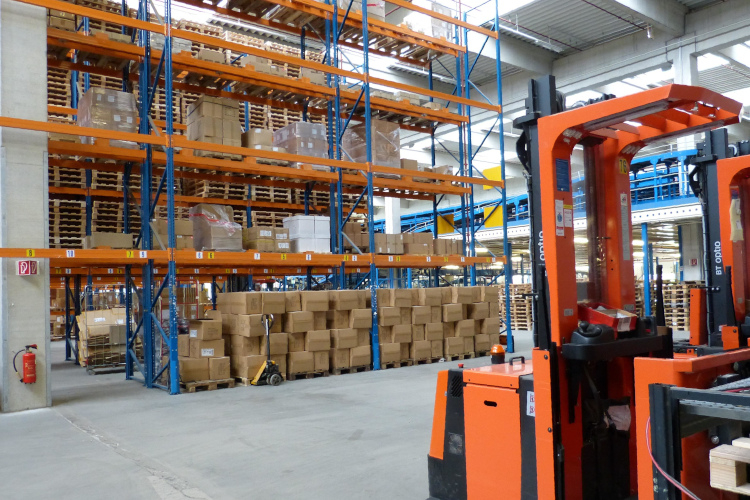
The warehouse space market is currently the fastest-growing commercial real estate sector in Poland. Between January and June 2022, 2.4 million m2 of modern warehouse space was delivered to tenants. Despite the very high new supply delivered to the market in the first half of 2022, the vacancy rate in the warehouse market in Poland recorded another decline. At the same time, further increases in asking rents should be expected.
Total modern warehouse space resources in Poland at the end of June 2022 exceeded 26.1 million m2, increasing their volume by over 16% over the year. The largest warehouse space resources are held by the Warsaw concentration area, which offers 5.5 million m2 (21% of the total volume of warehouse space in Poland), the Upper Silesia region with 4.6 million m2 (17%), and Central Poland, which has 3.8 million m2 of warehouse space (15% of resources).
In the period from January 2022 to June 2022, we continued to observe dynamic development of the warehouse sector. Michał Kozdrój, Director of the Warehouse and Industrial Space Department at Knight Frank, specifies that “during this period, 2.4 million m2 of modern warehouse space entered the market, which is the highest semi-annual volume recorded in the history of the market. Among the regions, Greater Poland (350,000 m2), Central Poland (350,000 m2), Lower Silesia (330,000 m2), and Upper Silesia (300,000 m2) lead the way. Developer activity remains high. At the end of the first half of 2022, 4.35 million m2 were still under construction, which is 20% more than a year earlier. However, the situation may change in the coming quarters, as developers have limited the implementation of speculative projects. These changes could already be seen in the second quarter of 2022, when 10% less space was under construction than in the first quarter.”
– This was influenced by the war in Ukraine and the economic consequences that Russia’s aggression caused in our part of Europe. Rising prices of building materials, a lack of available workers in the construction sector, inflation, rising interest rates, and the associated higher financing costs have caused some investors to start withdrawing from planned investments, particularly those of a speculative nature. This does not mean a lack of activity, however, as many entities from Western and Central-Eastern Europe remain in the game. In the second quarter, the market recorded several debuts, and entities already present in Poland expanded their portfolios. This is a good sign for the future. – added Michał Grabara, Director in the Capital Markets Department, Knight Frank.
High tenant interest in warehouse space in Poland translated into 3.8 million m2 of space leased in the first half of 2022. The most space was leased in the Upper Silesia area (770,000 m2, which accounts for a 20% share in the total volume of concluded contracts), in the second Warsaw zone (630,000 m2; 16% of leased space), and in the Central Poland area (450,000 m2; 12% of the transaction volume).
– Despite the very high new supply delivered to the market in the first half of 2022, the vacancy rate in the warehouse market in Poland recorded another decline and dropped to a record-low level currently estimated at just over 3%. In all areas of warehouse space concentration, the supply of vacant space is very limited, and due to the small number of projects being implemented speculatively, no significant changes in this regard should be expected in the coming quarters. – notes Elżbieta Czerpak, Director of the Market Research Department.
In the first half of 2022, an increase in asking rent rates was also recorded in the main warehouse markets in Poland.
– The sustained high interest of tenants in warehouse space and the low vacancy rate, as well as forecasts regarding the expected lower supply in the coming months, put landlords in a better negotiating position. Further increases in asking rents should be expected, and new tenants can expect that developers will offer smaller incentive packages, which will consequently translate into an increase in effective rates. – warns Michał Kozdrój, Director of the Warehouse and Industrial Space Leasing Department at Knight Frank.