








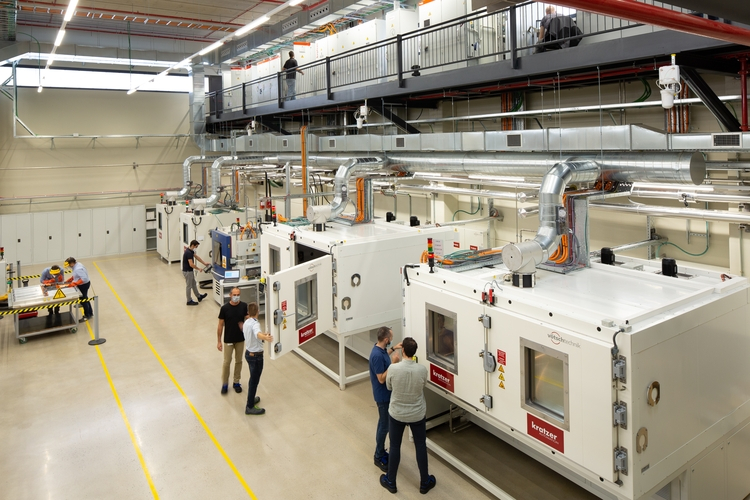
At the end of December 2021, SEAT announced the launch of the Test Center Energy (TCE) in Spain, which will develop and test energy systems for electric and plug-in hybrid cars. The investment cost over 7 million euros and is another step towards creating a leading electric mobility hub in Europe.
The new facility is located at the SEAT Technical Center in Martorell. The building will be used to develop and test the performance of energy systems for electric and hybrid vehicles from CUPRA, SEAT, SEAT MÓ, and other Volkswagen Group brands. The investment is part of the Group’s global R&D network and is the second such facility in Europe. It is also another step in the electrification of the company and the Spanish automotive industry. The TCE is also intended to become a space for innovation, collaboration, and research, offering training for young people in the field of electric car production. The opening ceremony was attended by the Spanish Minister of Science and Innovation, Diana Morant, and the Catalan Minister of Business and Employment, Roger Torrent, who visited the Center together with SEAT and CUPRA CEO Wayne Griffiths and the company’s Vice President for Research and Development, Werner Tietz.
– The TCE will conduct up to 6,000 different tests per year, which will allow us to verify and guarantee the performance of batteries and charging systems. The opening of the new facility is great news, not only because of the ongoing electrification of our company. The investment will also allow us to position ourselves as a benchmark in the development of technology dedicated to sustainable electromobility – said Werner Tietz during the official opening.
Built in just 18 months, the Test Center covers 1,500 sqm and includes various rooms designed for the validation of battery modules. The facility will test batteries for MEB (electric) and MQB (hybrid) platforms, as well as various chargers used in all electrified vehicles. In total, the investment’s testing capacity is 1.3 megawatts, which corresponds to the charging power of over 100,000 mobile phones at the same time or 350 households with all electrical appliances turned on simultaneously.
To ensure optimal battery performance throughout their service life under various conditions, each will undergo an average of over 17,500 hours of testing. The building also houses a workshop where tests of the energy system, functional safety, and integration of functions with all electronics of hybrid and electric cars will be carried out. Batteries and modules will also be checked in extreme thermal situations, between -25 and +55 ºC. Thanks to special climate chambers, SEAT engineers will simulate various conditions that a car may encounter during its life cycle.
Source: www.seatmedia.pl