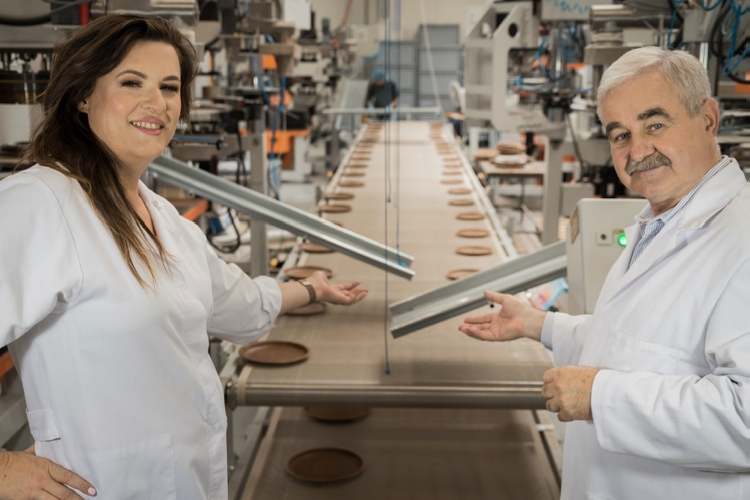
Starting their adventure with biodegradable containers a decade ago, they were definitely ahead of market trends. Today, their tableware reaches dozens of countries around the world. Małgorzata Then, CEO of the Zambrów-based company Biotrem, talks about the fascinating history of wheat bran plates.
Urszula Dziewit-Gontowska: The history of producing wheat bran tableware spans several years and is backed by a hundred-year history of the company and the milling traditions of the technology’s inventor. But history is not enough to develop such innovative products. Where did the idea for bran plates come from?
Małgorzata Then: Biotrem technology is the work of Jerzy Wysocki, a surveyor by education, a miller by profession, and an inventor by passion. Until the 1990s, he ran mills in Giżycko and Zambrów, where our pilot production plant operates today. Bran accounts for as much as one-third of the grain mass, but it is a byproduct of the grain milling process. It is used mainly as an additive to animal feed, and only a small portion is used by the food industry. Jerzy was looking for a better way to manage it. In the mid-90s, he began experimenting with processing bran. We met in 2012 and decided to check if this idea was suitable for commercialization.
U.D.-G.: Today we talk about the attractiveness of bran tableware. But was it the same at the beginning? Did crowds of enthusiastic eco-fans line up for plates from the start, or did you have to do a lot of educational work to convince the market of the product? Were the beginnings – as usual – fraught with difficulties?
M.T.: The beginnings were quite difficult. We were the first on the market and no one knew such products. The market for our products requires a change in thinking about the environment. We counted on the market for biodegradable single-use tableware and packaging to develop faster, and for favorable legal regulations to appear sooner. This change finally came – consumers began to be guided by concern for the environment and to make responsible purchasing choices. With such a vision of the future, we built a pilot plant in Zambrów in 2015. The first three years of our operation were about creating the technology, the product, and the market for it. Since 2017, we have known that the product has been verified by the market, it is sellable, and even though it is more expensive than plastic, it is able to find customers.
U.D.-G.: Innovations at Biotrem concern not only the products but also the machines themselves. Is it true that the machines producing the tableware are also a global rarity?
M.T.: Our entire machine park was built according to our own proprietary designs and, like the Biotrem technology itself, is protected by patents. Our innovative production process seems very simple, but its secret lies in understanding the raw material itself. The beauty of Biotrem technology lies, among other things, in the lack of need for pre-processing the bran, so it can go to the production line practically immediately after being transported from the mill to our production plant. Each machine measures the appropriate amount of raw material, applies it to steel molds, which are then subjected to pressure and temperature. After about 30 seconds, we have a finished product.
U.D.-G.: The proprietary production technology is protected by numerous patents. It seems simple, requiring no chemicals or complicated processes, and does not pollute the environment. Does it really not present you with challenges and is it a simple recipe for success?
M.T.: Biotrem technology is ahead of many of the latest regulations regarding environmental protection, waste management, and the disposal of single-use packaging. We offer an easy-to-implement solution that enables the rapid replacement of harmful plastic or paper single-use items with environmentally friendly, compostable, new-generation single-use products. It is indeed as simple and easy as we say. I am still surprised by the disbelief I encounter from potential customers or investors. Their doubts disappear when we invite them to the plant in Zambrów. There, they have the chance to see our technology in action.
 U.D.-G.: And how much water is used in the production of the tableware, because in times of deepening deficits, this is an important element of a company’s competitiveness?
M.T.: Water consumption in the case of our technology is minimal. It is about 80 liters per 1 ton of raw material. Compared to the production of tableware and packaging – for example from cellulose pulp – which uses thousands of liters of water, this value is practically negligible.
U.D.-G.: Your production fits into the zero-waste trend. Do you manage all the waste from the grain milling process, or is there anything left over?
M.T.: In the case of our technology, there are products that do not pass quality control. However, we give them a second chance. They are ground up and go back to the production line as raw material. Ultimately, if for some reason the products cannot be reprocessed, they go to local farmers as an additive to animal feed. Nothing goes to waste with us.
U.D.-G.: How durable is the tableware you produce? What can it be used for?
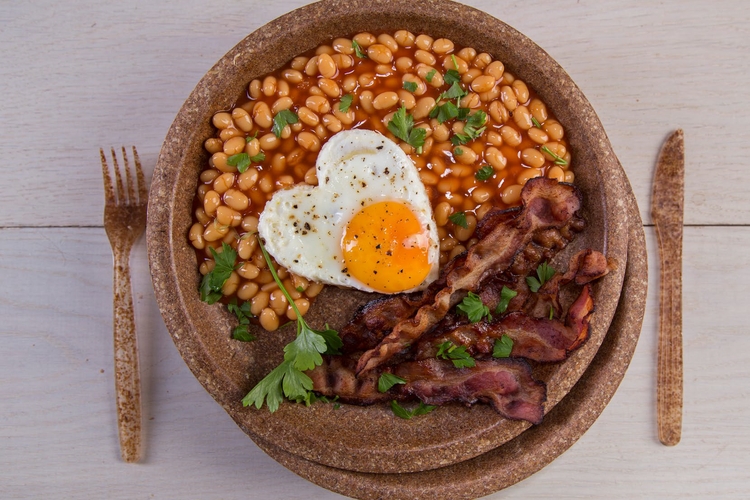
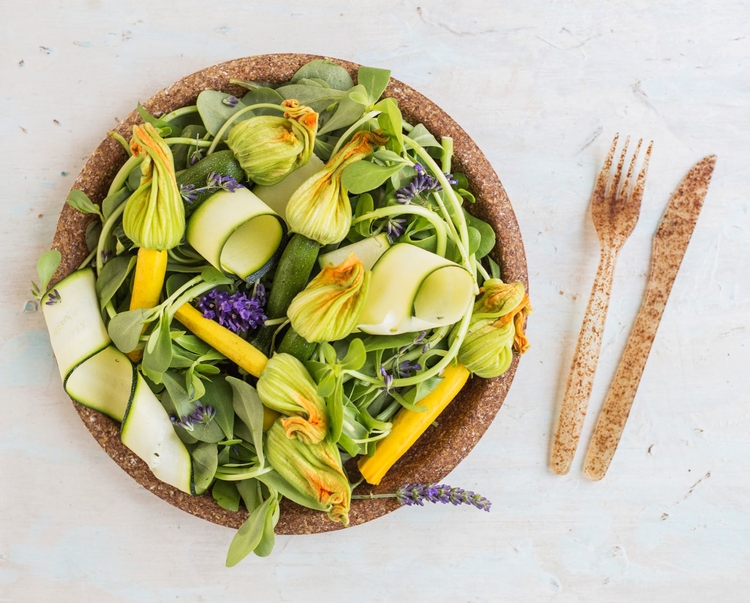
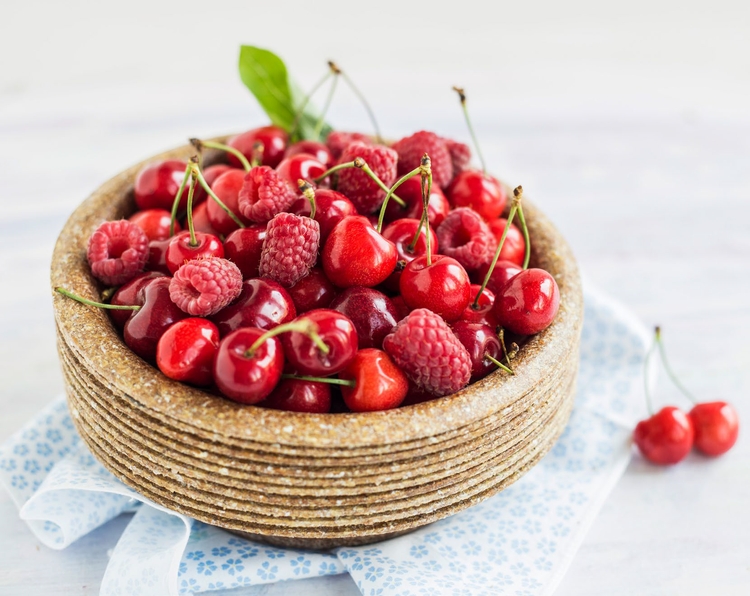
M.T.: Single-use wheat bran products are suitable for serving all cold and hot dishes. They can also be safely used in ovens and microwave ovens – most tableware and packaging made from other raw materials cannot do this.
U.D.-G.: It is said that these dishes are edible…
M.T.: In production, we use a clean, edible fraction of bran. So, in principle, you can eat them, although of course, this is not their main feature or purpose. Our production process is clean and hygienic. Every year, our production plant undergoes safety and quality tests and receives certification just like food production plants.
U.D.-G.: And how long do bran products take to decompose?
M.T.: Laboratory tests confirm that our bran products – under home composting conditions – fully decompose in less than 30 days. If it happened that someone threw them away in a forest or a meadow, they would disappear even faster. Before they manage to decompose, rodents, wild animals, or insects will eat them with pleasure. This often raises questions about the durability and shelf life of our products. I reassure you – our bran tableware, stored in the right conditions, without access to moisture, can be safely stored for at least 3 years. In our laboratory, we have prototype products that are even over a dozen years old.
U.D.-G.: The offer of biodegradable tableware is extremely attractive in times of growing ecological awareness. How much interest are you generating from customers? Are you keeping up with production?
M.T.: Biotrem supplies products to regular customers in over 40 markets around the world – directly and through a network of independent distributors. Our products have already reached nearly 80 countries around the world. Currently, we export about 60-70 percent of our production to customers in Europe, North America, South America, Asia, and Australia. The growing demand for our products means that the list of our local and international distributors is constantly growing. The production potential of the Zambrów plant is estimated at about 20 million plates and bowls per year. Our current production capacity is only a fraction of global demand. That is why plans for the near future include expanding production capacity – launching new production plants in Europe, North America, South America, and Asia. We are looking for potential business partners willing to invest in new production plants around the world. We aim to increase production capacity to at least 200 million pieces per year within the next few years.
U.D.-G.: How did it happen that in a flash (2-3 years?), you conquered the markets of over 40 countries in the world?
M.T.: Our beginnings were very difficult, no one knew such products, we were the first on the market. Everyone asked why bran and if the tableware had to be brown. Our sales department was more of an education department at the beginning; we had to create the market from scratch. We currently feel much more optimistic than a few years ago, when we had to fight for every customer, spending a lot of time and energy breaking through the barrier of ignorance about our brand and the lack of trust in our product. Thanks to, among other things, numerous viral campaigns on the internet, which generated billions of views of videos promoting our innovations around the world, we have more of a problem with satisfying the huge demand for our products. This also helped us in obtaining further grants for product commercialization and encouraged many potential investors to establish relationships with us.
 U.D.-G.: The European Union, but also the whole world, is slowly banning the use of plastic in tableware and cutlery. Do you expect an acceleration in business development as a result?
M.T.: The so-called Plastic Directive is an important and necessary regulation that fits into a long list of legal acts that limit or even eliminate single-use packaging and products made from petroleum-based plastics from the market. This is also a huge opportunity for manufacturers of single-use products and packaging made from plant-based raw materials – fully biodegradable and safe for the environment – such as Biotrem. We are a European company and EU markets are our natural operating environment. This opens up huge opportunities for us for development and product sales. It is also a huge motivation for the development of technology and the products themselves. We have plenty of new ideas and projects that we will want to introduce to our offer.
U.D.-G.: How much raw material is needed for production? If customer interest grows, do we have enough bran on the market?
M.T.: From 1000 kilograms of raw material, you can produce over 10,000 plates or bowls. I use the term “raw material” because using our technology, we can produce biodegradable tableware and packaging from many different natural and sustainable plant-based raw materials. In addition to wheat bran, these can also be corn bran, beet or carrot pulp, waste from cassava or hemp processing, seaweed, algae. Our research and development department in Zambrów is constantly testing materials from all over the world.
U.D.-G.: At the moment, the company’s offer includes not only plates but also cutlery. Are you planning to produce other tableware? In what direction will Biotrem develop in the coming years?
M.T.: Biotrem, from a manufacturer of bran tableware, is currently transforming into a provider of solutions for the production of tableware and packaging from raw materials that are waste and byproducts of agricultural production or the food industry. A new category of products that we are working on intensively is biodegradable packaging for takeaway food – Branbox. They will be suitable for thermal sealing and storing even liquid meals for at least 48 hours. This will be an excellent product for catering companies and restaurants delivering takeaway food.
More articles on ecological solutions can be found in the magazine LOGISTYKA 4/2021.
The e-edition of the magazine is available in our offer!
Stay up to date, subscribe to the LOGISTYKA magazine!