In many theoretical studies, the concept of a milk run appears in the context of reducing inventory levels and increasing supply fluidity. Of course, this is true, but it does not cover the factor most important to every enterprise – this solution, beyond the mentioned advantages, can bring an immediate, easily quantifiable, and quite substantial profit. Below, I will present the basic assumptions along with a discussion of individual aspects using a concrete example.
As part of a continuous search for better and more efficient solutions related to the daily operation of a production plant in the automotive industry, I decided to take a closer look at the concept of a milk run, or in native nomenclature “the milkman’s route,” although this name does not seem very elegant to me. This topic is widely described, in theoretical form, in publications in the field of lean management. However, these studies, beyond the outline of the concept itself and generalities, contain few practical tips. I still did not know how to translate theory into a functioning and, above all, effective mechanism.
It is known that a milk run is a kind of transport loop between my plant and the suppliers’ warehouses.
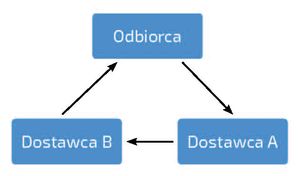
Fig. 1. Scheme of milk run operation (one of the possibilities).
Source: own elaboration.
So I started by analyzing the locations of contractors, or rather by looking for those whose distance from each other seemed relatively small. It is worth imposing an additional constraint here in the form of the maximum distance/maximum transit time that is acceptable to us. At a certain stage of consideration, I analyzed a road connection according to the scheme Poland -> 2 points on the Iberian Peninsula (rather in its further than closer part) -> Poland. Even if it makes sense from certain points of view, the total distance of approx. 6000 km and the real execution time of such a loop at the level of 9 days (not including the uncertainty related to possible traffic difficulties on such a route) will not be acceptable to everyone due to the mentioned uncertainty of transit time, required inventory level, etc. I decided to focus on possibilities located much closer and thus allowing to maintain the transit time and the size of the designed loop at a level ensuring greater fluidity. As part of further considerations, I identified two suppliers: supplier A located in Slovakia, from whom transport was already carried out on our own under EXW terms, and supplier B located in Hungary, who carried out transport independently in accordance with DAP terms.
The scheme presented in Figure 2 very clearly illustrates the responsibility of individual parties in terms of transport execution. It is worth remembering that having transport management is not always synonymous with bearing the risk.
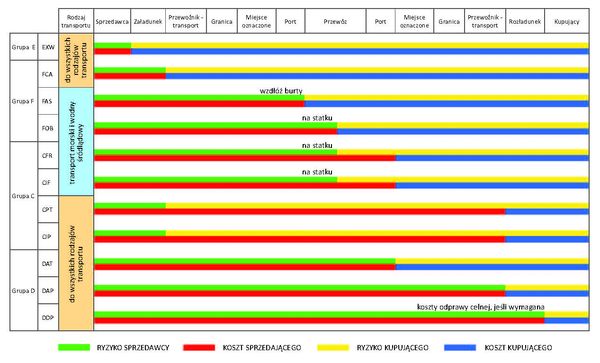
Fig. 2. Incoterms 2010.
Source: https://i0.wp.com/www.prawoilogistyka.pl/wp-content/uploads/2015/12/Incoterms-2010-podzia%C5%82-koszt%C3%B3w-i-ryzyka.jpg
Okay: I have an idea, I have a route that looks encouraging. What now?
The entire article is available below in PDF format.
The article comes from the magazine LOGISTYKA 2/2019.
The e-edition of the magazine is available in our offer!