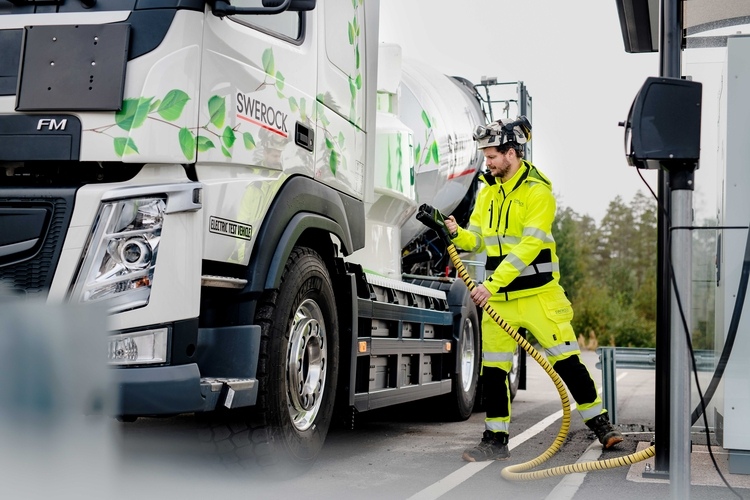
Next year, carriers in Europe will be able to take advantage of Volvo Trucks’ offering, which includes fully electric versions of heavy-duty trucks.
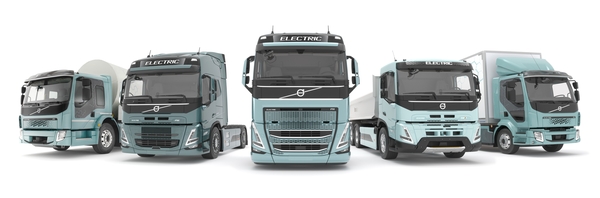
Currently, heavy-duty electric trucks are being tested – the Volvo FH, Volvo FM, and Volvo FMX – which will be used for regional transport and construction work in European cities. The maximum gross combination weight of these vehicles will be up to 44 tonnes. Depending on the battery configuration, the possible range will be up to 300 km. Sales will begin next year, with mass production starting in 2022. From the new year, a full range of electric (battery-powered) Volvo Trucks vehicles designed for distribution, regional transport, waste management, and urban construction work will be available in Europe.
– By rapidly increasing the number of heavy-duty electric trucks, we want to help our customers and transport buyers achieve their ambitious sustainability goals. We are determined to continue leading our industry towards a sustainable future – says Roger Alm, President of Volvo Trucks.
The Volvo FL Electric and Volvo FE Electric are electric trucks designed for urban distribution and waste management, primarily in Europe. Their production began in 2019. In North America, sales of the Volvo VNR Electric – a truck for regional transport – will begin on December 3, 2020.
Electric vehicles for demanding operations and long-haul heavy transport will have a longer range and will be equipped with batteries and fuel cells. Volvo Trucks intends to start selling electric trucks powered by hydrogen fuel cells in the second half of this decade. Volvo Trucks’ goal is to offer a full range of products that do not use fossil fuels by 2040.
– To reduce the impact of transport on the climate, we must quickly move from fossil fuels to alternatives such as electricity. However, the conditions for implementing this change, and consequently its pace, vary significantly depending on carriers and markets, as well as many variables such as financial incentives, access to charging infrastructure, and the type of transport operations – explains Roger Alm.
Most transport companies will introduce electric vehicles gradually, and during the transition period, they will have a mixed fleet of trucks powered by different fuels.
– Our chassis are designed to be independent of the powertrain used. Our customers can purchase several Volvo trucks of the same model, with the difference that some are electric and others are powered by gas or diesel – says Roger Alm.
According to Volvo Trucks, the transition of carriers to more sustainable transport should be smooth. One must be prepared for such a major change. The solutions offered must not only use alternative fuels but also enable carriers to achieve a satisfactory level of profitability and productivity.
– Our main task is to facilitate the transition to electrified vehicles. We do this by offering comprehensive solutions that include route planning, vehicles with the correct specifications, charging equipment, financing, and service. The long-term security that we provide to our customers, along with our global network of dealers and service workshops, will be more important than ever – argues Roger Alm.
{youtube}https://www.youtube.com/watch?v=-UYA1PjEkH0&feature=youtu.be{/youtube}
Source: Volvo Trucks
Read more about electric trucks:
– DB Schenker for green urban logistics in Oslo
– Electromobility counter in Poland shows progress
– Charging infrastructure for e-trucks needed
We write more about electromobility and the transport of the future in the magazine Logistyka 4/2020.
The e-edition of the magazine is available in our offer!