








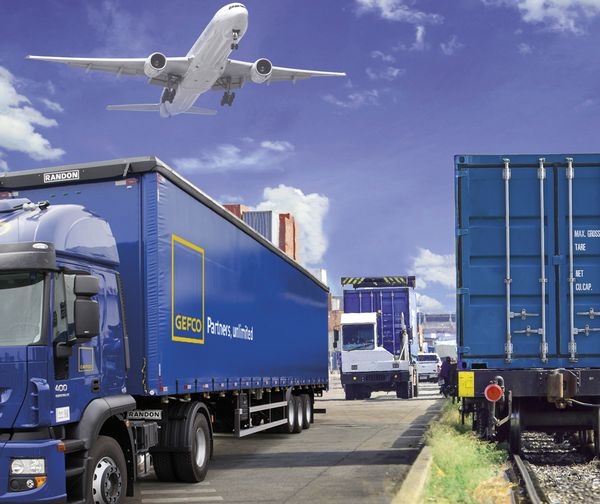
New technology can increase security, improve transparency, and create scalability throughout the supply chain. Managing the supply chain and all aspects related to the production and distribution of goods is an extremely complex process. Even using expensive software to track orders and execute shipments, most logistics companies still have limited visibility and insight into where all their goods are at any given moment. This is a result of analog gaps that appear during the execution of the entire process.
Let’s get to know blockchain
Blockchain is the technology behind the success of Bitcoin and other cryptocurrencies. It can be compared to an indestructible digital ledger that records all kinds of transactions – purchases, sales, contracts, transfers, and other events.
– Everything is recorded in a series of secured, permanently identifiable files called blocks. Each new transaction block is linked to the previous ones, creating a chronological register that is stored simultaneously on millions of computers. As a result, records kept in such a database are public and easy to verify – says Antoine Chaux, Sales Director – Supply Chain 4PL/LLP Solutions at GEFCO Group.
Erwin Matthijssen, Partner at M3 Consultancy, describes blockchain as an “intelligent spreadsheet” whose immutability, verifiability, and disintermediation make it a perfect fit for the complex puzzle of the supply chain. The key difference between blockchain and a spreadsheet is that information can only be added. Unlike a spreadsheet, it is impossible to edit or delete it.
– Every change is recorded as another visible addition to the data store, making it so-called immutable. Furthermore, multiple parties have access to the data store. So, if we decide to modify specific data, it will be visible and verifiable by others – emphasizes Matthijssen.
Integrating blockchain technology with the supply chain
We cannot treat blockchain as software. It is a technology that we connect with the existing supply chain management software in a company. Users still see the same interface and business processes. However, when they look at inventory levels, in addition to their own, they also see the stocks of other connected users. Additionally, every modification can be tracked in real-time.
Applicature – a blockchain technology development agency – advises companies on how to integrate this technology into the supply chain. The agency’s experts emphasize that to go through this process successfully, “companies must understand and assess all the risks and weaknesses they may face. It is essential to review the nature of these threats and develop a map of weak points and bottlenecks. Furthermore, the company must develop a plan to eliminate these weaknesses with the help of blockchain technology”.
It is best to start with small matters. Companies can initially try to apply blockchain solutions to some of their weak points. Once the indicated processes are running smoothly, blockchain can be expanded to the entire supply chain and solve subsequent problems until full efficiency is achieved. Development in terms of cooperation and scalability is essential in applying blockchain technology to supply chain management. The use of blockchain in supply chain management is still an innovative solution, but many professional service and software companies have already made significant investments in developing blockchain capabilities and resources in this industry.
What are the benefits of blockchain?
Supply chain managers (and other authorized employees) can see digital and physical products in their supply chains in real-time, along with changes in quantities and prices, thanks to blockchain. Because all authorized users can view the same information at the same time, this significantly improves the process of goods flow and settlements. As a result, this translates into efficient record-keeping, speeds up payment processes, improves shipment tracking, and additionally reduces the possibility of fraud due to complete transparency and data availability.
Blockchain allows for the aggregation of data between manufacturers, distributors, buyers, and financial partners. Thanks to data sharing, payments can be made at the moment of delivery confirmation.
– The faster manufacturers agree on delivery details with distributors, the faster they will receive payment for their goods. Faster payments significantly improve the financial liquidity of all supply chain participants – says Bill Fearnley Jr., Research Director at IDC Worldwide Blockchain Strategies.
Implementing blockchain in logistics enables third-party-independent verification, recording, and coordination of transactions, which essentially eliminates intermediaries. As a result, blockchain-based supply chains can significantly simplify the functioning of global supply chains.
Ian Khan, author and director of the documentary “Blockchain City”, summarizes: – Blockchain is a revolutionary mechanism that provides everyone with the highest level of accountability. We no longer have to deal with unreceived transactions, human and machine errors, or exchanges made without the consent of all involved parties. Above all, the most critical area where blockchain helps is guaranteeing the irrefutability of transactions made, recording them not only in the main ledger but also in a distributed ledger system, connected by a secure verification mechanism.
– We are currently observing great interest in “distributed ledger” technologies in the supply chain sector – where effective cooperation between a large number of partners is a key success factor, and stakeholders share confidential information daily, duplicate it, and use it to execute and monitor activities. Now we need to take a step further, go beyond the framework of the concept itself and imagine an ecosystem, business solutions, and technological and organizational capabilities that will allow the idea to be scaled to an industrial level – says Antoine Chaux, Sales Director – Supply Chain 4PL/LLP Solutions at GEFCO Group.