










Working in the transport industry involves many difficulties and requires a huge amount of sacrifice. A truck driver must demonstrate patience, a thick skin, and mental resilience every single day. We often forget that being a road driver is one of the toughest, yet most necessary professions in the world. When office workers close their eyes to sleep, professional drivers hit the road, facing long distances, difficult weather conditions, and overwhelming fatigue. All this to provide us with what is needed for daily life. On their day, it is worth thanking them for…
We owe the constant development of the Polish economic system to truck drivers who deliver millions of products to our country every day. Everything we see on store shelves, in restaurants, service outlets, or workshops, we owe to this type of transport. If it weren’t for them, we would be forced to obtain products on our own – just like a few hundred years ago.
According to a study by the portal truckinginfo.com, which examined the American economy in the context of the transport industry, as much as 70% of products are transported using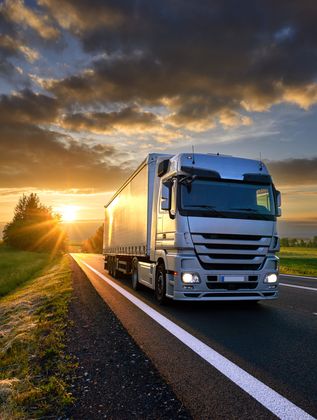 trucks. If they were to disappear one day, chaos would reign in the world. Probably within just a week, medical supplies would run out in healthcare facilities, fuel at gas stations would run out or become significantly more expensive, there would be a visible stagnation in the operation of post offices and courier companies, and food supplies would quickly be depleted. It is worth remembering how important transport has become for the development of Polish industry over the years.
A trucking powerhouse
According to Statistics Poland (GUS) data, there are nearly 3.3 million trucks registered in our country1. As OCRK studies show2, a Polish driver covers an average of 87,000 kilometers per year. More than 34% of drivers travel between 100,000 and 200,000 km annually. Poland is the transport empire of Europe – it performs 17.5% of the total value of tonne-kilometers in the European Union3 and as much as 40% of cabotage4. In this field, we have even surpassed Germany, France, the Netherlands, and Belgium. Since joining the EU, the Polish transport industry has dominated the market. According to GUS data, in 2017, the transport and logistics sector generated 6% of GDP – it is therefore one of the largest transport forces in Europe.
Last year, an increase in cargo transport and transport work performed was recorded in all types of transit, with the exception of inland waterway and maritime transport. Rail transport increased by weight by 4.1% to 249.26 million tonnes, and by transport work by 8.4% to 59.39 billion tonne-kilometers. Road transport increased by weight by 7.2% to 1,873.02 million tonnes, and by transport work by 8.4% to 377.78 billion tonne-kilometers – GUS also reported. Taking into account individual types of transport, in 2018, cargo transit carried out within the country dominated in road transport (80.8%) and rail transport (66.8%), while international transport prevailed in other types.
A big step for the driver and the country
It is not due to price cuts that Poles have achieved transport success in the European community. Road transport owes its dynamic development also to the popularization of online shopping.
– The scale of retail trade globalization is visibly increasing. Poles are buying online with increasing confidence and equipping their machine parks with good quality used equipment. Year after year, there are more 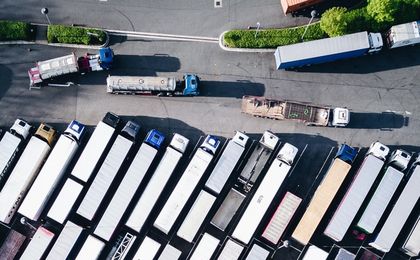 listings on trading portals, and along with them, the number of machine exports and imports is also growing – says Joost Goedhartl, Director of Sales for the European market at Tradus.
All this strengthens the demand for such services and the development of distribution centers and shipping companies, thanks to which the wealth of Poles and the country’s position on the international stage are also growing. According to the trans.info report, foreign contractors choose the services of Polish carriers primarily due to their high-quality fleet and the irreplaceable quality of services provided5. The average length of a trip for Polish drivers is a week – some of them spend even 260 days a year on the road. 30% of drivers use only 1 to 10 days off6. It is precisely for their undeniable diligence, punctuality, and reliability that Polish drivers are appreciated by their compatriots and companies neighboring the country.
1 https://bdl.stat.gov.pl/BDL/metadane/cechy/1733
2 “Who is the Polish driver”, OCRK, 2018
3 https://ec.europa.eu/eurostat/statistics-explained/index.php?title=Road_freight_transport_statistics
4 https://ec.europa.eu/eurostat/statistics-explained/index.php?title=Road_freight_transport_statistics- cabotage
5 “Posting of workers in transport – opinions and concerns of European entrepreneurs”, trans.info, 2018 https://www.trans.eu/download/transinfo/raport_Delegowanie_long_version_PL_29_05_!.pdf
6 “Earnings of professional drivers in Poland”, trans.info, 2018
https://www.transjobs.eu/Raport-TransJobs.eu-Zarobki-kierowcow-zawodowych-2018.pdf