











The last two decades have been a time of strong development in logistics construction in Poland, especially warehouse facilities, which have transformed thousands of hectares of fields and meadows around large and small cities into industrial and distribution areas with national and international reach. As a result, logistics agglomerations have grown up alongside urban ones, bustling with life around the clock, and perhaps even longer before major holidays… Logistics operators and developers have dotted our landscape with “standard warehouse boxes,” trying to meet the expectations of their users while keeping the time and costs of these investments as low as possible. However, something seems to have been forgotten. What? Ecology, which is declined in all possible cases in the media and various official speeches, and the related self-sufficiency of facilities, e.g., in terms of obtaining water, heat, and electricity. Or perhaps it wasn’t forgotten, but it wasn’t profitable before? And is it today?
For over 20 years, there has been a global trend promoting the development of economically, ecologically, and socially sustainable construction. Terms such as green building, eco-construction, or ecological construction have been repeated ad nauseam. In 1998, the global organization World Green Building Council was inaugurated in the Japanese city of Nagoya, which, in addition to popularizing the implementation of ecological building standards, contributed to the creation of several organizations certifying buildings at the design, construction, and subsequent operation stages in terms of solutions friendly to the environment and the health of the people working there. As a result, new multi-criteria facility certification systems appeared, including the most well-known: the American LEED (Leadership in Energy and Environmental Design) and the British BREEAM (Building Research Establishment Environmental Assessment Method). Both systems were introduced to Poland in 2010, and since then, many modern facilities built here (mainly office buildings, but not only) can boast BREEAM and LEED certificates. The latter (at the Silver level) was the first in our country to be awarded to the BorgWarner Turbo Systems Poland office, warehouse, and production building in Rzeszów.
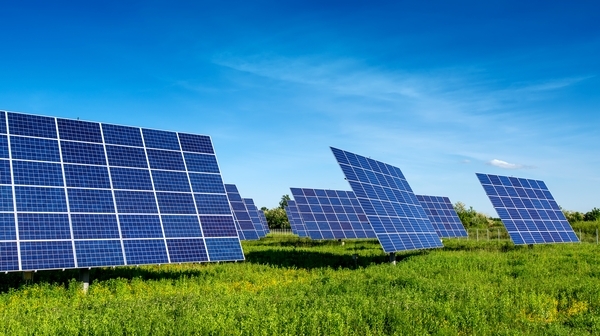
Why am I writing about this? Well, because ecological construction has been talked about here constantly for years, but it took the disaster of drought and water shortages on a national scale to draw attention not to the need, but to the absolute necessity of truly widespread use of renewable sources for obtaining electricity, water, and heat. For years, I have been wondering why the hectares of roof surfaces and parts of the external walls of logistics facilities are not used to obtain electricity and heat from the sun, and water from rainwater (at least for non-potable use). During conversations, I receive various arguments pointing to the unprofitability of such ventures or the impossibility of their application for various technical reasons (e.g., the unsuitability of warehouse roof structures to bear the weight of tons of solar or photovoltaic panels and their low efficiency), as well as formal and legal ones. Energy experts could also point to certain conditions related to, for example, storing energy surpluses, etc. It is a pity that owners of logistics facilities do not receive incentives for pro-ecological activities in the form of, for example, specific tax breaks or the ability to use energy obtained from the sun for their own needs and sell surpluses on the local market at a price negotiated with the local energy operator. For now, they can only supply electricity to the national grid at official rates. Changes would certainly translate into a significant reduction in the maintenance costs of many a warehouse, and there would also be a stronger bond with the local community, which would benefit from cheaper electricity from a nearby logistics center. Of course, these are just speculations, and many experts from various fields could probably point out my incompetence regarding the details. But here I will recall an article by Ewa Radomska-Deutsch from issue 4/2010 of “Logistyka,” in which she described, among other things, a 35,000 sqm logistics center built in 2008 on post-mining wasteland in Chatterley Valley (UK), which was 100% self-sufficient in terms of obtaining electricity and heat from renewable sources. The author also pointed to the opinions of specialists at the time, indicating about a 40% higher cost of implementing such pro-ecological facilities compared to “traditional” buildings. However, it is hard to believe that various types of specialists and government, local government, scientific, construction, and business legislators would not be able to lower these percentages so that it would be profitable to build self-sufficient, ecological logistics facilities here as well. So that, in the end, ecology and life could “stand in one house,” and water would be in abundance.